Your Cart is Empty
Start shopping

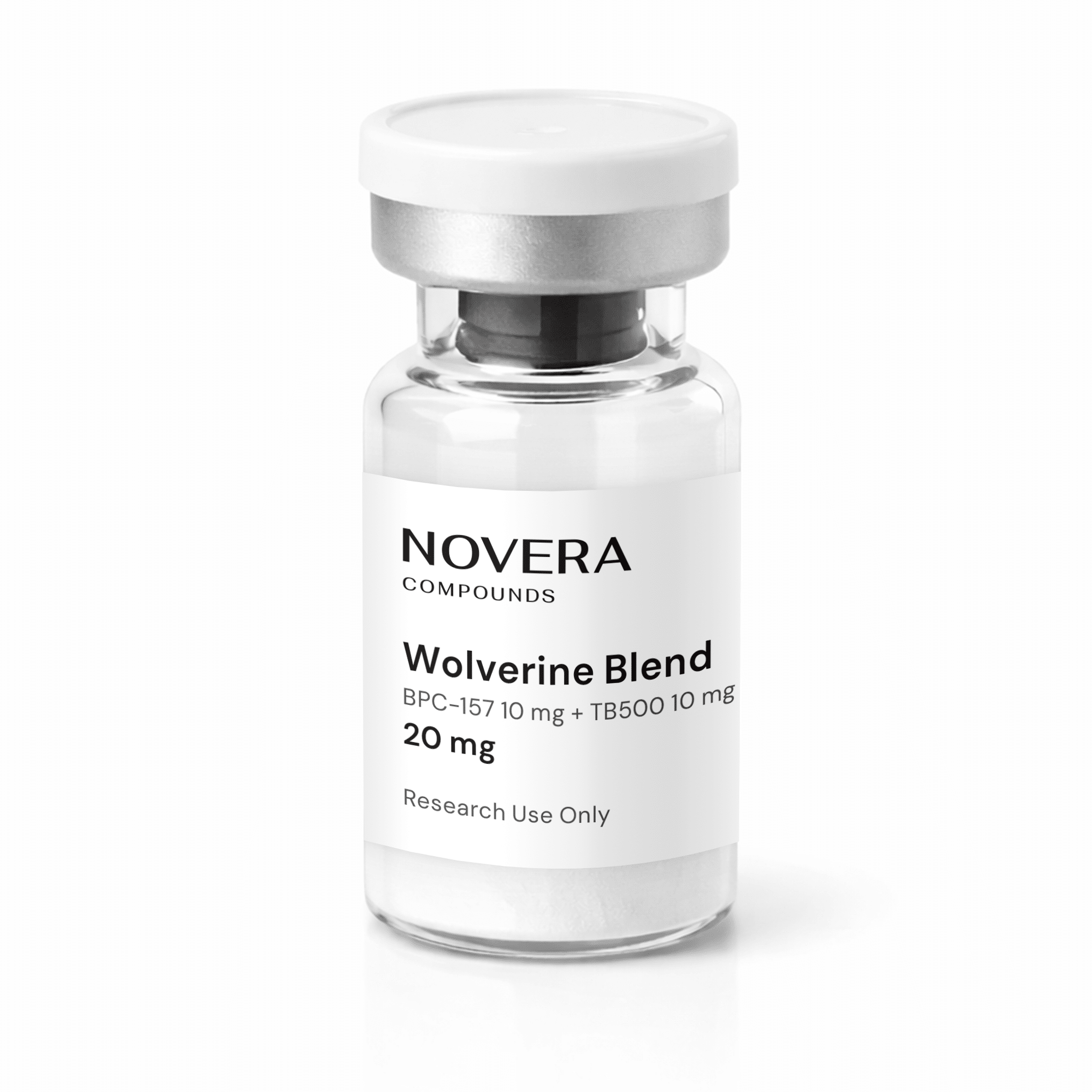
Wolverine Blend – BPC-157 (10mg) / TB500 (10mg)
Tier
| Packs | Discount (%) | For Each |
|---|---|---|
| 1 - 5 | — | $123.00 |
| 6 - 10 | 9.76 % | $111.00 |
| 11 - 20 | 18.7 % | $100.00 |
| 21+ | 26.83 % | $90.00 |
Product description
What is Wolverine Blend - BPC-157 (10mg) / TB500 (10mg)?
Wolverine Blend – BPC-157 (10mg) / TB500 (10mg) is a research formulation combining two synthetic peptides commonly studied in experimental models focused on cellular repair signaling and tissue remodeling. This blend includes BPC-157, a peptide fragment derived from gastric protein research, and TB500, a synthetic form of Thymosin Beta-4, a naturally occurring peptide that binds to actin. The components of the blend have the following characteristics:BPC-157
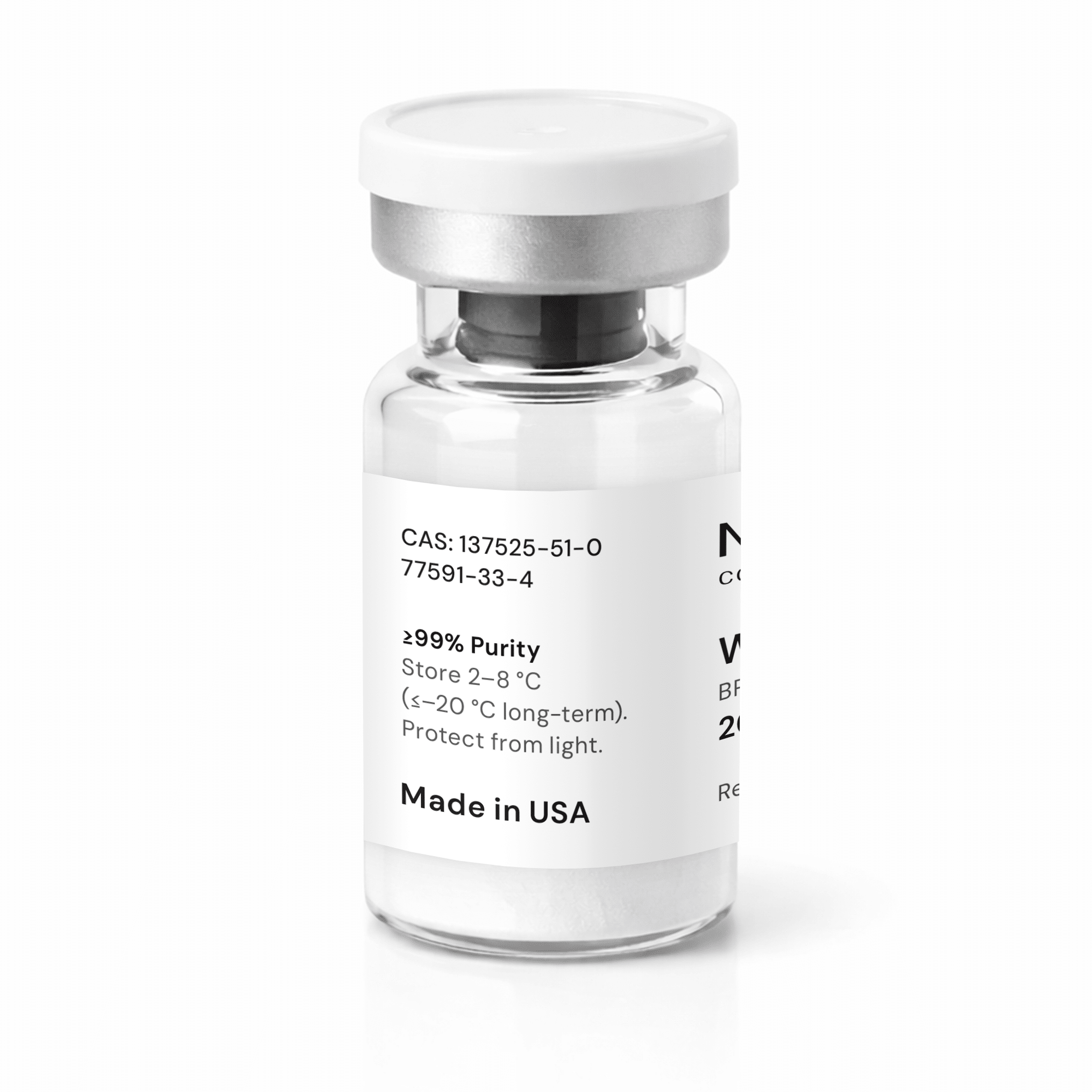
- CAS Number: 137525-51-0
- Chemical Formula: C₆₂H₉₈N₁₆O₂₂
- Molecular Weight: 1419.535 g/mol
- Sequence: Gly-Glu-Pro-Pro-Pro-Gly-Lys-Pro-Ala-Asp-Asp-Ala-Gly-Leu-Val
TB500 (Thymosin Beta-4)
- CAS Number: 77591-33-4
- Chemical Formula: C₂₁₂H₃₅₀N₅₆O₇₈S
- Molecular Weight: 4963.44 g/mol
- Sequence: Ac-Ser-Asp-Lys-Pro-Asp-Met-Ala-Glu-Ile-Glu-Lys-Phe-Asp-Lys-Ser-Lys-Leu-Lys-Lys-Thr-Glu-Thr-Gln-Glu-Lys-Asn-Pro-Leu-Pro-Ser-Lys-Glu-Thr-Ile-Glu-Gln-Glu-Lys-Gln-Ala-Gly-Glu-Ser
What are the key features of Wolverine Blend - BPC-157 (10mg) / TB500 (10mg)?
Wolverine Blend – BPC-157 / TB500 is a research peptide formulation used in laboratory studies exploring cellular repair signaling pathways and cytoskeletal dynamics. Key features include:- Combination of two research peptides: BPC-157 (10 mg) and TB500 (10 mg)
- Total vial content of 20 mg lyophilized peptide blend
- High analytical purity verified by HPLC and mass spectrometry
- Commonly studied in cellular migration and tissue signaling research models
- For laboratory research use only
How is Wolverine Blend - BPC-157 (10mg) / TB500 (10mg) synthesized?
The peptides in Wolverine Blend – BPC-157 / TB500 are produced individually by solid-phase peptide synthesis (SPPS), a standard technique in peptide chemistry for constructing peptides with specific amino acid sequences. In this process, amino acids are sequentially linked on a solid support to form the complete peptide chain. After synthesis, both peptides undergo purification via high-performance liquid chromatography (HPLC) to achieve the required purity for research applications. Their molecular structures and weights are confirmed using mass spectrometry (MS) and additional analytical methods. Once purified, the peptides are carefully blended in controlled proportions and processed into lyophilized powder, which helps maintain peptide stability during storage and transport.What is Wolverine Blend - BPC-157 (10mg) / TB500 (10mg) being studied for? What are its possible benefits?
In laboratory research, the peptides in Wolverine Blend – BPC-157 / TB500 are studied in experimental models focused on cellular migration, tissue remodeling, and cytoskeletal signaling pathways. Common research areas include:- Cell migration and cytoskeletal organization
- Tissue repair signaling pathways
- Angiogenesis and vascular signaling
- Inflammatory signaling and cellular communication models
- Experimental studies on connective tissue remodeling
How does Wolverine Blend - BPC-157 (10mg) / TB500 (10mg) work in research studies?
In laboratory studies, the peptides in Wolverine Blend – BPC-157 / TB500 are examined for their potential effects on signaling pathways involved in tissue remodeling and cytoskeletal regulation.- BPC-157 has been studied for its role in cellular signaling pathways involved in vascular communication and tissue integrity.
- TB500, derived from Thymosin Beta-4, interacts with actin, a structural protein that helps maintain cellular shape and movement.
What dosing information exists for Wolverine Blend - BPC-157 (10mg) / TB500 (10mg)?
Research on BPC-157 and TB500 has primarily been conducted in preclinical laboratory studies, including cell culture experiments and animal models. In vitro studies typically examine peptide activity at nanomolar to micromolar concentrations to observe cellular responses and signaling behavior. Animal studies have explored dosing ranges in the microgram per kilogram (µg/kg) scale depending on the experimental design and research objectives. As the Wolverine Blend formulation is strictly for laboratory use, there are no standardized human dosing guidelines for research-grade preparations.How should Wolverine Blend - BPC-157 (10mg) / TB500 (10mg) be stored and handled?
Wolverine Blend – BPC-157 / TB500 should be stored under controlled laboratory conditions to ensure stability. Recommended storage conditions include:- 2–8 °C for routine storage
- ≤–20 °C for long-term preservation when not in use
Where can I read more research about Wolverine Blend - BPC-157 (10mg) / TB500 (10mg)?
- Chang CH, Tsai WC, Lin MS, Hsu YH, Pang JH. The promoting effect of pentadecapeptide BPC 157 on tendon healing involves tendon outgrowth, cell survival, and cell migration. J Appl Physiol (1985). 2011;110(3):774-780. doi:10.1152/japplphysiol.00945.2010
- Malinda KM, Sidhu GS, Mani H, et al. Thymosin beta4 accelerates wound healing. J Invest Dermatol. 1999;113(3):364-368. doi:10.1046/j.1523-1747.1999.00708.x
- Philp D, Goldstein AL, Kleinman HK. Thymosin beta4 promotes angiogenesis, wound healing, and hair follicle development. Mech Ageing Dev. 2004;125(2):113-115. doi:10.1016/j.mad.2003.11.005
Compliance Statement
This product is intended for laboratory research use only and is not approved for human or veterinary use.Shop with Confidence: Product Authenticity is Guaranteed
All products available at Doctor Medica shop are obtained from respective manufacturers and contain original LOT numbers Contact us if you have any questions about product LOT numbers.


