Your Cart is Empty
Start shopping

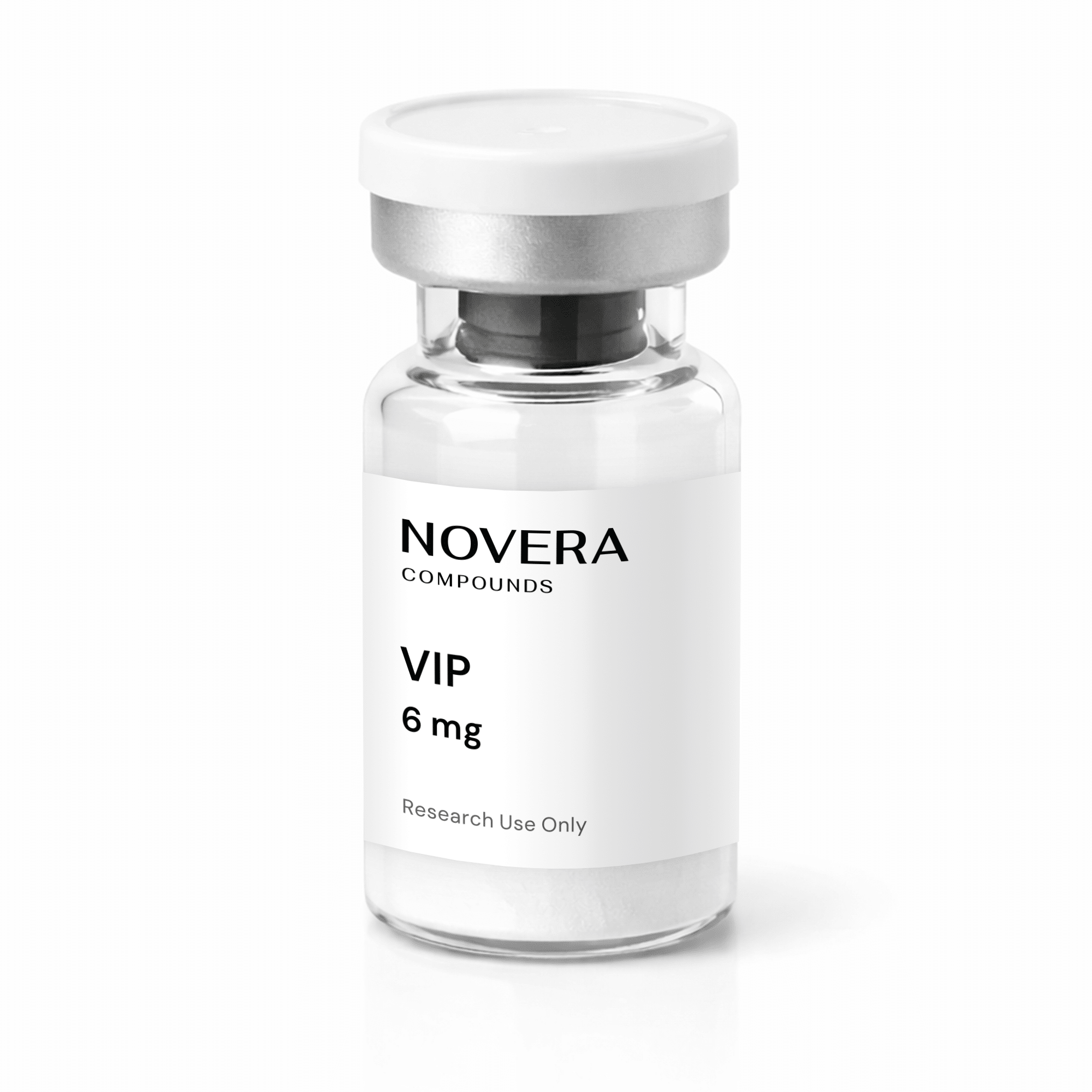
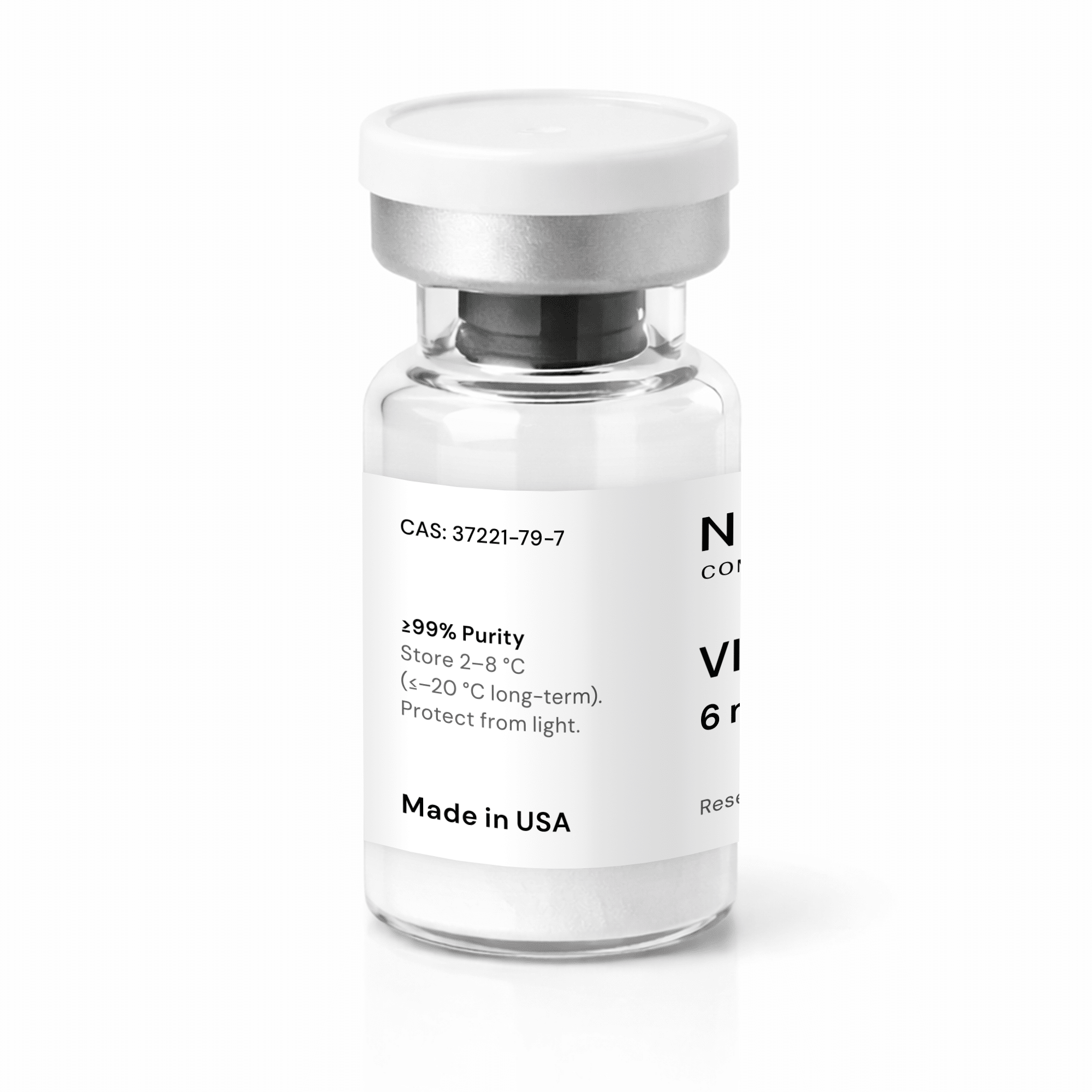
VIP (6mg)
Coming Soon
This peptide will be available soon. Join the waitlist to be notified when it launches.
Product description
What is VIP (6mg)?
VIP (6mg) is a research-grade preparation of Vasoactive Intestinal Peptide, a 28-amino acid neuropeptide initially identified in the gastrointestinal tract and later found to be widely distributed in the nervous and endocrine systems. VIP belongs to the secretin/glucagon peptide family, which includes signaling peptides involved in various regulatory processes across biological systems.- Chemical Formula: C₁₄₇H₂₃₇N₄₃S
- Molecular Weight: 3326.8 g/mol
- CAS Number: 37221-79-7
- Peptide Sequence: HSDAVFTDNYTRLRKQMAVKKYLNSILN (28 amino acids)
What are the key features of VIP (6mg)?
VIP (6mg) is a research-grade peptide designed for controlled experiments involving neuroendocrine and cellular signaling pathways. Key features include:- Synthetic peptide corresponding to Vasoactive Intestinal Peptide (28 amino acids)
- High analytical purity verified through HPLC and mass spectrometry
- Supplied as 6 mg lyophilized powder in a sealed research-grade vial
- Studied in neuroendocrine signaling and immune pathway research
- For laboratory research use only
How is VIP (6mg) synthesized?
VIP (6mg) is typically synthesized using solid-phase peptide synthesis (SPPS), a widely-used method in peptide chemistry for constructing peptides with specific amino acid sequences. In SPPS, each amino acid residue is sequentially attached to a peptide chain anchored to a solid support until the full 28-amino acid sequence is assembled. After synthesis, the peptide is purified using HPLC to achieve the necessary purity for research. Structural verification and molecular weight confirmation are done through mass spectrometry (MS) and other analytical methods. The purified peptide is then lyophilized into powder, enhancing its stability and enabling long-term storage under controlled laboratory conditions.What is VIP (6mg) being studied for? What are its possible benefits?
In laboratory research, VIP (6mg) has been studied in experimental models exploring neuroendocrine communication, immune regulation, and smooth muscle signaling. VIP is naturally produced in neurons and gastrointestinal tissues, making it a subject of interest in studies on how neuropeptides influence physiological signaling pathways. Research areas involving VIP include:- Neuroendocrine signaling research
- Immune regulatory pathway studies
- Smooth muscle and vascular signaling investigations
- Gastrointestinal physiology research
- Inflammatory signaling and cellular communication models
How does VIP (6mg) work in research studies?
In laboratory studies, VIP (6mg) is investigated as a signaling peptide involved in cellular communication across the neural and immune systems. Neuropeptides like VIP can interact with receptors on various cell types, including immune cells, neurons, and smooth muscle cells. Researchers explore how VIP affects intracellular signaling pathways that regulate communication between cells. These pathways may influence processes related to neurotransmitter release, immune signaling, and vascular regulation. The goal of these studies is to better understand how neuropeptides coordinate complex biological signaling networks.What dosing information exists for VIP (6mg)?
Research on VIP (6mg) has largely been conducted in preclinical laboratory models, including cell culture systems and animal studies. In vitro experiments generally examine VIP activity at nanomolar to micromolar concentrations to observe cellular responses and signaling behavior. Animal studies have investigated dosing ranges on the microgram-per-kilogram (µg/kg) scale, depending on the experimental model and research objectives. As VIP is a research compound, there are no standardized human dosing guidelines for laboratory use.How should VIP (6mg) be stored and handled?
VIP (6mg) should be stored under controlled laboratory conditions to maintain stability. Recommended storage conditions include 2–8 °C for routine use, and ≤–20 °C for long-term preservation when not in use. The lyophilized peptide should be protected from light, heat, and moisture to prevent degradation. Once reconstituted with a sterile laboratory-grade solvent, the solution should be stored at 2–8 °C for short-term use. Repeated freeze-thaw cycles should be avoided, as they may affect peptide stability. When stored under recommended conditions, VIP maintains its stability for approximately 24 months.Where can I read more research about VIP (6mg)?
- Seo S, Miyake H, Alganabi M, et al. Vasoactive intestinal peptide decreases inflammation and tight junction disruption in experimental necrotizing enterocolitis. J Pediatr Surg. 2019;54(12):2520-2523. doi:10.1016/j.jpedsurg.2019.08.038
- Delgado M, Gonzalez-Rey E, Ganea D. Vasoactive intestinal peptide: the dendritic cell --> regulatory T cell axis. Ann N Y Acad Sci. 2006;1070:233-238. doi:10.1196/annals.1317.020
- Lu J, Zheng MH, Yan J, Chen YP, Pan JP. Effects of vasoactive intestinal peptide on phenotypic and functional maturation of dendritic cells. Int Immunopharmacol. 2008;8(10):1449-1454. doi:10.1016/j.intimp.2008.06.002
Compliance Statement
This product is intended for laboratory research use only and is not approved for human or veterinary use.Shop with Confidence: Product Authenticity is Guaranteed
All products available at Doctor Medica shop are obtained from respective manufacturers and contain original LOT numbers Contact us if you have any questions about product LOT numbers.


