Your Cart is Empty
Start shopping

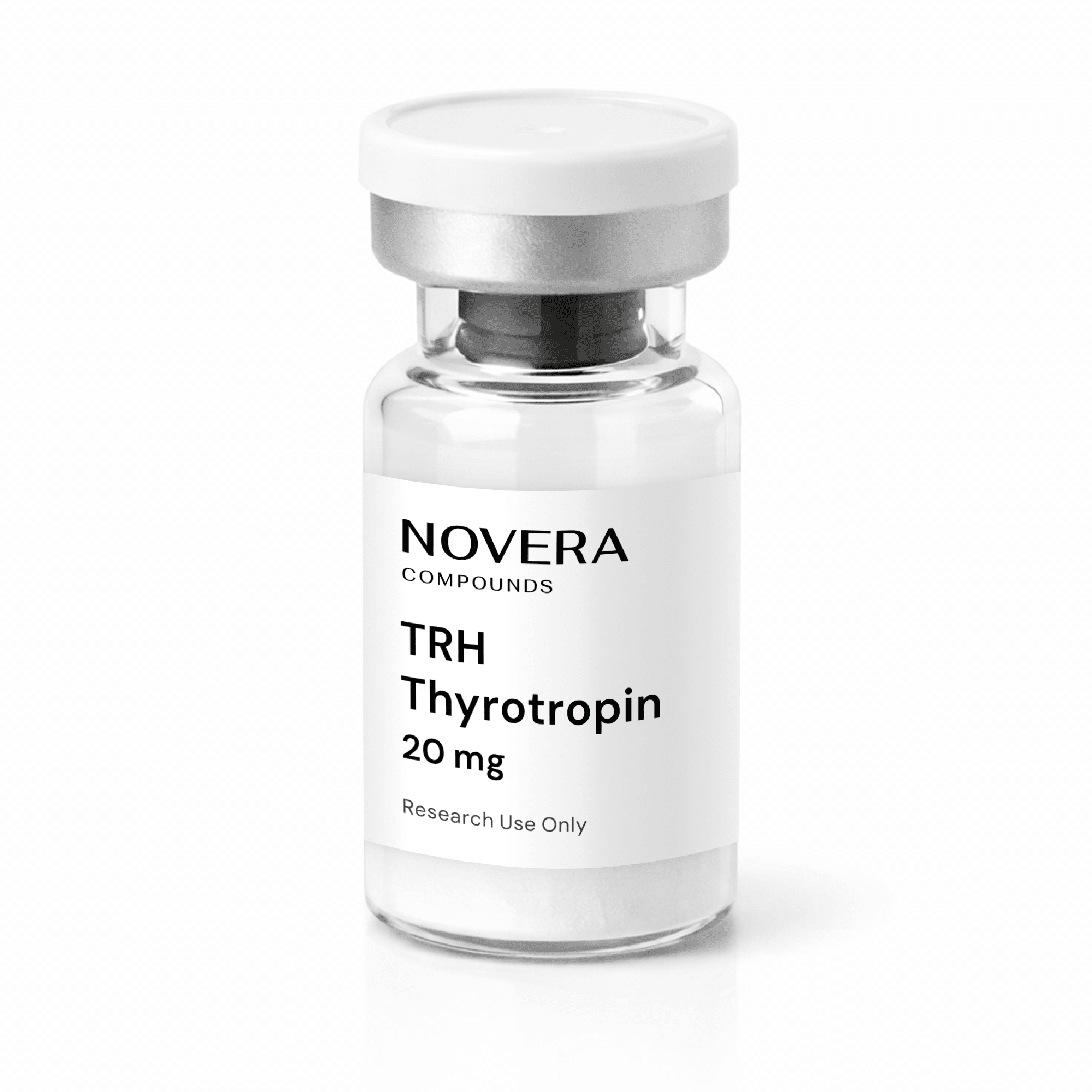
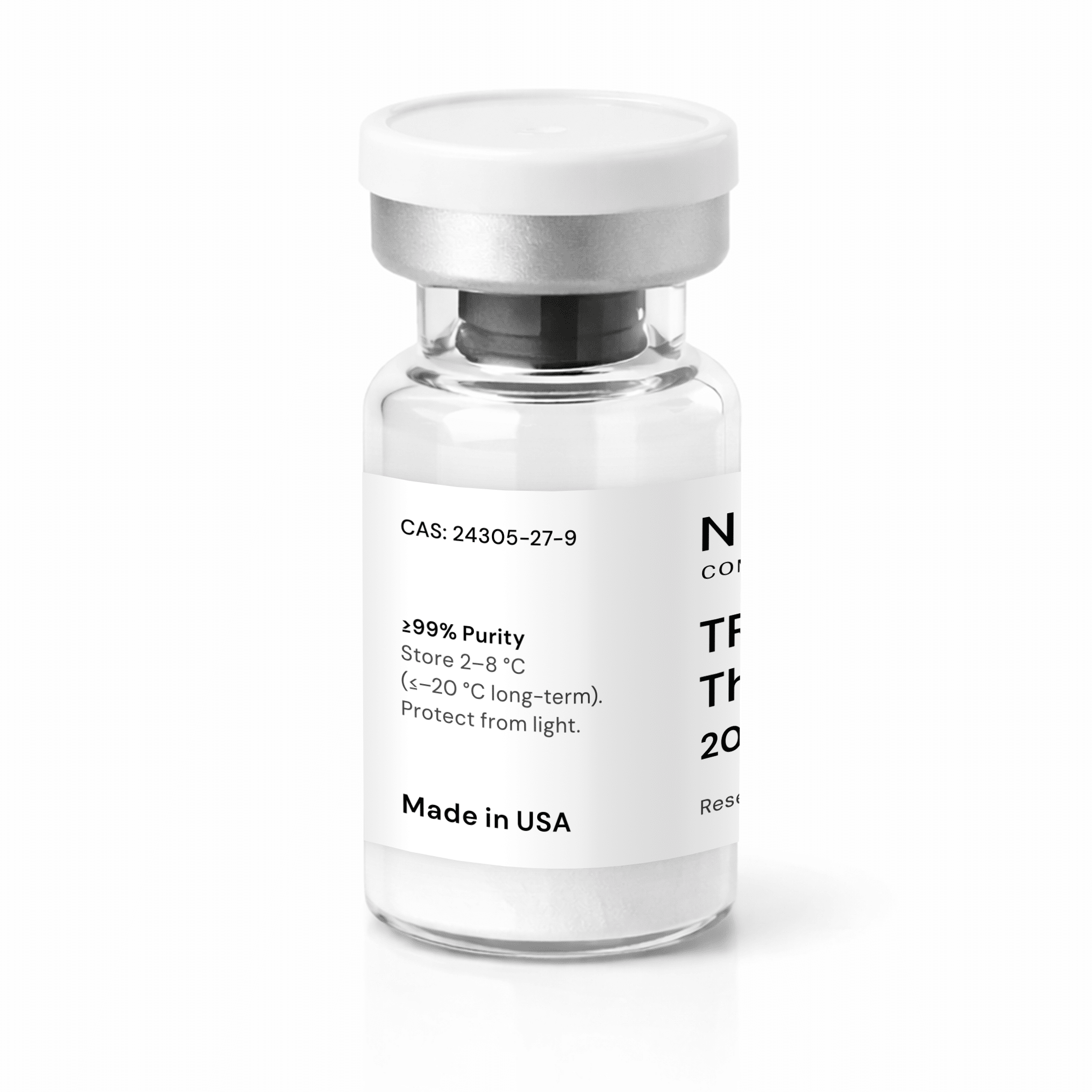
TRH Thyrotropin (20mg)
Coming Soon
This peptide will be available soon. Join the waitlist to be notified when it launches.
Product description
What is TRH Thyrotropin (20mg)?
TRH Thyrotropin (20mg) is a research-grade form of the neuropeptide thyrotropin-releasing hormone (TRH), a naturally occurring hypothalamic peptide that regulates communication between the brain and the pituitary gland. The peptide is composed of three amino acids and plays an important role in neuroendocrine signaling. In laboratory studies, TRH has been widely investigated for its influence on pituitary hormone secretion and its activity in several regions of the central nervous system. Key identifiers include:- CAS Number: 24305-27-9
- Chemical Formula: C₁₆H₂₂N₆O₄
- Molecular Weight: 362.38 g/mol
- Peptide Sequence: Pyr-His-Pro-NH₂
What are the key features of TRH Thyrotropin (20mg)?
- Tripeptide structure composed of pyroglutamic acid, histidine, and proline amide
- High analytical purity (typically ≥99%) verified using HPLC and mass spectrometry
- Supplied as a 20 mg lyophilized research vial for flexible experimental preparation
- Frequently studied in hypothalamic-pituitary axis and neuroendocrine signaling research
- Used in experimental studies exploring neuronal communication and synaptic activity
- Standard compound for comparison with longer-acting TRH analogs in laboratory studies
- For laboratory research use only
How is TRH Thyrotropin (20mg) synthesized?
TRH Thyrotropin used in research laboratories is synthetically produced rather than extracted from biological tissue. Most manufacturing processes employ solid-phase peptide synthesis (SPPS), a well-established technique for assembling short peptide chains with precise amino acid sequences. In this process, protected amino acids are sequentially attached to a solid resin support to form the Pyr-His-Pro-NH₂ structure. Following synthesis, the peptide undergoes purification using high-performance liquid chromatography (HPLC) to remove incomplete fragments or impurities. Analytical verification is then performed through mass spectrometry (MS) and other quality-control methods to confirm molecular weight and sequence accuracy. After purification, the material is typically lyophilized to maintain stability and facilitate long-term storage before laboratory use.What is TRH Thyrotropin (20mg) being studied for? What are its possible benefits?
TRH Thyrotropin has been extensively studied as a key regulator of the hypothalamic–pituitary–thyroid (HPT) axis, particularly for its role in stimulating the release of thyroid-stimulating hormone from pituitary cells. Researchers use this peptide to better understand neuroendocrine feedback mechanisms and hormonal signaling pathways within the brain. Beyond endocrine regulation, TRH has also been investigated in several areas of neuroscience research. Studies explore its potential influence on synaptic plasticity, motor coordination, and autonomic nervous system activity. In experimental models, TRH has been examined for possible roles in cerebellar signaling, neurotransmitter release, and neural network regulation. These observations remain within controlled experimental settings and continue to be evaluated through ongoing laboratory studies.How does TRH Thyrotropin (20mg) work in research studies?
In laboratory research, TRH functions as a neuroendocrine signaling molecule that initiates intracellular signaling within pituitary and neuronal cells. When introduced into experimental systems, the peptide can stimulate signaling pathways that influence hormone release and neuronal activity. In pituitary cell models, TRH has been shown to trigger intracellular signaling cascades that result in the secretion of thyroid-stimulating hormone. In neural tissue studies, the peptide has been associated with changes in neuronal excitability, synaptic transmission, and other signaling processes, helping researchers understand how the brain coordinates endocrine and neurological responses.What dosing information exists for TRH Thyrotropin (20mg)?
Published laboratory studies report a range of concentrations depending on the experimental design. In cell-based assays, TRH concentrations typically range from 1–100 nanomolar, which has been sufficient to stimulate measurable endocrine signaling responses in pituitary cell lines. In preclinical animal studies, researchers have used controlled administration of TRH solutions to investigate hormone release, neural signaling, or physiological responses. These dosing strategies vary widely between experimental models and objectives. Importantly, no standardized human dosing guidelines exist for this research-grade peptide, and experimental protocols should follow validated study methodologies.How should TRH Thyrotropin (20mg) be stored and handled?
- Store lyophilized peptide at ≤–20 °C for long-term preservation.
- Protect the vial from light, moisture, and repeated temperature fluctuations.
- After reconstitution, store the solution at 2–8 °C for short-term use.
- Prepare aliquots to avoid repeated freeze–thaw cycles.
- Room temperature exposure during shipping is generally acceptable if minimized.
- Lyophilized peptide may remain stable for up to 24 months under recommended storage conditions.
Where can I read more research about TRH Thyrotropin (20mg)?
- Watanave M, Matsuzaki Y, Nakajima Y, Ozawa A, Yamada M, Hirai H. Contribution of Thyrotropin-Releasing Hormone to Cerebellar Long-Term Depression and Motor Learning. Front Cell Neurosci. 2018;12:490. Published 2018 Dec 12. doi:10.3389/fncel.2018.00490
- McDermott AM, Wilkin GP, Dickinson SL. Pharmacological and biochemical comparison of thyrotropin releasing hormone (TRH) and di-methyl proline-TRH on pituitary GH3 cells. Br J Pharmacol. 1990;101(3):615-620. doi:10.1111/j.1476-5381.1990.tb14129.x
- Kamath J, Yarbrough GG, Prange AJ Jr, Winokur A. The thyrotropin-releasing hormone (TRH)-immune system homeostatic hypothesis. Pharmacol Ther. 2009;121(1):20-28. doi:10.1016/j.pharmthera.2008.09.004
Compliance Statement
This product is intended for laboratory research use only and is not approved for human or veterinary use.Shop with Confidence: Product Authenticity is Guaranteed
All products available at Doctor Medica shop are obtained from respective manufacturers and contain original LOT numbers Contact us if you have any questions about product LOT numbers.


