Your Cart is Empty
Start shopping

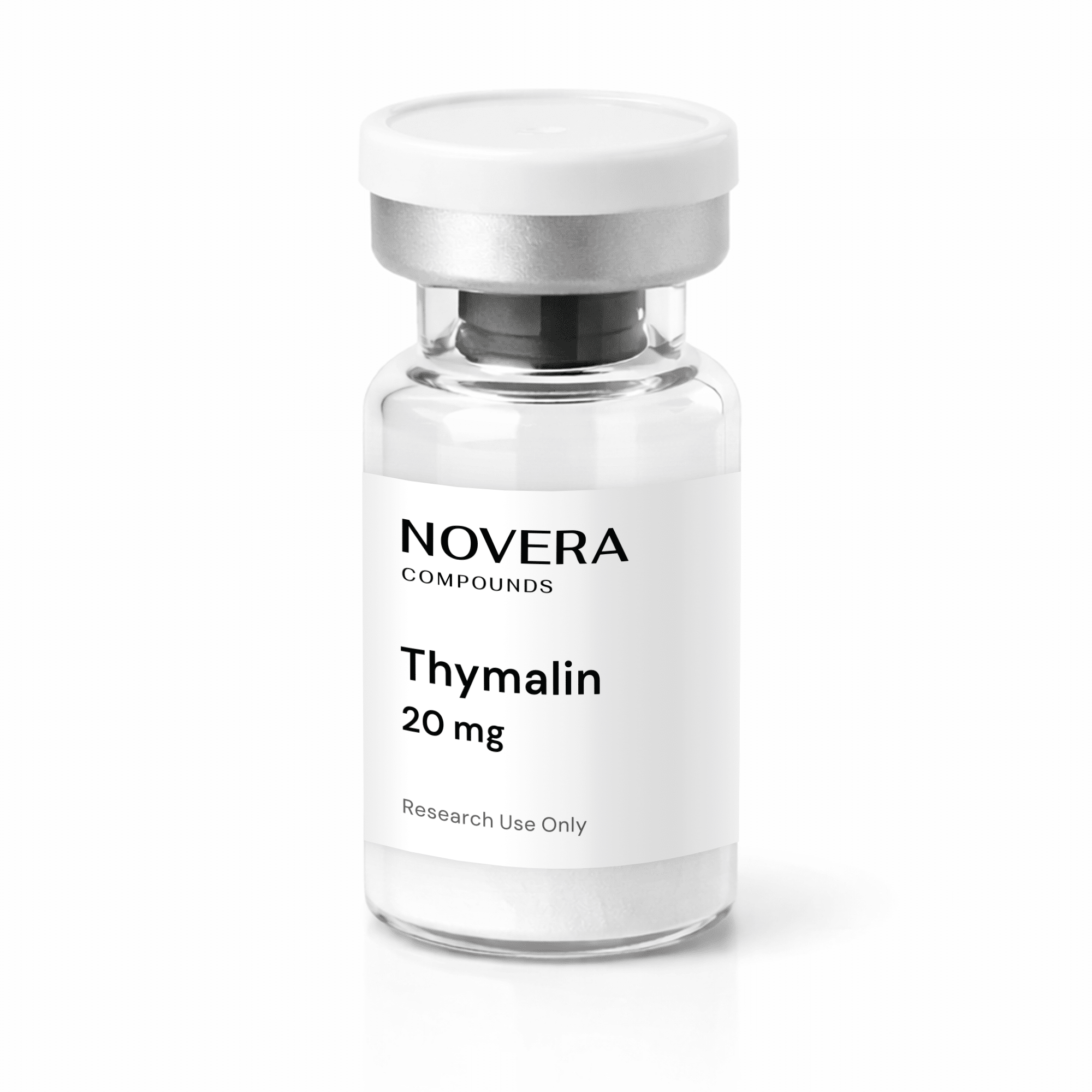
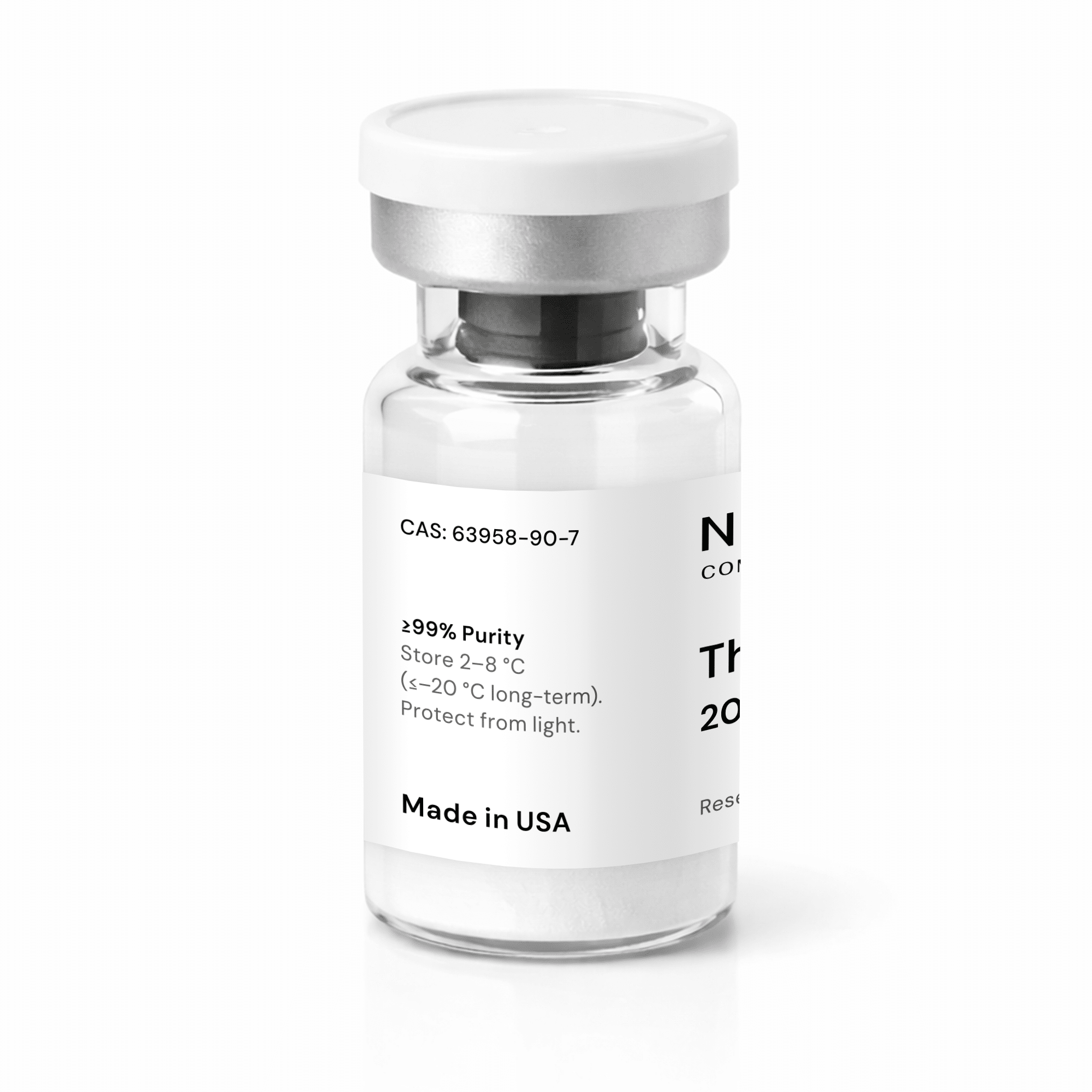
Thymalin (20mg)
Coming Soon
This peptide will be available soon. Join the waitlist to be notified when it launches.
Product description
What is Thymalin (20mg)?
Thymalin (20mg) is a synthetic peptide derived from thymus-related proteins and has been studied in laboratory research for its role in immune system signaling and cellular regulation. Thymalin is part of a class of peptides that may influence immune cell communication and function.- Chemical Formula: C₃₃H₅₄N₁₂O₁₅
- Molecular Weight: 858.864 g/mol
- CAS Number: 63958-90-7
- Sequence: Pyr-Ala-Lys-Ser-Gln-Gly-Gly-Ser-Asn
What are the key features of Thymalin (20mg)?
- Synthetic nonapeptide composed of nine amino acids
- Purity typically ≥95%, verified by HPLC and mass spectrometry
- Supplied as 20 mg lyophilized peptide in a sealed research vial
- Studied in immune signaling and thymic peptide research models
- For laboratory research use only
How is Thymalin (20mg) synthesized?
Thymalin (20mg) is synthesized using solid-phase peptide synthesis (SPPS), a laboratory technique that allows for controlled peptide chain assembly. In SPPS, each amino acid is sequentially added to a solid support to form the complete peptide chain. After synthesis, the peptide is purified by high-performance liquid chromatography (HPLC) to achieve high purity. Mass spectrometry (MS) is used for identity verification, confirming the peptide’s molecular weight and structure. Finally, the peptide is lyophilized to maintain stability during storage and transport.What is Thymalin (20mg) being studied for? What are its possible benefits?
Thymalin (20mg) has been studied for its potential role in regulating immune system signaling, particularly for its involvement in thymus-derived peptides. Thymus-related peptides are frequently studied for their potential effects on immune cell differentiation, communication, and molecular signaling in lymphoid tissues. Research areas involving Thymalin include:- Immune system signaling studies
- Thymus-related peptide regulation research
- Cellular communication within lymphoid tissues
- Gene expression and peptide bioregulator research
- Experimental models of immune cell differentiation
How does Thymalin (20mg) work in research studies?
In laboratory research models, Thymalin (20mg) is studied as a regulatory peptide that may influence cellular communication within immune-related tissues. Short peptides such as those derived from thymic proteins interact with proteins involved in gene expression and intracellular signaling. Researchers examine how these peptides affect communication between immune cells and the signaling pathways within lymphoid tissues. By studying these interactions, scientists aim to better understand the role of thymic peptides in immune regulation and cellular communication. These mechanisms are still being explored in controlled experimental environments.What dosing information exists for Thymalin (20mg)?
Research on Thymalin (20mg) has primarily been conducted in preclinical laboratory studies, including cell culture experiments and animal models. In vitro research typically evaluates peptide activity at nanomolar to micromolar concentrations to observe cellular responses and signaling activity. In animal models, dosing ranges have been explored on a microgram-per-kilogram (µg/kg) scale, depending on the research objectives and experimental design. As Thymalin is a research compound, no standardized human dosing guidelines exist, and its use is limited to laboratory research settings.How should Thymalin (20mg) be stored and handled?
- Store at –20 °C or lower for long-term preservation.
- Protect from light, heat, and moisture.
- Keep vials sealed until ready for laboratory use.
- After reconstitution, store at 2–8 °C for short-term use.
- Avoid repeated freeze-thaw cycles to preserve peptide integrity.
- Refer to the batch certificate of analysis for batch-specific stability data.
Where can I read more research about Thymalin (20mg)?
Researchers interested in thymic peptides and immune regulatory peptide research may consult the following scientific publications:- Dardenne M, Pleau JM. Interactions between zinc and thymulin. Met Based Drugs. 1994;1(2-3):233-239. doi:10.1155/MBD.1994.233
- Bach JF, Dardenne M, Pleau JM, Rosa J. Biochemical characterisation of a serum thymic factor. Nature. 1977;266(5597):55-57. doi:10.1038/266055a0
- Hrinevych IuIa, Bendiuh HD, Khranovs'ka NM, Bilokin' IuM, Ostapenko OM. Vplyv tyroksynu i tymalinu na proliferatsiiu ta apoptoz tymotsytiv u shchuriv pislia tyreoïdektomiï [Effect of thyroxin and thymalin on proliferation and apoptosis of thymocytes in rats after thyroidectomy]. Fiziol Zh (1994). 2004;50(3):39-43.
- Zhukova GV, Schikhlyarova AI, Barteneva TA, Shevchenko AN, Zakharyuta FM. Effect of Thymalin on the Tumor and Thymus under Conditions of Activation Therapy In Vivo. Bull Exp Biol Med. 2018;165(1):80-83. doi:10.1007/s10517-018-4104-z
- Labunets' IF. Vikovi zminy tsyrkadnykh i tsyrkanual'nykh kolyvan' velychyny imunnoï vidpovidi ta chysla klityn u limfoïdnykh orhanakh tvaryn: mozhlyvyĭ zv'iazok z faktoramy tymusa [Age-related changes in circadian and circannual fluctuations of the immune response and the number of cells in lymphoid organs of animals: a possible connection to thymic factors]. Fiziol Zh (1994). 2001;47(5):54-62.
Compliance Statement
This product is intended for laboratory research use only and is not approved for human or veterinary use.Shop with Confidence: Product Authenticity is Guaranteed
All products available at Doctor Medica shop are obtained from respective manufacturers and contain original LOT numbers Contact us if you have any questions about product LOT numbers.


