Your Cart is Empty
Start shopping

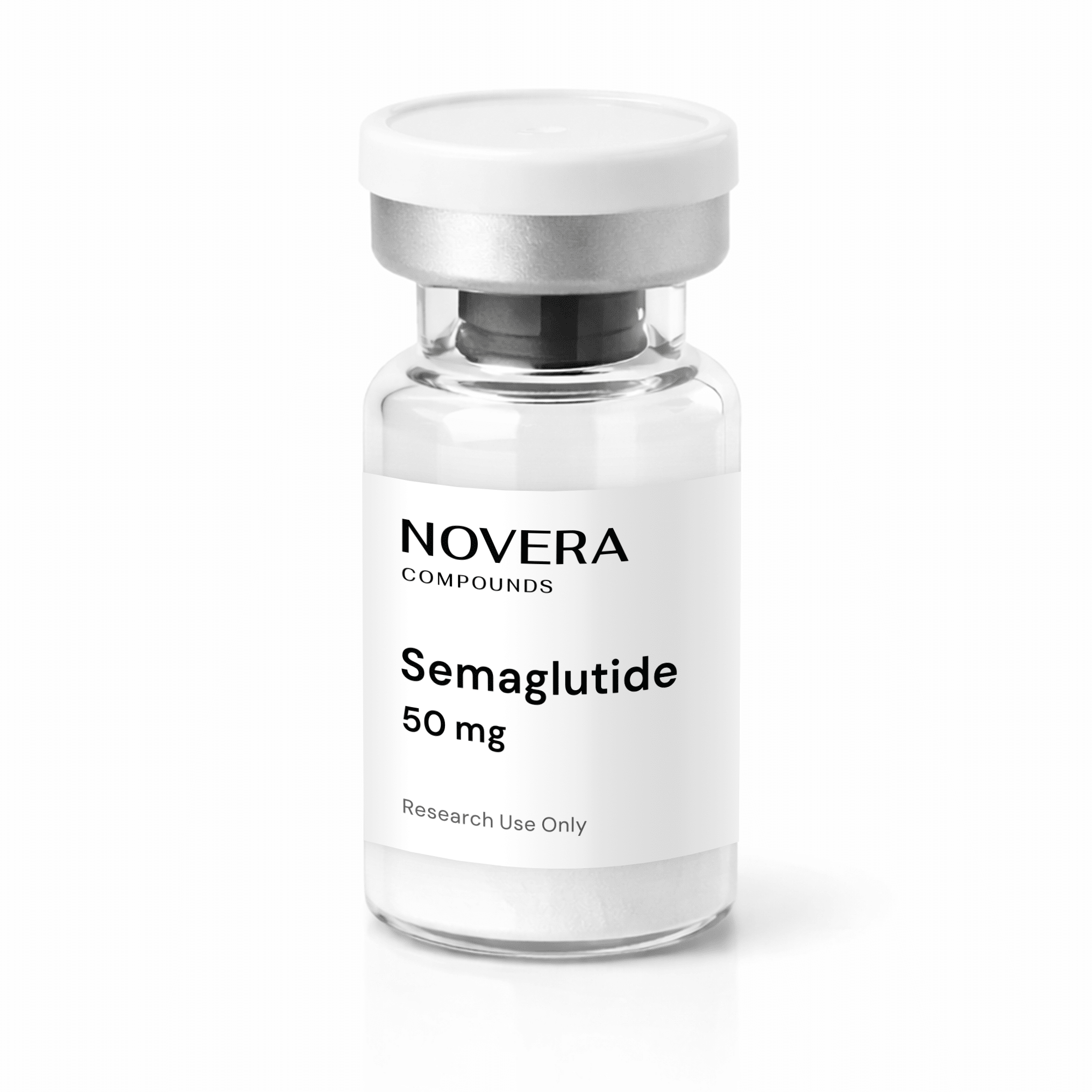
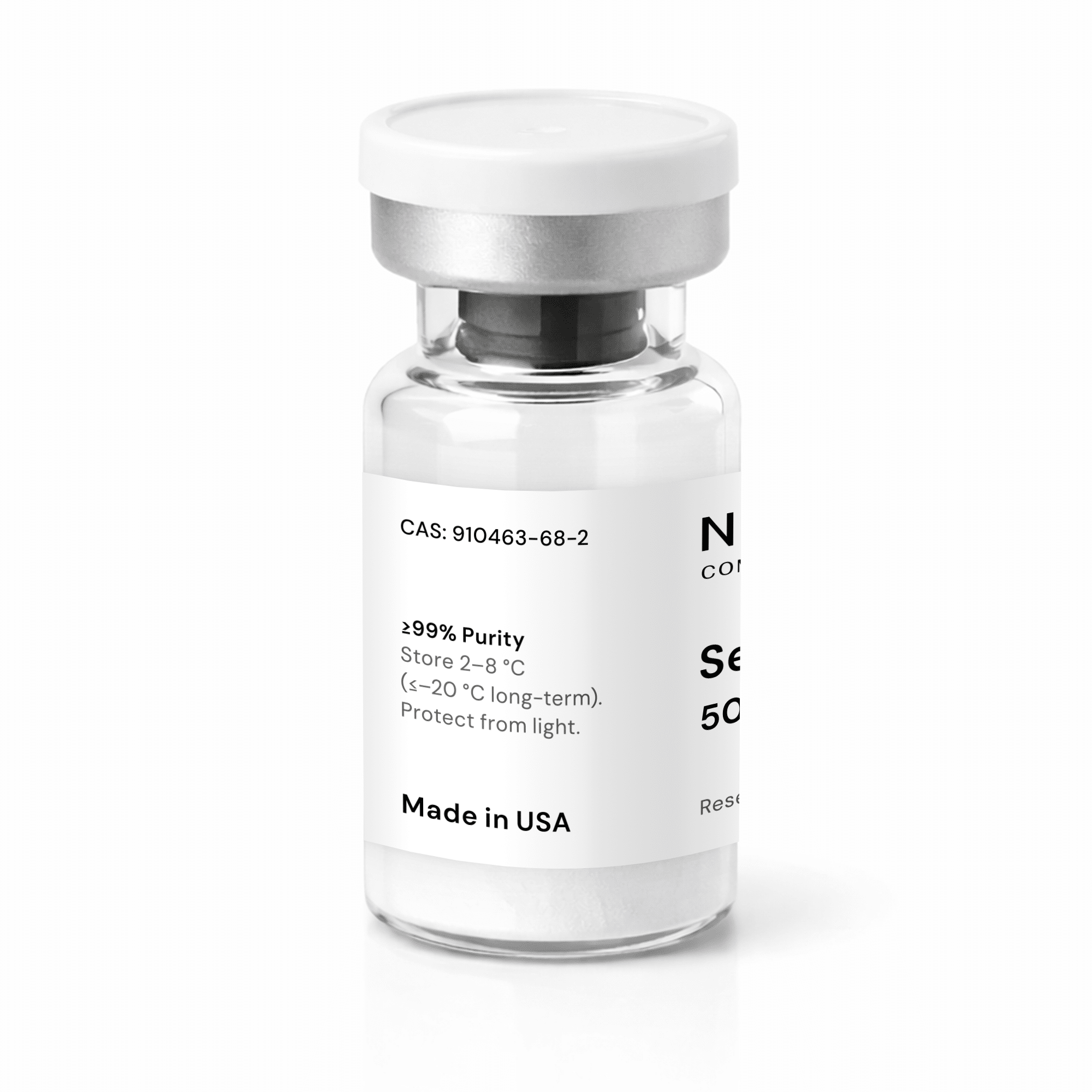
Semaglutide (50 mg)
Tier
| Packs | Discount (%) | For Each |
|---|---|---|
| 1 - 5 | — | $598.00 |
| 6 - 10 | 10.03 % | $538.00 |
| 11 - 20 | 19.06 % | $484.00 |
| 21+ | 27.09 % | $436.00 |
Product description
What is Semaglutide (50mg)?
Semaglutide (50mg) is a synthetic peptide modeled after human glucagon-like peptide-1 (GLP-1), a hormone involved in metabolic signaling and appetite regulation. The molecule contains 31 amino acids and includes structural modifications designed to extend its stability and duration in experimental systems. Semaglutide is commonly categorized among weight loss and metabolic peptides and is supplied in a larger 50 mg vial format to support extensive metabolic or pharmacology studies.- CAS Number: 910463-68-2
- Chemical Formula: C₁₈₇H₂₉₁N₄₅O₅₉
- Molecular Weight: 4113.6 g/mol
- Peptide Sequence: H-His-Aib-Glu-Gly-Thr-Phe-Thr-Ser-Asp-Val-Ser-Ser-Tyr-Leu-Glu-Gly-Gln-Ala-Ala-Lys(AEEAc-AEEAc-γ-Glu-17-carboxyheptadecanoyl)-Glu-Phe-Ile-Ala-Trp-Leu-Val-Arg-Gly-OH
- Synonym: NN9535
What are the key features of Semaglutide (50mg)?
- Large 50 mg vial format, useful for extended or multi-phase studies
- High purity peptide, commonly ≥95–99%, verified by HPLC
- Identity confirmed through mass spectrometry (MS) analysis
- Long-acting GLP-1 analog containing a fatty-acid side chain for albumin interaction
- Frequently used in metabolic, appetite, and pharmacokinetic research models
- Suitable for formulation development and comparative peptide studies
- For laboratory research use only
How is Semaglutide (50mg) synthesized?
Semaglutide is produced using solid-phase peptide synthesis (SPPS), a common laboratory technique used to build peptides one amino acid at a time. During this process, protected amino acids are sequentially attached to a resin support until the full peptide chain is formed. After assembly, the peptide undergoes chemical modification in which a fatty-acid side chain is linked to a lysine residue through specialized spacers. This modification is responsible for semaglutide’s extended stability and slower metabolic breakdown in experimental systems. The synthesized peptide is then purified through high-performance liquid chromatography (HPLC). Analytical testing, including mass spectrometry, verifies the molecular weight and structural accuracy. Additional quality checks may include peptide purity analysis, residual solvent testing, and moisture content evaluation.What is Semaglutide (50mg) being studied for? What are its possible benefits?
Semaglutide has been investigated in numerous research models focused on metabolic regulation and appetite control. In laboratory animals, the peptide has been studied for its effects on food intake, body weight changes, and glucose metabolism. Many studies explore how semaglutide influences biological pathways involved in energy balance, insulin signaling, and nutrient metabolism. Researchers often use it as a benchmark compound when evaluating other incretin-related peptides or long-acting metabolic agents. Additional experimental areas include:- Cardiometabolic biomarker research
- Liver metabolism and lipid regulation
- Neural circuits related to feeding behavior
- Pharmacokinetic and drug-delivery systems
How does Semaglutide (50mg) work in research studies?
In research settings, semaglutide mimics the biological signaling of GLP-1. When introduced into experimental models, it interacts with cellular receptors that influence metabolic processes and appetite signaling pathways. The molecule’s fatty-acid modification enables it to associate with circulating proteins such as albumin. This interaction slows degradation and extends its activity in experimental systems. As a result, researchers can observe prolonged metabolic signaling compared with native GLP-1. Studies using semaglutide often examine its influence on hormonal signaling, neuronal activity related to appetite, and metabolic enzyme pathways. These experiments help scientists better understand mechanisms that regulate body weight and glucose balance.What dosing information exists for Semaglutide (50mg)?
Preclinical dosing of semaglutide spans a broad range depending on species, route, and study aim.- In one chronic rat study, subcutaneous dosing was escalated from 7 µg/kg to 70 µg/kg over 10 days, with 70 µg/kg/day maintained to investigate weight change and sucrose preference.
- In diet-induced obese rodents, subcutaneous doses between 1 and 100 nmol/kg (approximately low to mid µg/kg–mg/kg range depending on species and conversion) have produced graded reductions in food intake and body weight.
- Long-acting formulations such as once-monthly PLGA depots have been tested at doses up to ~192 mg/kg in mice, with assessments focusing on exposure, tolerability, and sustained body-weight effects.
How should Semaglutide (50mg) be stored and handled?
- Store lyophilized Semaglutide at ≤–20 °C. Protect from light and moisture.
- After reconstitution, store solutions at 2–8 °C and minimize freeze–thaw cycles by preparing single-use aliquots.
- Use sterile technique and low-binding labware to minimize peptide adsorption and support reproducibility.
- Maintain accurate records of preparation conditions to support experimental reproducibility.
- For laboratory research use only.
Where can I read more research about Semaglutide (50mg)?
Researchers interested in semaglutide can consult several well-established scientific publications and databases:- Lau J, Bloch P, Schäffer L, Pettersson I, Spetzler J, Kofoed J, Madsen K, Knudsen LB, McGuire J, Steensgaard DB, Strauss HM, Gram DX, Knudsen SM, Nielsen FS, Thygesen P, Reedtz-Runge S, Kruse T. Discovery of the Once-Weekly Glucagon-Like Peptide-1 (GLP-1) Analogue Semaglutide. J Med Chem. 2015;58(18):7370-7380. doi: 10.1021/acs.jmedchem.5b00726. Epub 2015 Sep 11. PMID: 26308095.
- Mahapatra MK, Karuppasamy M, Sahoo BM. Semaglutide, a glucagon like peptide-1 receptor agonist with cardiovascular benefits for management of type 2 diabetes. Rev Endocr Metab Disord. 2022;23(3):521-539. doi:10.1007/s11154-021-09699-1
- Knudsen LB, Lau J. The Discovery and Development of Liraglutide and Semaglutide. Front Endocrinol (Lausanne). 2019;10:155. doi: 10.3389/fendo.2019.00155. PMID: 31031702; PMCID: PMC6474072.
- Liu QK. Mechanisms of action and therapeutic applications of GLP-1 and dual GIP/GLP-1 receptor agonists. Front Endocrinol (Lausanne). 2024;15:1431292. doi: 10.3389/fendo.2024.1431292. PMID: 39114288; PMCID: PMC11304055.
Compliance Statement
This product is intended for laboratory research use only and is not approved for human or veterinary use.Shop with Confidence: Product Authenticity is Guaranteed
All products available at Doctor Medica shop are obtained from respective manufacturers and contain original LOT numbers Contact us if you have any questions about product LOT numbers.


