Your Cart is Empty
Start shopping

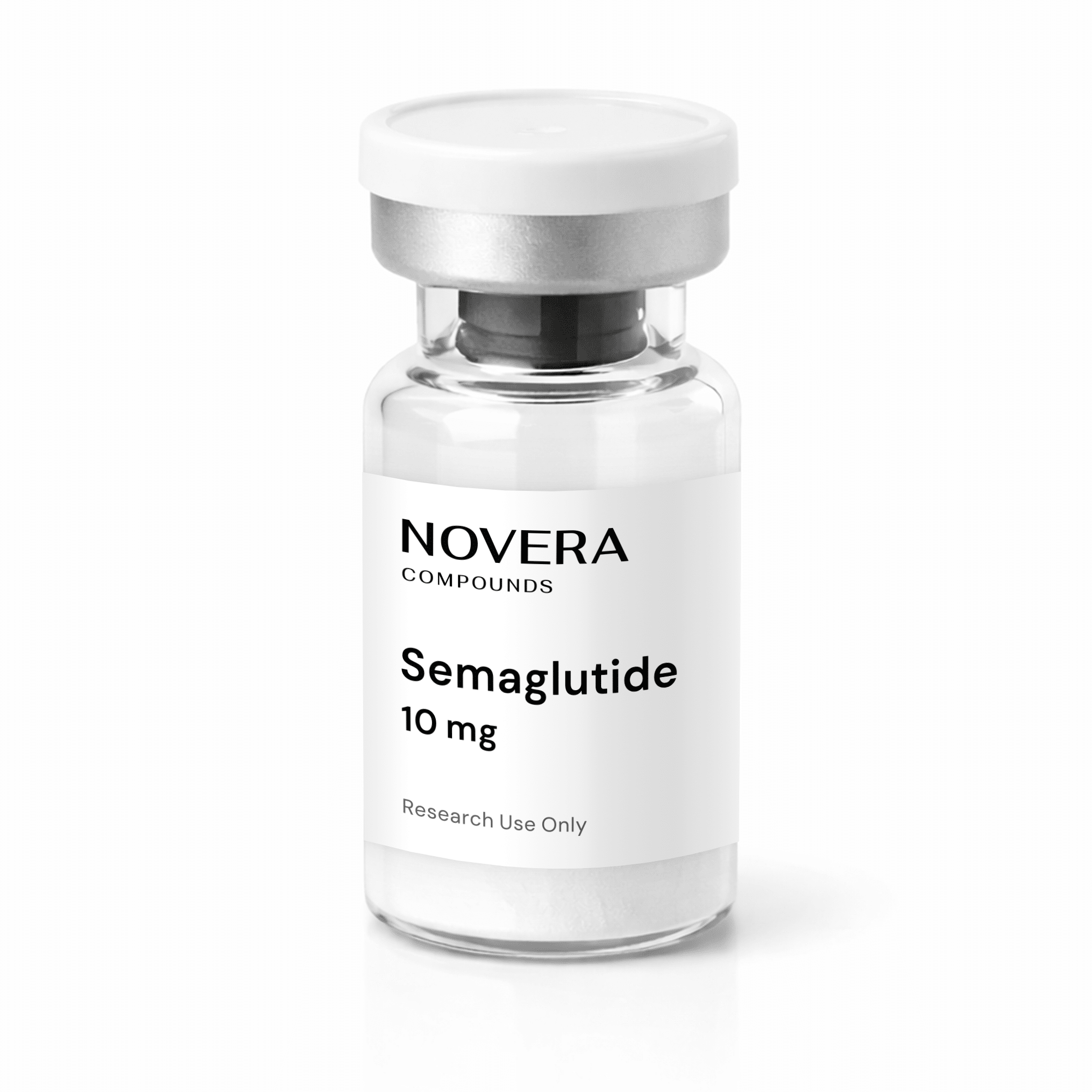
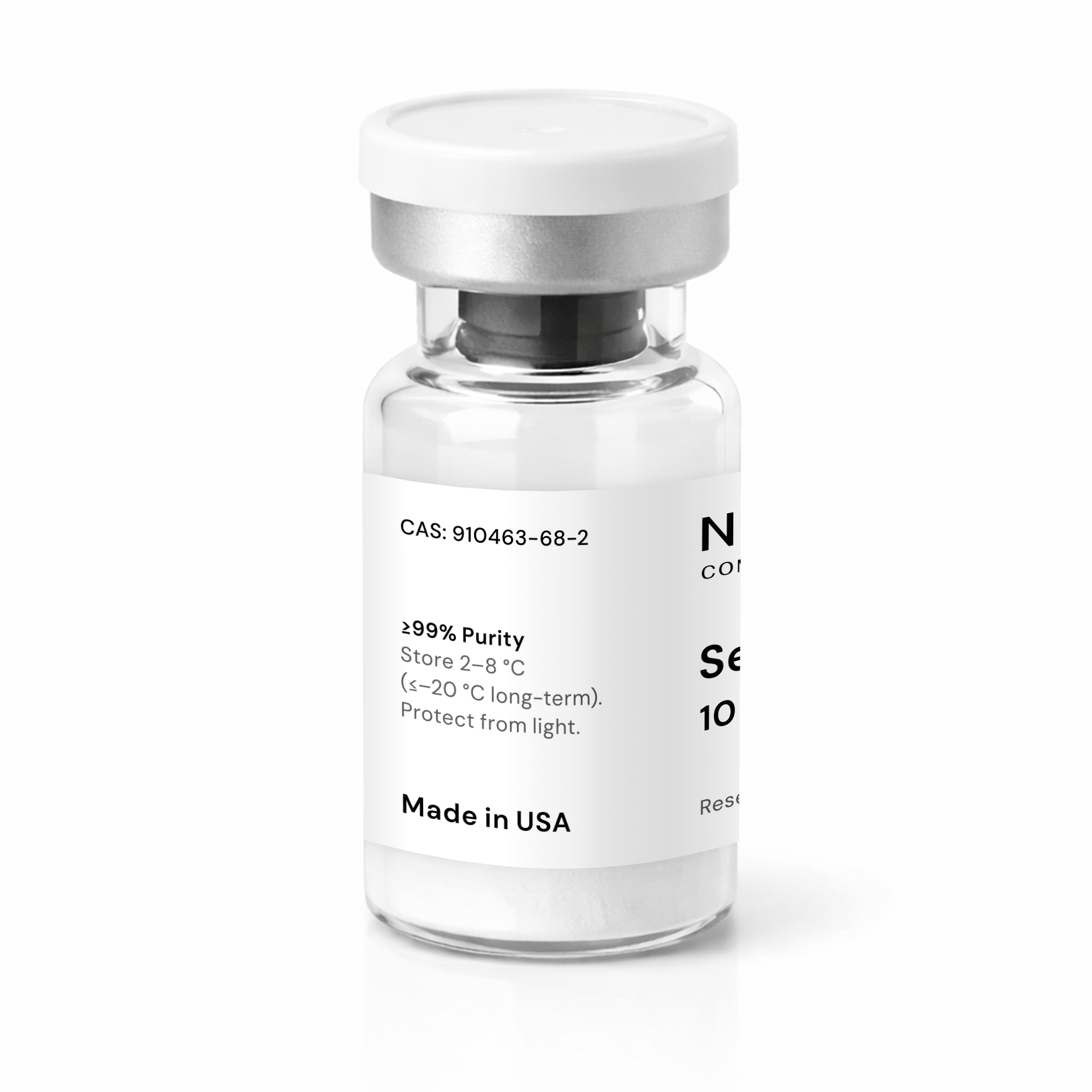
Semaglutide 10mg
Tier
| Packs | Discount (%) | For Each |
|---|---|---|
| 1 - 5 | — | $138.00 |
| 6 - 10 | 10.14 % | $124.00 |
| 11 - 20 | 18.84 % | $112.00 |
| 21+ | 26.81 % | $101.00 |
Product description
What is Semaglutide 10mg?
Semaglutide peptide is a synthetic analog of the endogenous glucagon-like peptide-1 (GLP-1). Classified as a modified peptide, it has been studied for its role in metabolic regulation and cellular signaling. The molecule has a molecular weight of 4113.6 g/mol and contains a 31-amino acid peptide backbone derived from natural GLP-1 (amino acids 7–37), with targeted modifications including Aib substitution at position 8 and C18 fatty acid attachment at position 26. Research-grade versions are typically provided at high purity levels (often ≥98%). Semaglutide 10mg refers to a vial quantity intended strictly for controlled laboratory use.What are the key features of Semaglutide 10mg?
It is supplied as a lyophilized powder designed for reconstitution. It maintains high chemical consistency and is structurally modified to enhance stability during research applications. Its molecular formula is C₁₈₇H₂₉₁N₄₅O₅₉, reflecting its extended structure and lipid attachment. Key features include:- High research-grade purity (≥98–99%)
- Lyophilized powder format for controlled handling
- Modified GLP-1 analog structure for enhanced stability
- Verified identity through standard analytical methods
- Consistent molecular mass and sequence integrity
How is Semaglutide 10mg synthesized?
Semaglutide 10mg for research use is produced using advanced solid-phase peptide synthesis (SPPS), allowing precise control over amino acid sequence assembly and structural integrity. The peptide incorporates specific, well-characterized modifications that distinguish it from native GLP-1 and support enhanced stability in laboratory studies. Key structural features include:- Alanine replaced with α-aminoisobutyric acid (Aib) at position 8, which increases resistance to enzymatic degradation
- Lysine at position 26 conjugated to a C18 fatty acid chain, enabling extended molecular stability and albumin interaction
What Is Semaglutide 10mg Being Studied For?
Semaglutide 10mg is being examined in preclinical research as a model peptide to study metabolic pathways and cellular signaling processes. Current investigations are exploratory and focus on understanding peptide behavior in controlled experimental systems rather than establishing physiological or therapeutic benefits. Primary research areas include:- Metabolic Pathway Analysis: Studied in models evaluating glucose-related and energy-associated cellular processes
- Cellular Signaling: Used to explore general intracellular signaling responses and receptor-mediated activity
- Peptide Stability: Examined for prolonged activity linked to its structural modifications
- Energy Balance Models: Applied in rodent studies assessing metabolic regulation under experimental conditions
How Does Semaglutide 10mg Work in Research Studies?
In preclinical and in vitro studies, Semaglutide 10mg is evaluated as a modified GLP-1–based peptide to assess general cellular signaling and engagement of metabolic pathways. Its stabilized peptide backbone and lipid modification allow extended presence in experimental systems, supporting time-dependent observation of downstream cellular responses. Research models examine changes in protein expression, cellular adaptation, and tissue-level responses following exposure. These effects are highly dependent on experimental design, assay conditions, and model selection. No clinical effects have been established, and all observed activity remains confined to controlled laboratory investigations.What Dosing Information Exists for Semaglutide 10mg?
All dosing information for Semaglutide 10mg is derived exclusively from laboratory and preclinical research settings and is not applicable to humans. Research-derived dosing context includes:- Preclinical rodent models: Commonly studied at 1–3 mg/kg, administered subcutaneously, depending on study design
- In vitro assays: Typically use nanomolar to micromolar concentrations based on cell type and experimental goals
- Model-dependent variation: Dosing is adjusted according to duration, endpoint analysis, and assay methodology
How Should Semaglutide 10mg Be Stored and Handled?
Proper storage and handling are essential to preserve Semaglutide 10mg integrity in research environments. Standard laboratory practices include:- Lyophilized storage: Store at −20 °C, protected from light, heat, and moisture
- Long-term stability: When frozen and unopened, the peptide remains stable for extended periods
- After reconstitution: Store solutions at 2–8 °C and use within protocol-defined time frames
- Handling precautions: Avoid repeated freeze–thaw cycles to prevent degradation
- Aseptic technique: Use sterile procedures during reconstitution and handling to maintain sample quality
Where can I read more research about Semaglutide 10mg?
Relevant peer-reviewed studies on Semaglutide can be found in journals focused on endocrinology, metabolism, pharmacology, and cardiovascular research. The following sources provide foundational information: Tamayo-Trujillo R, Ruiz-Pozo VA, Cadena-Ullauri S, et al. Molecular mechanisms of semaglutide and liraglutide as a therapeutic option for obesity. Frontiers in nutrition. 2024;11. doi:https://doi.org/10.3389/fnut.2024.1398059- Lau J, Bloch P, Schäffer L, et al. Discovery of the Once-Weekly Glucagon-Like Peptide-1 (GLP-1) Analogue Semaglutide. J Med Chem. 2015;58(18):7370-7380. doi:10.1021/acs.jmedchem.5b00726
- Knudsen LB, Lau J. The Discovery and Development of Liraglutide and Semaglutide. Frontiers in Endocrinology. 2019;10(155). doi:https://doi.org/10.3389/fendo.2019.00155
- Loomba R, Abdelmalek MF, Armstrong MJ, et al. Semaglutide 2·4 mg once weekly in patients with non-alcoholic steatohepatitis-related cirrhosis: a randomised, placebo-controlled phase 2 trial. Lancet Gastroenterol Hepatol. 2023;8(6):511-522. doi:10.1016/S2468-1253(23)00068-7
- Yang XD, Yang YY. Clinical Pharmacokinetics of Semaglutide: A Systematic Review. Drug Design Development and Therapy. 2024;Volume 18:2555-2570. doi:https://doi.org/10.2147/dddt.s470826
Compliance Statement
This product is intended for laboratory research use only and is not approved for human or veterinary use.Shop with Confidence: Product Authenticity is Guaranteed
All products available at Doctor Medica shop are obtained from respective manufacturers and contain original LOT numbers Contact us if you have any questions about product LOT numbers.


