Your Cart is Empty
Start shopping

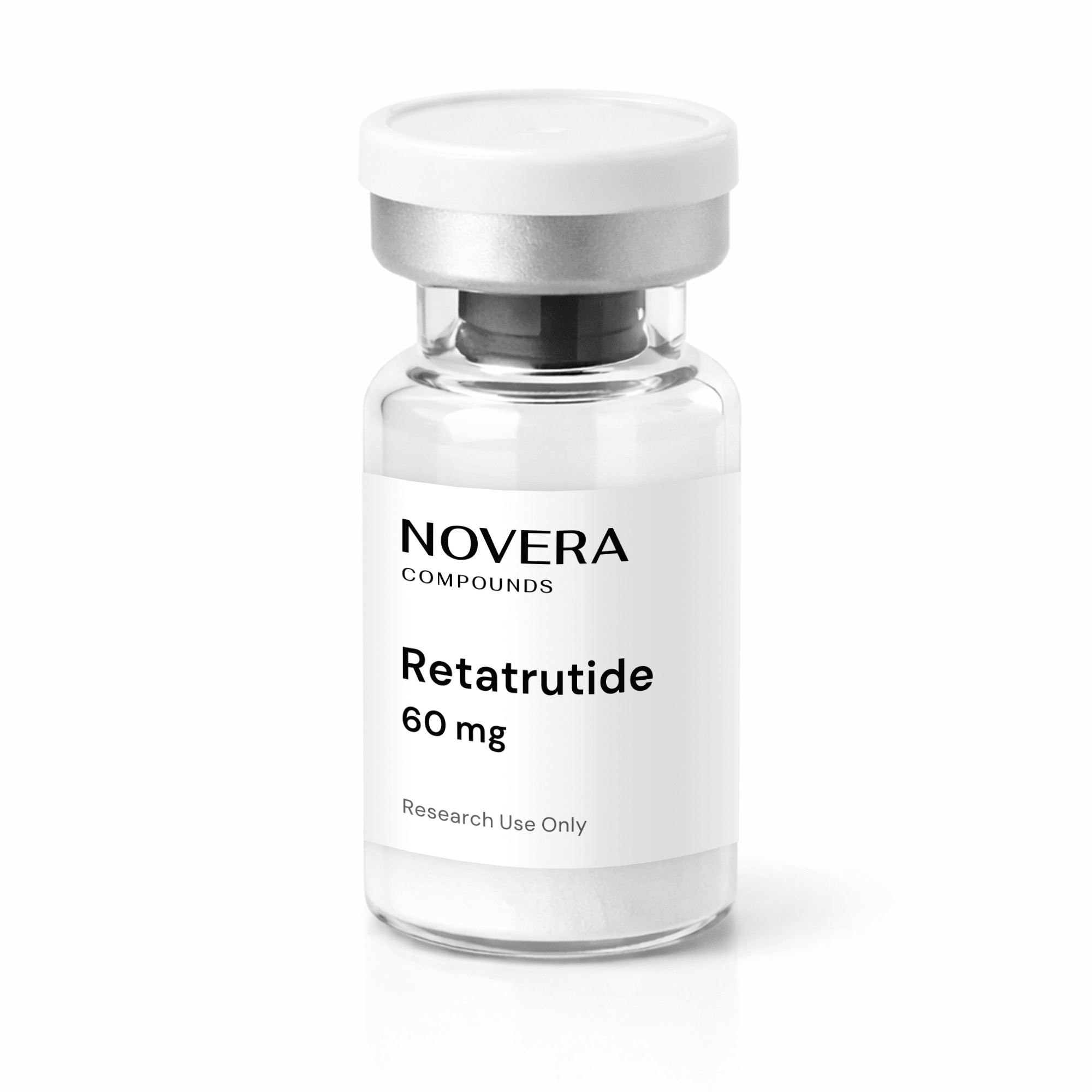
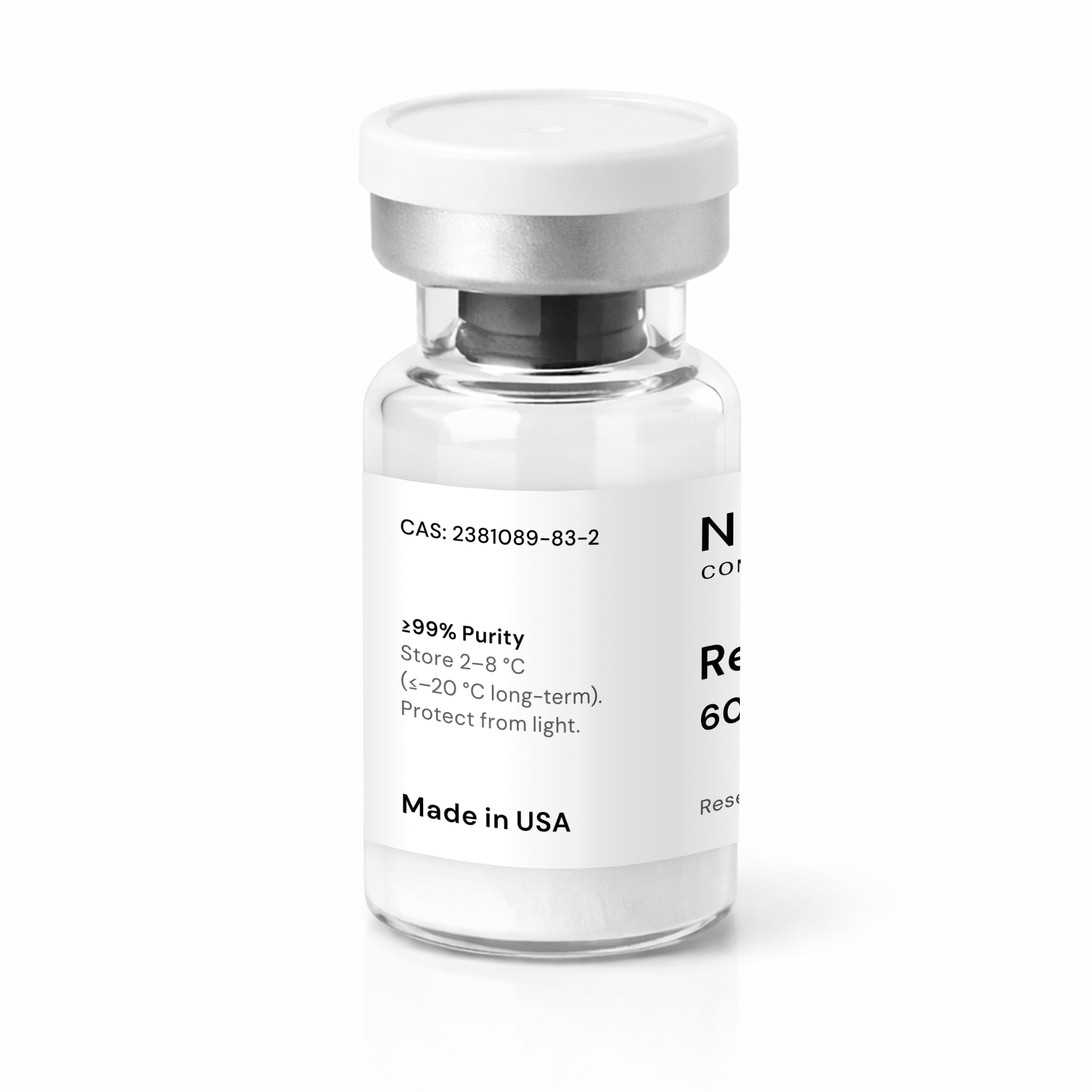
Retatrutide (60 mg)
Tier
| Packs | Discount (%) | For Each |
|---|---|---|
| 1 - 5 | — | $598.00 |
| 6 - 10 | 10.03 % | $538.00 |
| 11 - 20 | 19.06 % | $484.00 |
| 21+ | 27.09 % | $436.00 |
Product description
What is Retatrutide (60 mg)?
Retatrutide (60mg) is a synthetic investigational peptide studied in laboratory settings for its role in metabolic signaling and energy regulation research. It belongs to a class of engineered peptide analogs designed to interact with hormone-related pathways involved in metabolic balance. Retatrutide is being studied to better understand complex signaling networks associated with cellular energy use and metabolic adaptation. Structurally, Retatrutide consists of exactly 39 amino acids and has a molecular weight of 4731.33 g/mol. The peptide typically includes modifications such as fatty acid conjugation and C-terminal amidation, which may influence stability and interaction with biological systems during experimental studies. Research-grade preparations commonly report purity levels of 95–99%, verified by analytical testing.What are the key features of Retatrutide (60 mg)?
- Chemical Formula: C₂₂₁H₃₄₂N₄₆O₆₈
- Molecular Weight: 4731.3 g/mol
- CAS Number: 2381089-83-2
- Purity: typically ≥95–99%, verified through analytical testing
- Supplied as 60 mg lyophilized peptide in sealed vials
- Structural modifications: fatty acid conjugation and C-terminal amidation
- Intended for laboratory investigation of metabolic signaling pathways
- For research use only
How is Retatrutide (60 mg) synthesized?
Retatrutide is produced by synthetic peptide synthesis, most commonly via solid-phase peptide synthesis (SPPS). This method allows scientists to assemble the peptide chain step by step from individual amino acids, ensuring precise control over the final sequence and structure. After synthesis, the peptide is typically purified to remove incomplete sequences or byproducts. High-performance liquid chromatography (HPLC) is frequently used to confirm purity, while mass spectrometry (MS) verifies the expected molecular weight and molecular identity. Additional structural modifications may be introduced during synthesis, including fatty acid chains or specialized linkers. These features are designed to enhance peptide stability and extend activity during laboratory experiments. Analytical verification ensures that each batch meets the quality standards required for scientific investigation.What is Retatrutide (60 mg) being studied for? What are its possible benefits?
Retatrutide has been studied in several areas of metabolic and physiological research. Laboratory investigations focus on how modified peptides may influence biological pathways involved in energy balance and metabolism. Areas of ongoing research involving Retatrutide include:- Metabolic signaling and cellular energy regulation
- Hormonal communication pathways
- Nutrient utilization and metabolic adaptation
- Regulatory mechanisms involved in energy expenditure
- Interactions between peptide hormones and metabolic tissues
How does Retatrutide (60 mg) work in research studies?
In experimental models, Retatrutide is examined to assess its effects on biological signaling pathways that regulate metabolism and energy use. Peptides act as signaling molecules, allowing cells to communicate and coordinate responses to environmental and metabolic changes. Researchers study how engineered peptides, such as Retatrutide, may interact with metabolic signaling systems that regulate nutrient balance, energy expenditure, and hormonal signaling. Structural modifications, such as fatty acid conjugation, may allow the peptide to remain active longer in experimental environments, providing researchers with extended observation periods. Through controlled laboratory experiments, scientists evaluate how these peptide interactions affect cellular signaling, energy metabolism, and regulatory processes.What dosing information exists for Retatrutide (60 mg)?
Information about dosing primarily comes from experimental studies rather than standardized laboratory protocols. In research settings, peptide concentrations are often selected based on the study design, experimental model, and research objectives. Preclinical investigations involving related investigational peptides have examined various dosing schedules and concentrations in controlled models. These studies are designed to evaluate pharmacokinetic properties, signaling responses, and biological interactions. It is important to note that no established human dosing guidelines exist for Retatrutide. Laboratory researchers determine appropriate concentrations based on experimental requirements and institutional research protocols.How should Retatrutide (60 mg) be stored and handled?
- Store under temperature-controlled conditions per laboratory protocol and certificate of analysis.
- For extended storage, follow temperature conditions specified in the product certificate of analysis.
- Protect the lyophilized powder from light, heat, and moisture.
- Room-temperature exposure during transport is generally acceptable for short periods.
- Once reconstituted, store under appropriate temperature-controlled conditions per laboratory protocol for short-term use.
- Avoid repeated freeze-thaw cycles to preserve peptide integrity.
- Refer to the batch certificate of analysis for batch-specific stability data.
Where can I read more research about Retatrutide (60 mg)?
- Coskun T, Urva S, Roell WC, et al. LY3437943, a novel triple glucagon, GIP, and GLP-1 receptor agonist for glycemic control and weight loss: From discovery to clinical proof of concept. Cell Metab. 2022;34(9):1234-1247.e9. doi:10.1016/j.cmet.2022.07.013
- Ma J, Hu X, Zhang W, Tao M, Wang M, Lu W. Comparison of the effects of Liraglutide, Tirzepatide, and Retatrutide on diabetic kidney disease in db/db mice. Endocrine. 2025;87(1):159-169. doi:10.1007/s12020-024-03998-8
- Finan B, Ma T, Ottaway N, et al. Unimolecular dual incretins maximize metabolic benefits in rodents, monkeys, and humans. Sci Transl Med. 2013;5(209):209ra151. doi:10.1126/scitranslmed.3007218
- Willard FS, Douros JD, Gabe MB, et al. Tirzepatide is an imbalanced and biased dual GIP and GLP-1 receptor agonist. JCI Insight. 2020;5(17):e140532. Published 2020 Sep 3. doi:10.1172/jci.insight.140532
- National Center for Biotechnology Information. PubChem Compound Summary for CID 171390338, Retatrutide. https://pubchem.ncbi.nlm.nih.gov/compound/Retatrutide
Compliance Statement
This product is intended for laboratory research use only and is not approved for human or veterinary use.Shop with Confidence: Product Authenticity is Guaranteed
All products available at Doctor Medica shop are obtained from respective manufacturers and contain original LOT numbers Contact us if you have any questions about product LOT numbers.


