Your Cart is Empty
Start shopping

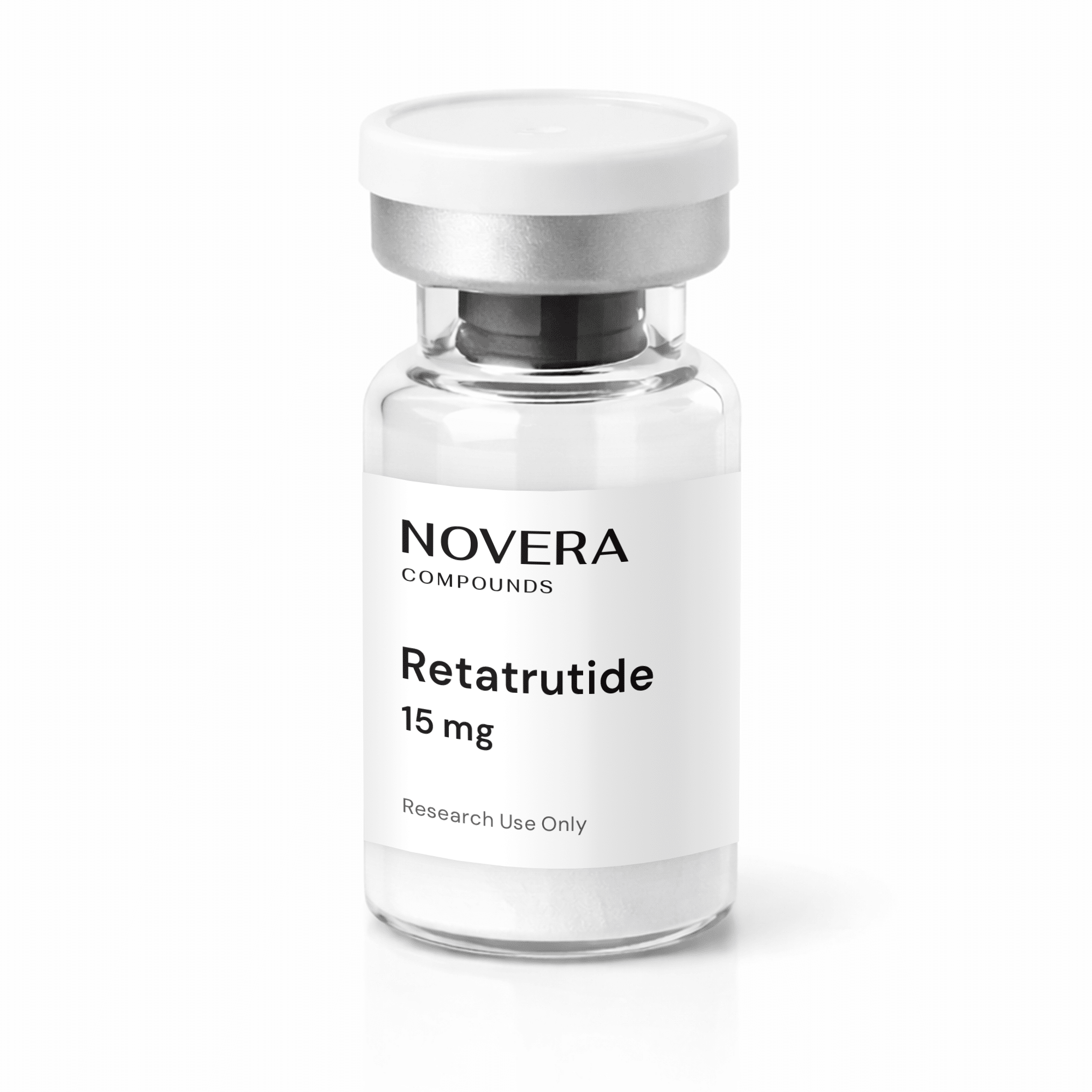
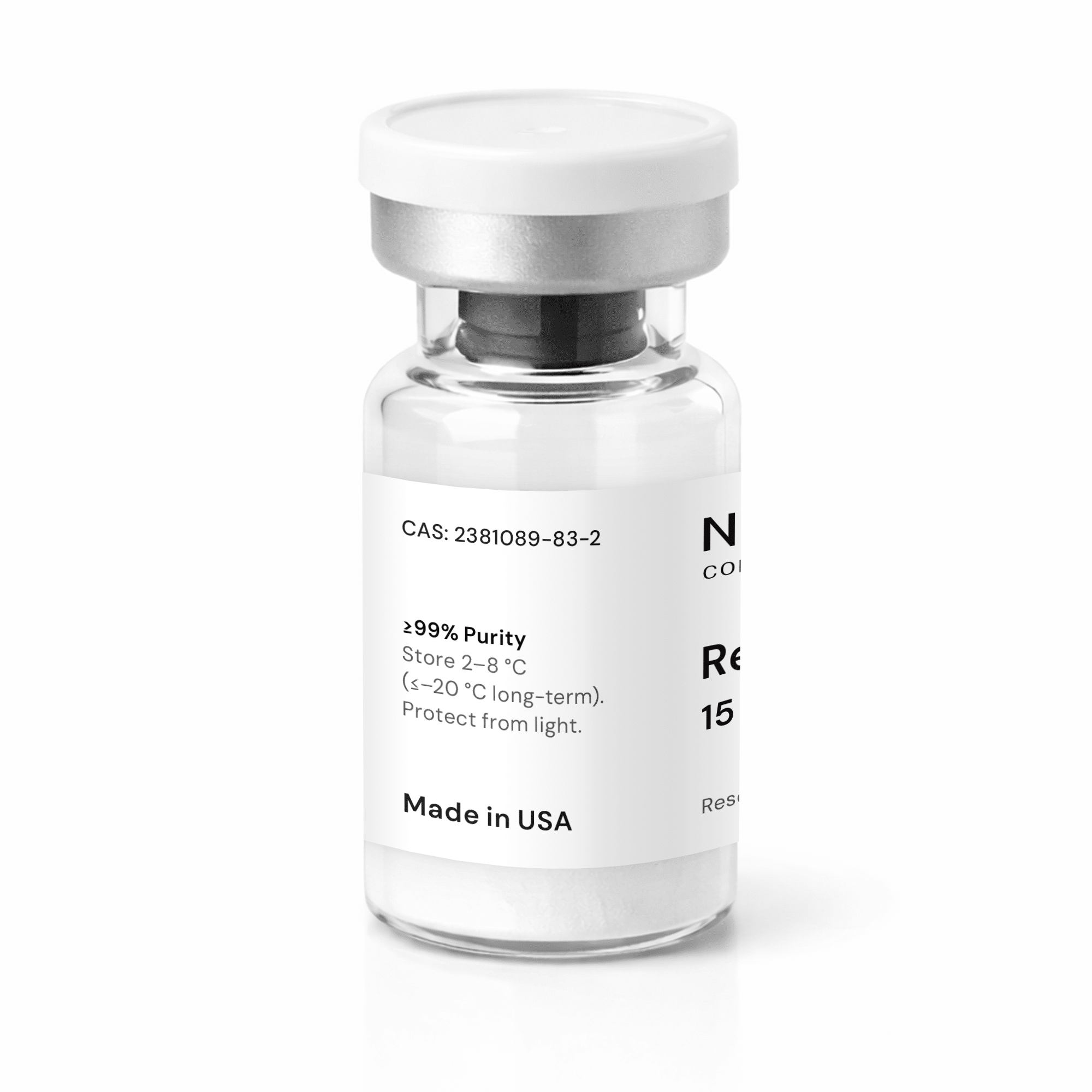
Retatrutide 15mg
Tier
| Packs | Discount (%) | For Each |
|---|---|---|
| 1 - 5 | — | $165.00 |
| 6 - 10 | 9.7 % | $149.00 |
| 11 - 20 | 18.79 % | $134.00 |
| 21+ | 26.67 % | $121.00 |
Product description
What is Retatrutide (15 mg)?
Retatrutide (15 mg) is a weight loss and metabolic peptide classified as a synthetic investigational compound studied in metabolic and cellular signaling research. Derived from hormone-related peptide frameworks, it has been examined for its effects on multi-receptor metabolic signaling processes involving GLP-1, GIP, and glucagon receptor pathways. From a chemical perspective, Retatrutide consists of 39 amino acids and has a molecular weight of 4,731.33 g/mol. It includes structural modifications such as fatty acid conjugation and C-terminal amidation, which may influence peptide stability and protein binding in experimental systems. Research-grade preparations typically report purity levels greater than 95–99%, verified by analytical testing.What are the key features of Retatrutide (15 mg)?
- Chemical Formula: C₂₂₁H₃₄₂N₄₆O₆₈
- Molecular Weight: 4,731.33 g/mol
- CAS Number: 2381089-83-2
- Purity: typically ≥95–99%, verified by analytical testing
- Supplied as 15 mg lyophilized peptide in sealed vials
- Structural modifications: fatty acid conjugation and C-terminal amidation
- Intended for laboratory investigation of metabolic signaling pathways
- For research use only
How is Retatrutide (15 mg) synthesized?
Retatrutide is produced using solid-phase peptide synthesis (SPPS), a method that allows researchers to assemble the peptide sequence step-by-step using protected amino acids, ensuring precise control over the final structure. After synthesis, the peptide is purified by high-performance liquid chromatography (HPLC) to achieve high purity. Mass spectrometry (MS) confirms the peptide's molecular weight and structural integrity. The peptide is then lyophilized to maintain stability during storage and transportation. In metabolic peptide research, related formulations such as Retatrutide (12 mg) and Retatrutide (60 mg) are also studied in experimental models to examine dose-dependent receptor activation, endocrine signaling, and energy homeostasis pathways.What is Retatrutide (15 mg) being studied for? What are its possible benefits?
Retatrutide has been studied in various areas of metabolic and physiological research. As a triple receptor agonist targeting GLP-1R, GIPR, and glucagon receptors simultaneously, it is investigated for how this multi-receptor engagement may influence metabolic signaling differently from dual or single receptor agonists. For comparative context, researchers may reference Semaglutide, a selective GLP-1 receptor agonist, and Tirzepatide, a dual GIP/GLP-1 receptor agonist, when examining how incremental receptor targeting across this compound class affects metabolic pathway outcomes. Research areas involving Retatrutide include:- Metabolic pathway regulation
- Energy balance and nutrient signaling
- Hormone-related peptide signaling systems
- Cellular energy utilization
- Multi-receptor agonism and endocrine signaling coordination
- Metabolic adaptation in experimental models
How does Retatrutide (15 mg) work in research studies?
In laboratory studies, Retatrutide is investigated for its potential to modulate biological signaling through simultaneous engagement of three receptor pathways: the glucagon-like peptide-1 receptor (GLP-1R), the glucose-dependent insulinotropic polypeptide receptor (GIPR), and the glucagon receptor (GCGR). This triple receptor activity is the defining mechanistic feature that distinguishes Retatrutide from related compounds: Semaglutide acts on GLP-1R alone, while Tirzepatide targets GLP-1R and GIPR without glucagon receptor involvement. Researchers examine how this multi-receptor engagement may influence nutrient signaling, energy expenditure, and hormonal coordination in experimental systems. Structural features such as fatty acid conjugation and sequence modifications may extend the peptide's stability and allow it to remain active longer in experimental environments, which is relevant to pharmacokinetic studies examining receptor occupancy and downstream signaling duration. By studying these mechanisms in controlled settings, scientists aim to understand how simultaneous engagement of complementary metabolic receptor pathways contributes to broader physiological processes.What dosing information exists for Retatrutide (15 mg)?
Available dosing information comes from experimental and preclinical studies rather than standardized laboratory protocols. Published research has reported the following reference ranges:- Preclinical (rodent) models: doses in the range of 0.1–3 nmol/kg administered at periodic intervals to evaluate pharmacokinetics, receptor activation, and metabolic signaling responses
- Early-phase clinical investigations: escalating dose protocols beginning at sub-milligram weekly doses, as reported in Phase 1 and Phase 2 trial literature (Coskun et al., 2022)
- In vitro systems: receptor binding and activation studies conducted at nanomolar concentrations to evaluate GLP-1R, GIPR, and GCGR engagement
How should Retatrutide (15 mg) be stored and handled?
Lyophilized peptide preparations should be stored under conditions that preserve stability and minimize degradation.Storage
- Long-term (lyophilized): ≤–20 °C; refer to the batch certificate of analysis for lot-specific shelf life data
- Short-term (lyophilized): 2–8 °C acceptable for shorter storage periods
- Post-reconstitution: Refrigerate at 2–8 °C and use within the timeframe specified by the research protocol or product documentation
- Protect from light, heat, and moisture at all times; brief room-temperature exposure during transport is acceptable
Handling
- Use aseptic technique when reconstituting and aliquoting
- Avoid repeated freeze-thaw cycles to preserve peptide integrity
- Follow all institutional biosafety guidelines; consult the Safety Data Sheet (SDS) provided with the product for comprehensive safety information
Where can I read more research about Retatrutide (15 mg)?
- Rosenstock J, Frias J, Jastreboff AM, et al. Retatrutide, a GIP, GLP-1 and glucagon receptor agonist, for people with type 2 diabetes: a randomised, double-blind, placebo and active-controlled, parallel-group, phase 2 trial conducted in the USA. Lancet. 2023;402(10401):529-544. doi:10.1016/S0140-6736(23)01053-X
- Abdrabou Abouelmagd A, Abdelrehim AM, Bashir MN, et al. Efficacy and safety of retatrutide, a novel GLP-1, GIP, and glucagon receptor agonist for obesity treatment: a systematic review and meta-analysis of randomized controlled trials. Proc (Bayl Univ Med Cent). 2025;38(3):291-303. Published 2025 Feb 5. doi:10.1080/08998280.2025.2456441
- Sanyal AJ, Kaplan LM, Frias JP, et al. Triple hormone receptor agonist retatrutide for metabolic dysfunction-associated steatotic liver disease: a randomized phase 2a trial. Nat Med. 2024;30(7):2037-2048. doi:10.1038/s41591-024-03018-2
- Abdul-Rahman T, Roy P, Ahmed FK, et al. The power of three: Retatrutide's role in modern obesity and diabetes therapy. Eur J Pharmacol. 2024;985:177095. doi:10.1016/j.ejphar.2024.177095
- Li W, Zhou Q, Cong Z, et al. Structural insights into the triple agonism at GLP-1R, GIPR and GCGR manifested by retatrutide. Cell Discov. 2024;10(1):77. Published 2024 Jul 17. doi:10.1038/s41421-024-00700-0
Compliance Statement
This product is intended for laboratory research use only and is not approved for human or veterinary use.Shop with Confidence: Product Authenticity is Guaranteed
All products available at Doctor Medica shop are obtained from respective manufacturers and contain original LOT numbers Contact us if you have any questions about product LOT numbers.


