Your Cart is Empty
Start shopping

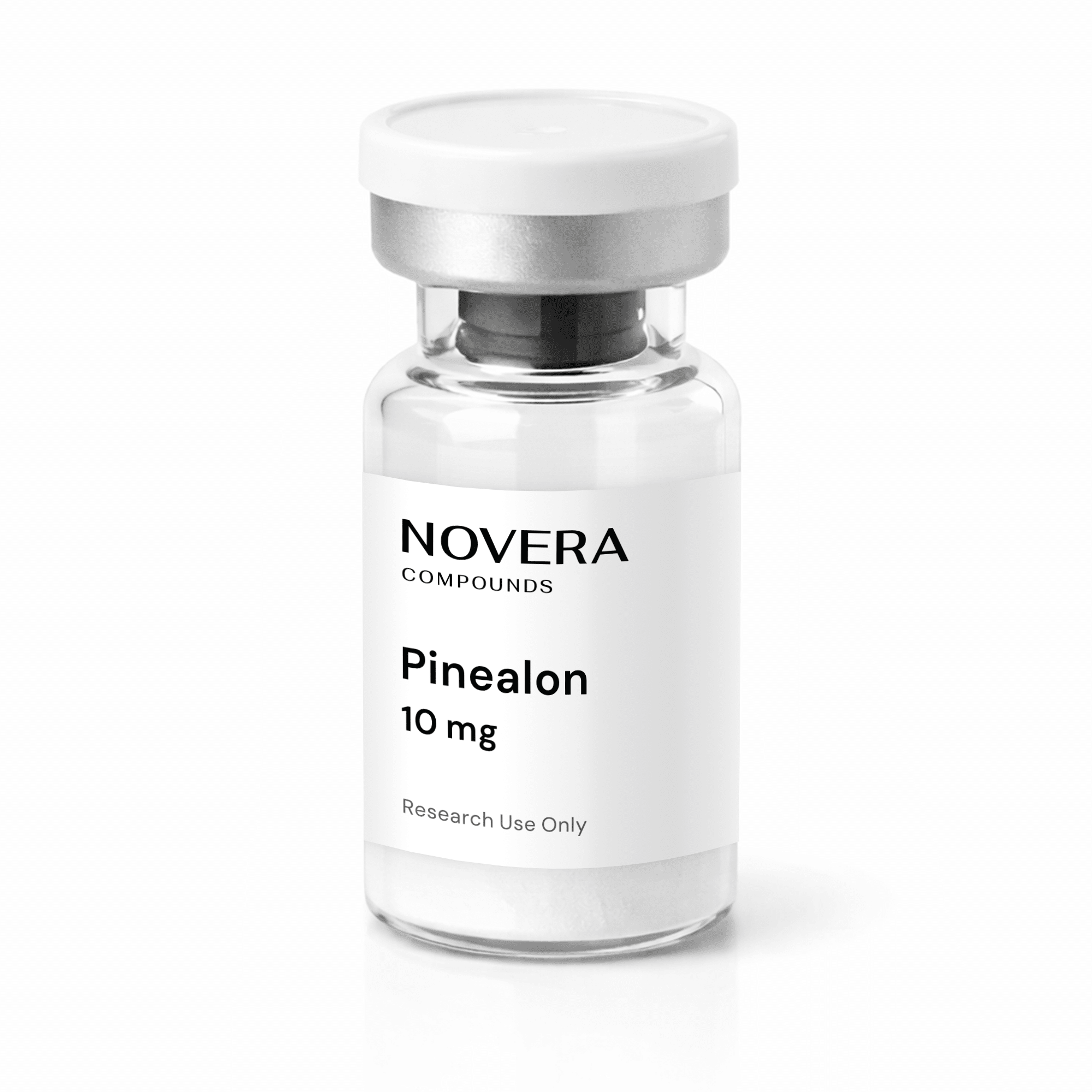
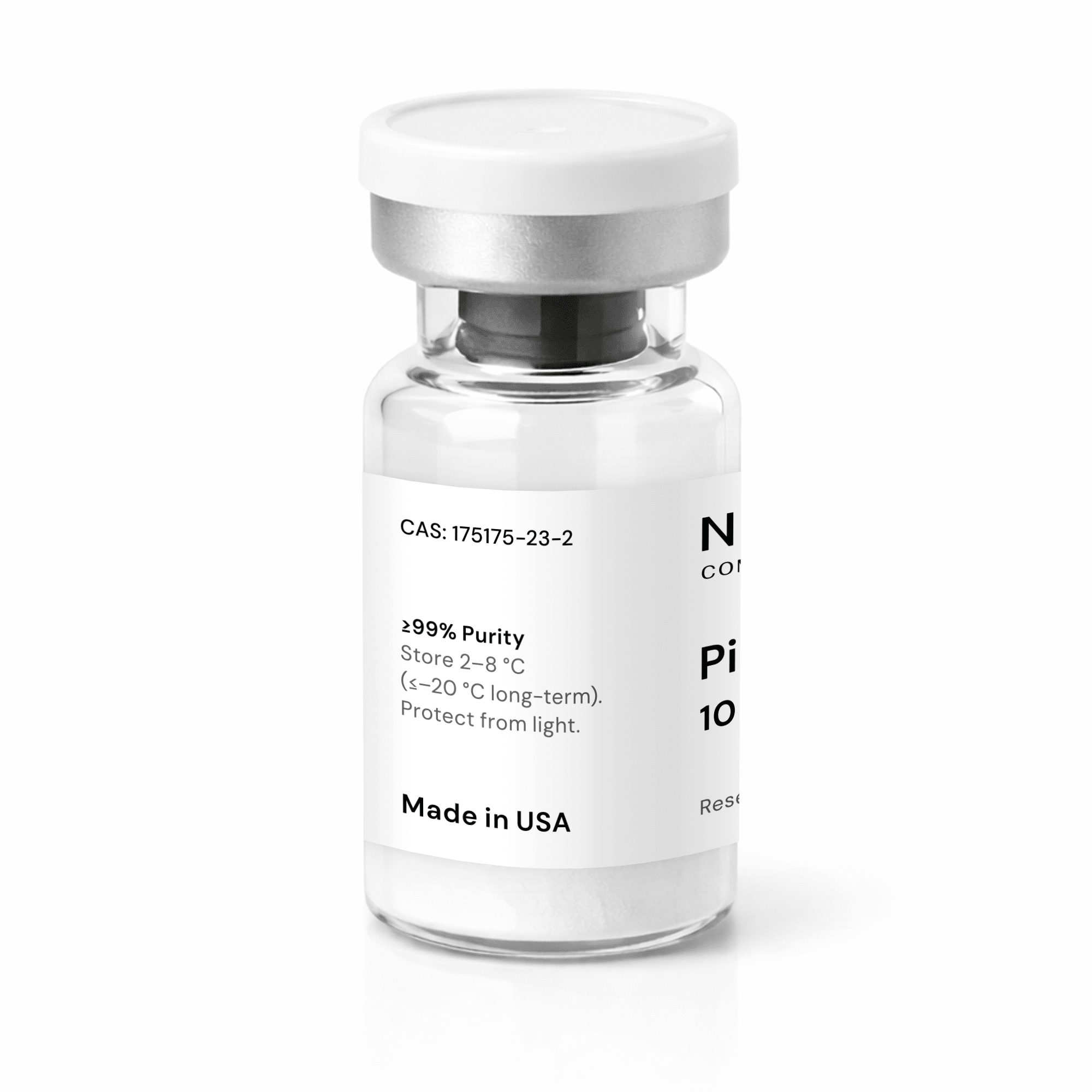
Pinealon (10mg)
Product description
What is Pinealon (10mg)?
Pinealon is a short synthetic peptide composed of three amino acids: Glu-Asp-Arg (EDR). It belongs to a group of small regulatory peptides studied in laboratory research for their potential influence on cellular processes related to aging and gene regulation. Research has focused on Pinealon’s role in neural tissues and genomic activity. Research-grade preparations typically have ≥98% purity, verified using analytical methods such as high-performance liquid chromatography (HPLC) and mass spectrometry (MS). Pinealon has been studied in experimental models examining cellular signaling, DNA expression patterns, and mechanisms of neurobiological aging.What are the key features of Pinealon (10mg)?
Pinealon (10mg) is supplied as a lyophilized peptide for controlled laboratory research. It is commonly used in experimental studies examining cellular signaling and gene expression in neural tissues. Key features of Pinealon (10mg) include:- CAS Number: 175175-23-2
- Peptide sequence: Glu-Asp-Arg (EDR)
- Sequence length: 3 amino acids
- Subcategory: Brain, Cognitive & Nootropic Peptides
- Molecular weight: 418.40 g/mol
- Chemical Formula: C₁₅H₂₆N₆O₈
- Purity: Typically ≥98%, verified by HPLC analysis
- Analytical verification: Identity confirmed using mass spectrometry (MS)
- Format: Lyophilized powder in a 10 mg research vial
How is Pinealon (10mg) synthesized?
Pinealon is produced through synthetic peptide manufacturing, commonly using solid-phase peptide synthesis (SPPS). This widely used technique allows researchers to assemble short peptide chains by sequentially linking protected amino acids in a controlled chemical process. The resulting compound reproduces the precise EDR tripeptide sequence identified in experimental research. After synthesis, the peptide is purified and verified. High-performance liquid chromatography (HPLC) confirms purity levels, while mass spectrometry (MS) verifies molecular weight and structural identity. The purified compound is lyophilized into a powder to minimize degradation and facilitate laboratory handling.What is Pinealon (10mg) being studied for? What are its possible benefits?
Pinealon has been studied in laboratory research focused on neurobiology, aging mechanisms, and genetic regulation within cells. Studies have explored whether small peptides like EDR interact with chromatin structures or influence transcriptional activity in certain cell types. These investigations primarily examine cellular and molecular processes in controlled experimental settings. Some research has explored Pinealon in models investigating neuronal survival, cellular stress responses, and age-related molecular changes in brain tissue. Additional work has assessed whether the peptide may influence gene expression patterns associated with metabolic activity or structural proteins. These potential biological roles remain under investigation, with findings limited to preclinical and experimental studies rather than clinical applications.How does Pinealon (10mg) work in research studies?
In experimental studies, Pinealon is researched for its potential role in regulating gene activity within cells. Laboratory investigations suggest that short peptides like EDR may interact with DNA or chromatin, potentially influencing the expression of specific genes in cultured cells or experimental models. Researchers have also examined whether the peptide may influence cellular signaling pathways associated with aging or neuronal stability. In these studies, Pinealon is explored as a molecular regulator that could affect processes such as protein synthesis, metabolic regulation, or cellular stress responses. These mechanisms remain under investigation, and current findings are limited to laboratory research.What dosing information exists for Pinealon (10mg)?
Published studies on Pinealon primarily involve preclinical research models and in-vitro experiments. In some animal research settings, small peptide regulators have been studied at doses in micrograms per kilogram (µg/kg), often administered over short experimental periods to evaluate biological responses in laboratory conditions. Dosing protocols vary widely depending on experimental design, species studied, and research objectives. No standardized dosing guidelines exist for human use. Reported experimental concentrations are strictly for research purposes and should not be interpreted as clinical recommendations.How should Pinealon (10mg) be stored and handled?
To minimize degradation, Pinealon should be stored in its lyophilized form at –20 °C or lower. Cold storage preserves peptide structural integrity and reduces the risk of degradation. Protect the vial from light, heat, and moisture, as these factors may affect peptide integrity. After reconstitution with a suitable sterile laboratory solvent, solutions are typically stored at 2–8 °C for short-term use in laboratory experiments. Researchers often prepare small aliquots to minimize repeated freeze-thaw cycles, which can compromise peptide structural integrity. Peptide integrity may vary depending on solvent choice and laboratory handling conditions.Where can I read more research about Pinealon (10mg)?
Several scientific publications and research databases provide information about Pinealon and related peptide studies. Researchers interested in exploring the topic further may consult the following sources:- Mendzheritsky AM, Karantysh GV, Ryzhak GA, Prokofiev VN. Pinealon and Cortexin influence on behavior and neurochemical processes in 18-month aged rats within hypoxia and hypothermia. Adv Gerontol. 2015;28(3):532-539.
- Khavinson V, Ribakova Y, Kulebiakin K, et al. Pinealon increases cell viability by suppression of free radical levels and activating proliferative processes. Rejuvenation Res. 2011;14(5):535-541. doi:10.1089/rej.2011.1172
- Mendzheritski AM, Karantysh GV, Abramchuk VA, Ryzhak GA. Effect of peptide geroprotectors on the navigation system learning and caspase-3 in brain structures in rats of different age. Adv Gerontol. 2013;26(2):252-257.
- National Center for Biotechnology Information. PubChem Compound Summary for CID 10273502, Glu-Asp-Arg. https://pubchem.ncbi.nlm.nih.gov/compound/Glu-Asp-Arg
Compliance Statement
This product is intended for laboratory research use only and is not approved for human or veterinary use.Shop with Confidence: Product Authenticity is Guaranteed
All products available at Doctor Medica shop are obtained from respective manufacturers and contain original LOT numbers Contact us if you have any questions about product LOT numbers.


