Your Cart is Empty
Start shopping

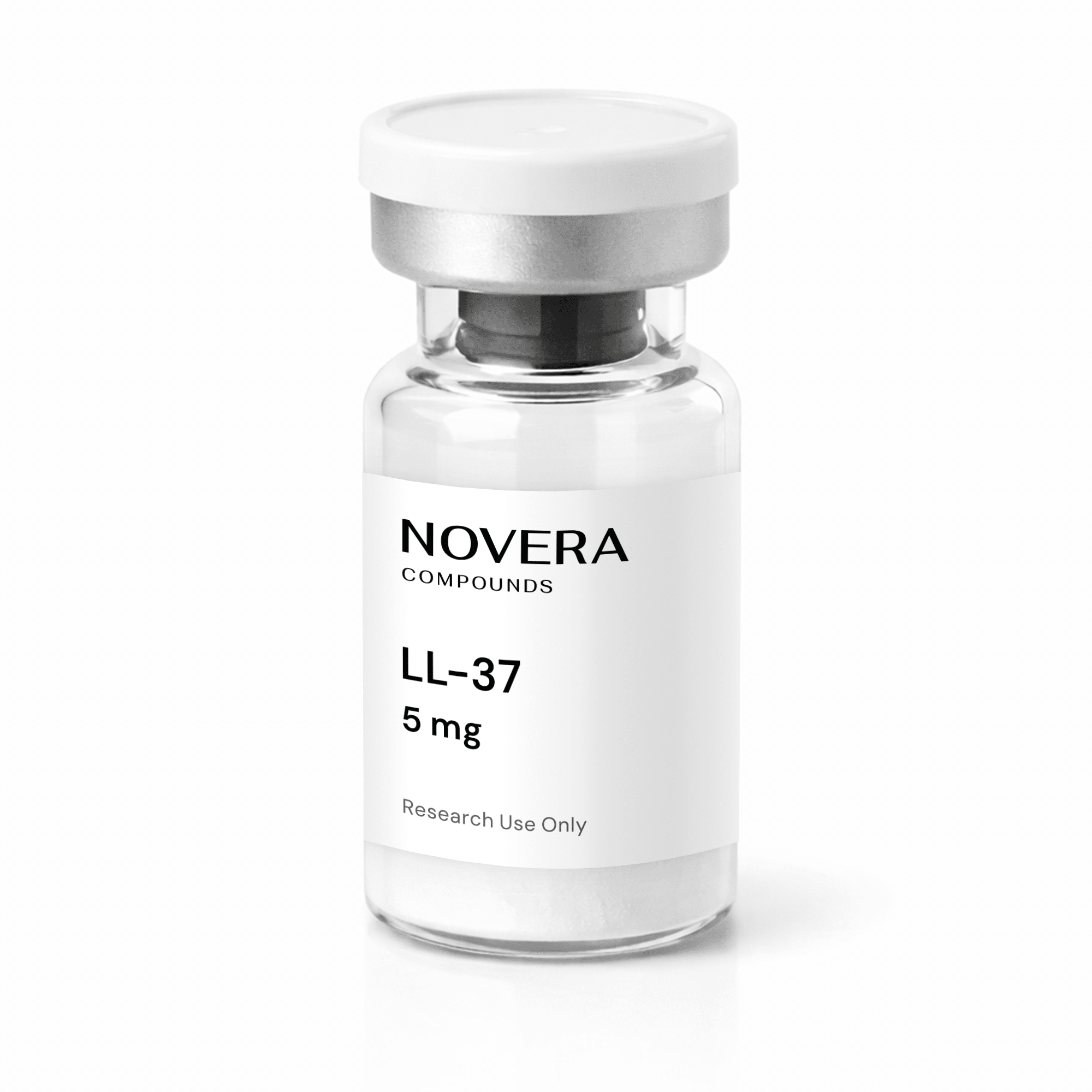
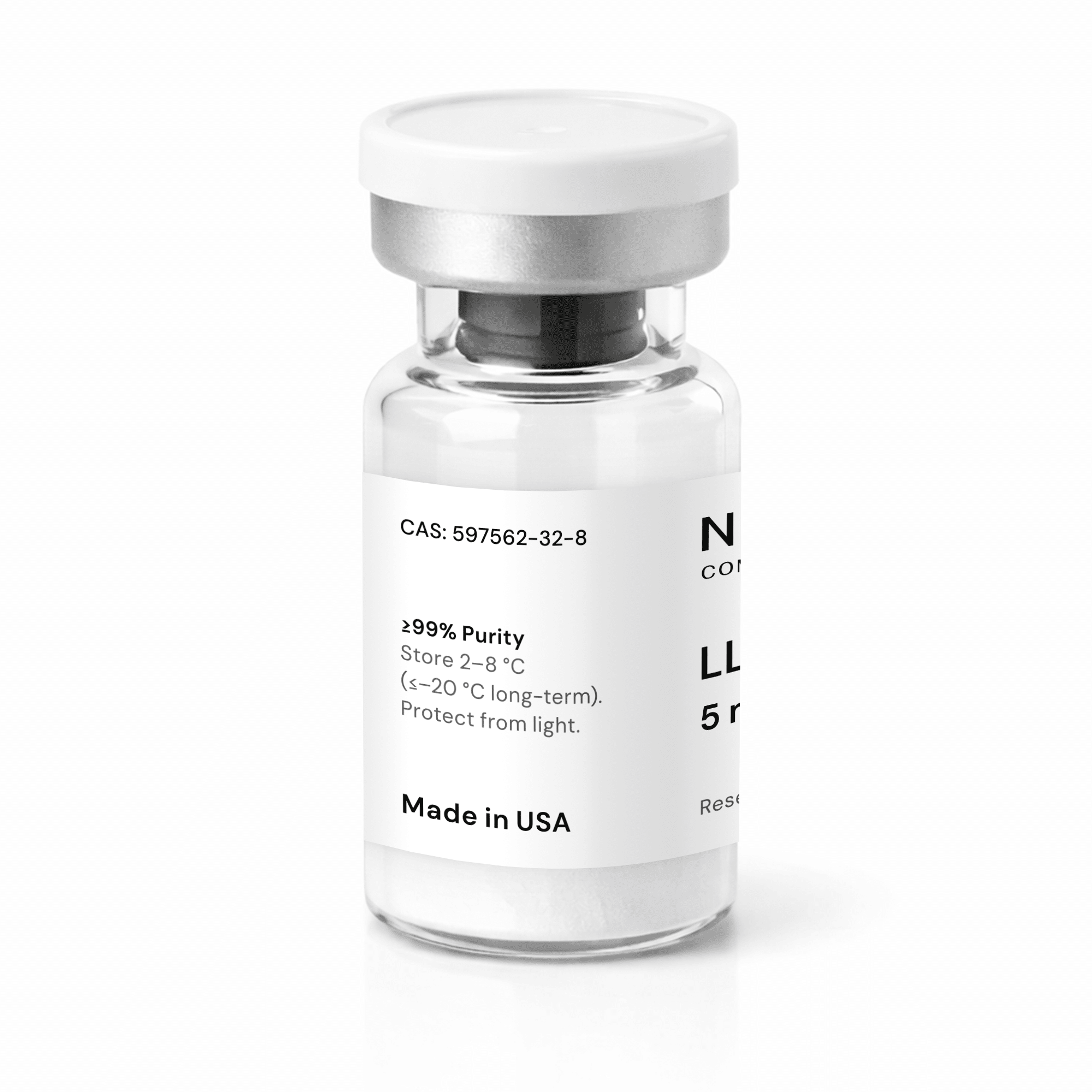
LL37
Coming Soon
This peptide will be available soon. Join the waitlist to be notified when it launches.
Tier
| Packs | Discount (%) | For Each |
|---|---|---|
| 1 - 5 | — | $91.00 |
| 6 - 10 | 1.1 % | $90.00 |
| 11 - 20 | 2.2 % | $89.00 |
| 21+ | 3.3 % | $88.00 |
Product description
What Is LL37?
LL37 is a naturally occurring antimicrobial peptide derived from the human cathelicidin family. It consists of 37 amino acids and has an exact molecular weight of 4493.3 g/mol. In preclinical and in vitro research, LL37 is studied for its role in innate immune defense, antimicrobial activity, and modulation of cellular signaling processes. LL37 is supplied as a high-purity (>95%) lyophilized powder in laboratory-grade vials. Researchers commonly buy LL37 to investigate antimicrobial mechanisms, immune-related signaling, and cellular response pathways under controlled experimental conditions.What Are the Key Features of LL37?
The primary features of LL37 make it ideal for controlled laboratory studies, with verified high purity, a synthetic formulation, and consistent antimicrobial peptide activity for reliable LL37 for research applications.- Supplied in lyophilized vials (commonly ranging from 1–10 mg, depending on supplier)
- High purity peptide (>95%), verified by HPLC
- Fully synthetic formulation for reproducible experimental results
- Stable under recommended storage conditions
- Suitable for studies involving antimicrobial activity, immune modulation, and cellular signaling
- Intended strictly for laboratory research use only
How Is LL37 Synthesized?
LL37 is produced using solid-phase peptide synthesis (SPPS), a method that enables precise control over amino acid sequence and peptide length. Following synthesis, the peptide is analyzed using high-performance liquid chromatography (HPLC) and mass spectrometry (MS) to confirm purity, molecular weight, and sequence identity. This synthetic approach replicates the native LL37 peptide while eliminating variability associated with biological extraction. As a result, researchers using LL37 can rely on consistent material quality to support reproducible in vitro and preclinical research.What Is LL37 Being Studied For?
LL37 is investigated in preclinical and in vitro research as a model antimicrobial and immune-regulatory peptide. Current areas of study include:- Antimicrobial Activity: Examination of interactions with bacterial membranes and microbial surfaces in controlled laboratory systems
- Immune Modulation: Evaluation of chemotactic responses, cytokine signaling, and immune cell communication pathways
- Inflammatory Signaling: Analysis of cellular inflammatory responses and immune regulation in experimental models
- Wound Healing and Tissue Repair: Exploration of peptide-mediated cellular processes related to regeneration and repair signaling
How Does LL37 Work in Research Studies?
In in vitro and preclinical research, LL37 is studied for its ability to interact with microbial membranes and influence cellular signaling pathways associated with immune defense. Its synthetic composition allows precise control over concentration and exposure in experimental systems. Researchers use LL37 to investigate antimicrobial mechanisms, immune modulation, and cell–peptide interactions under reproducible conditions. These studies provide a consistent platform for examining fundamental biological processes related to innate immunity and host defense.What Dosing Information Exists for LL37?
All reported dosing information for LL37 is limited to laboratory and preclinical research applications:- In vitro assays: Commonly 1–50 µg/mL in cellular and microbial studies
- Preclinical murine models: Typically 0.5–5 mg/kg administered under controlled experimental conditions
How Should LL37 Be Stored and Handled?
Proper storage and handling are essential to maintain LL37 stability and performance in experimental workflows:- Lyophilized peptide: Store at −20 °C, protected from light and moisture
- After reconstitution: Short-term storage at 2–8 °C is recommended
- Handling precautions: Avoid repeated freeze–thaw cycles to preserve structural integrity
- Shelf life: Up to 24 months when stored under recommended conditions, with stability dependent on proper temperature control and protection from moisture/humidity exposure.
Where can I read more research about LL37?
Researchers seeking detailed experimental and preclinical data on LL37 can access peer-reviewed publications, scientific databases, and laboratory studies to support reproducible LL37 research.- Dürr UH, Sudheendra US, Ramamoorthy A. LL-37, the only human member of the cathelicidin family of antimicrobial peptides. Biochim Biophys Acta. 2006;1758(9):1408-1425. doi:10.1016/j.bbamem.2006.03.030
- Barlow PG, Beaumont PE, Cosseau C, et al. The human cathelicidin LL-37 preferentially promotes apoptosis of infected airway epithelium. Am J Respir Cell Mol Biol. 2010;43(6):692-702. doi:10.1165/rcmb.2009-0250OC
- Zanetti M. Cathelicidins, multifunctional peptides of the innate immunity. J Leukoc Biol. 2004;75(1):39-48. doi:10.1189/jlb.0403147
- Voronko OE, Khotina VA, Kashirskikh DA, Lee AA, Gasanov VAO. Antimicrobial Peptides of the Cathelicidin Family: Focus on LL-37 and Its Modifications. Int J Mol Sci. 2025;26(16):8103. Published 2025 Aug 21. doi:10.3390/ijms26168103
- Vandamme D, Landuyt B, Luyten W, Schoofs L. A comprehensive summary of LL-37, the factotum human cathelicidin peptide. Cell Immunol. 2012;280(1):22-35. doi:10.1016/j.cellimm.2012.11.009
Shop with Confidence: Product Authenticity is Guaranteed
All products available at Doctor Medica shop are obtained from respective manufacturers and contain original LOT numbers Contact us if you have any questions about product LOT numbers.


