Your Cart is Empty
Start shopping

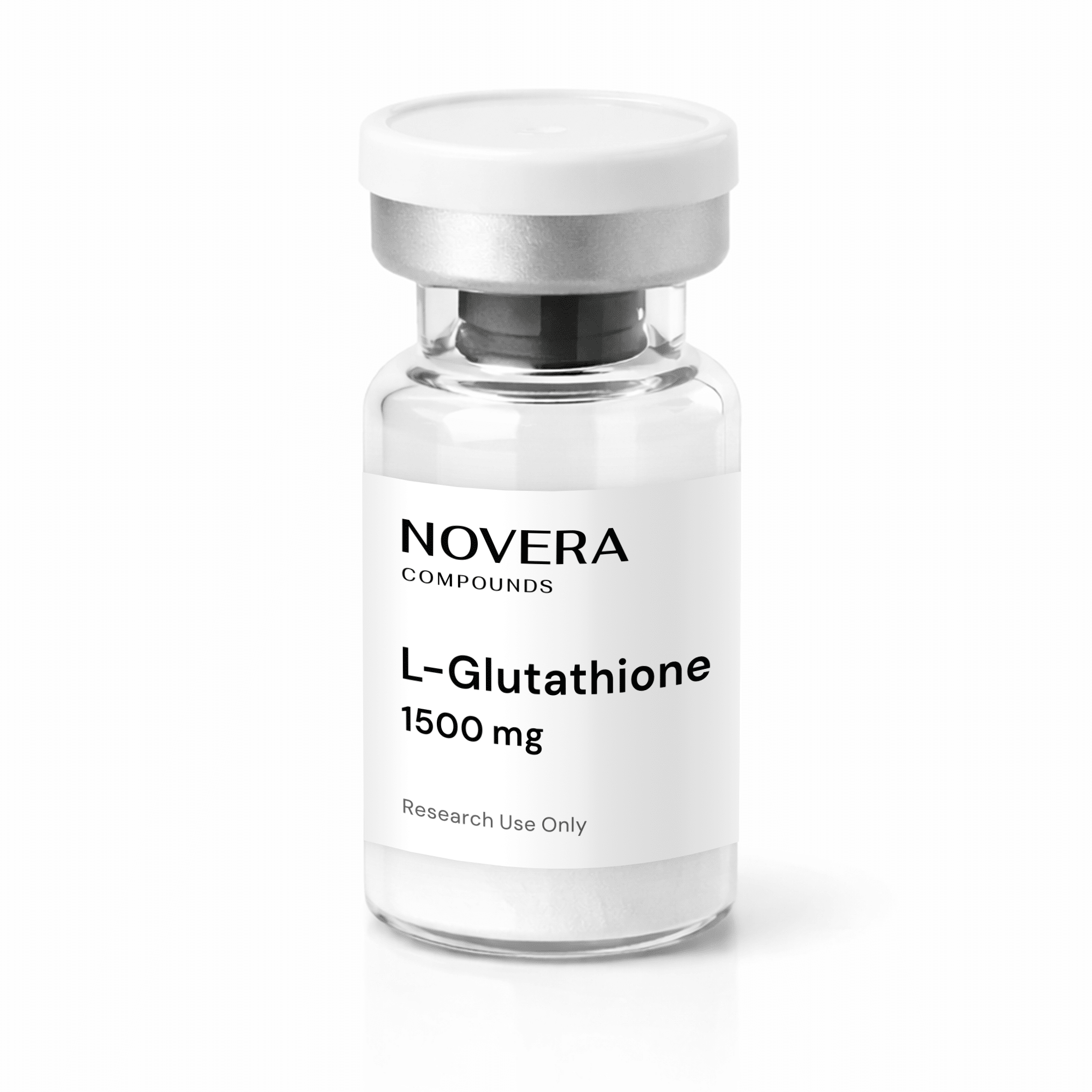
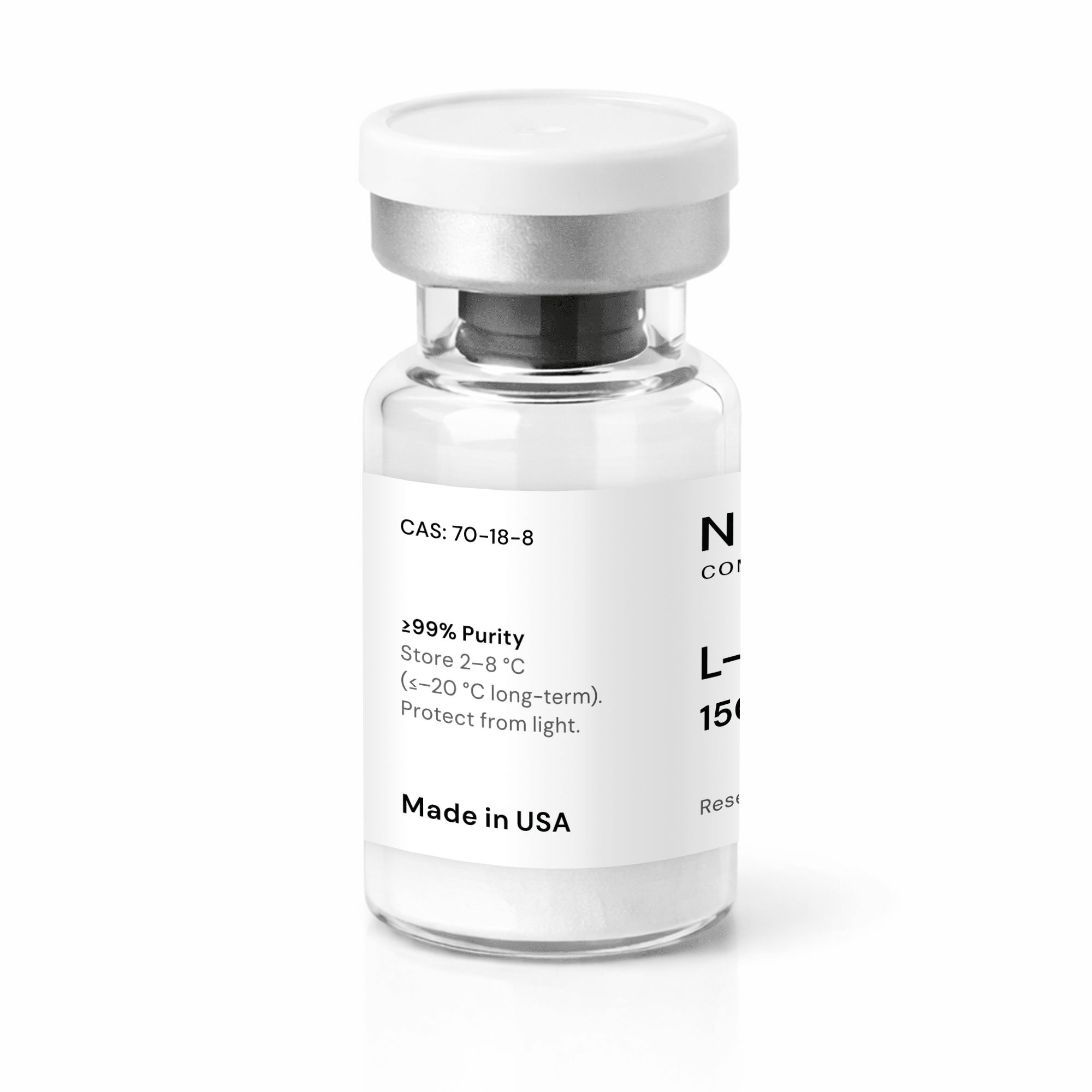
L-Glutathione (1500mg)
Coming Soon
This peptide will be available soon. Join the waitlist to be notified when it launches.
Tier
| Packs | Discount (%) | For Each |
|---|---|---|
| 1 - 5 | — | $78.00 |
| 6 - 10 | 1.28 % | $77.00 |
| 11 - 20 | 2.56 % | $76.00 |
| 21+ | 3.85 % | $75.00 |
Product description
What is L-Glutathione?
L-Glutathione (γ-L-glutamyl-L-cysteinyl-glycine, abbreviated GSH) is a naturally occurring tripeptide composed of three amino acids: glutamate, cysteine, and glycine, linked through a distinctive γ-carboxyl peptide bond between the glutamate side chain and cysteine, with a standard α-peptide bond connecting cysteine to glycine. This peptide for cellular rejuvenation has a molecular weight of 307.33 g/mol (molecular formula C₁₀H₁₇N₃O₆S; CAS No. 170-18-8) and appears as a white to off-white lyophilized powder in its reduced form. The L Glutathione peptide has been extensively studied for its fundamental role in intracellular redox balance, antioxidant defense systems, and cellular protection from oxidative stress. It is under investigation for its roles in detoxification pathways, enzymatic cofactor systems, and metabolic homeostasis. This compound is supplied at 99% purity, verified by high-performance liquid chromatography (HPLC) and mass spectrometry (MS), aligned with pharmaceutical-grade specifications for rigorous laboratory use. Researchers who buy L Glutathione typically employ it for biochemical, oxidative stress, and redox biology investigations.What are the key features of L-Glutathione?
L-Glutathione is valued in research for its stability, biochemical consistency, well-documented antioxidant properties, and established role as a redox-active cofactor in cellular biology. Supplied in a standardized lyophilized powder format, it supports both small-scale and large-scale laboratory experiments with batch-to-batch consistency. The L Glutathione antioxidant peptide has been extensively examined in scientific literature focusing on cellular defense mechanisms, detoxification pathways, and redox-dependent metabolic responses. Key features include:- 99% purity, confirmed by HPLC and mass spectrometry for analytical accuracy and reproducibility
- Lyophilized powder format designed for maximum storage stability, ease of reconstitution, and long-term preservation without degradation
- Documented redox-active thiol group (cysteine residue) enabling reversible reduction-oxidation cycling between reduced (GSH) and oxidized (GSSG) forms
- Established cofactor in glutathione-dependent enzymatic systems, including glutathione peroxidase (GPx), glutathione reductase (GR), and glutathione S-transferase (GST)
- Well-characterized γ-carboxyl peptide bond conferring resistance to most peptidases, protecting the peptide from non-specific degradation
- Suitable for in-vitro and preclinical research examining oxidative stress models, redox signaling, enzymatic studies, and cellular protection mechanisms
- For laboratory research use only
How is L-Glutathione synthesized?
L-Glutathione can be produced via solid-phase peptide synthesis (SPPS), a controlled chemical methodology that ensures precise assembly of its three amino acid components. SPPS allows consistent, reproducible synthesis of the natural tripeptide structure found in living cells while providing enhanced precision and batch-to-batch quality control. Notably, the synthesis process incorporates the distinctive γ-carboxyl peptide bond between glutamate and cysteine, followed by standard α-peptide linkage between cysteine and glycine, replicating the natural molecular architecture. The synthesis steps involve:- The process typically involves sequential coupling of protected amino acids on a solid resin support, with careful protection and deprotection chemistry to preserve the γ-carboxyl functionality and ensure formation of the correct bond geometry.
- Following synthesis, the lyophilized peptide undergoes comprehensive analytical verification, including HPLC for structural confirmation, mass spectrometry (MS) for molecular weight verification, and purity assessment to ensure ≥99% compositional accuracy.
What is L-Glutathione being studied for? What are its possible benefits?
L-Glutathione has been studied extensively in scientific literature for its fundamental biochemical roles in maintaining cellular redox balance, supporting intracellular antioxidant systems, and participating in detoxification and enzymatic pathways. Research highlights its involvement in multiple molecular and cellular processes that regulate oxidative stress responses and preserve cellular integrity under challenging biochemical conditions. Main Research Areas Under Investigation Include:- Cellular redox buffering and oxidative stress modeling — Examination of intracellular glutathione levels (GSH:GSSG ratio) as indicators of cellular redox state
- Enzymatic detoxification pathways — Glutathione-dependent phase II conjugation reactions mediated by glutathione S-transferases (GSTs)
- Protein folding and disulfide bond maintenance — Redox-dependent protein synthesis in the endoplasmic reticulum and other cellular compartments
- Iron-dependent lipid peroxidation and ferroptosis signaling — Cell-death mechanisms and oxidative damage prevention
- Neurochemical redox modulation and glial signaling — Nervous system oxidative stress and neuroprotection research
- Immune cell activation and redox-dependent signaling — Lymphocyte proliferation and adaptive immune response mechanisms
- Cellular repair and integrity preservation — Maintenance of mitochondrial function and genome stability
- Support for cellular antioxidant defense mechanisms
- Enzymatic detoxification capacity
- Oxidative stress resilience
- Maintenance of cellular redox homeostasis in experimental systems
How does L-Glutathione work in research studies?
In laboratory studies, L-Glutathione is thought to function through multiple interconnected biochemical mechanisms centered on its unique redox-active cysteine thiol (-SH) group. This thiol group enables reversible oxidation-reduction (redox) cycling between the reduced form (GSH) and oxidized form (GSSG), a process fundamental to its antioxidant and cofactor roles. Primary Mechanisms of Action:- Direct Antioxidant Activity: The cysteine thiol group directly donates electrons to neutralize reactive oxygen species (ROS), free radicals, and reactive nitrogen species (RNS), converting them to less harmful molecules. This electron donation reversibly oxidizes glutathione from GSH to GSSG (glutathione disulfide).
- Enzymatic Cofactor Function: L-Glutathione serves as an essential substrate and cofactor for glutathione-dependent enzyme systems:
- Glutathione Peroxidase (GPx): Uses GSH to reduce hydrogen peroxide (H₂O₂) and organic hydroperoxides to water and alcohols
- Glutathione S-Transferase (GST): Catalyzes conjugation of GSH with electrophilic xenobiotics and endogenous compounds, facilitating detoxification
- Glutathione Reductase (GR): Recycles GSSG back to reduced GSH using NADPH, maintaining intracellular redox equilibrium
- Redox Buffering: The high intracellular concentration of glutathione (0.5–10 mM in cytosol) and its rapid interconversion between GSH and GSSG makes it a primary intracellular redox buffer, maintaining cellular redox homeostasis and modulating redox-sensitive signaling cascades.
- Protein Modification and Protection: L-Glutathione participates in S-glutathionylation, a reversible post-translational modification that protects protein cysteine residues from oxidative damage and helps regulate protein function and signaling.
What dosing information exists for L-Glutathione?
Available dosing information for L-Glutathione in laboratory and preclinical research contexts derives from peer-reviewed literature examining oxidative stress models and enzymatic assays. No standardized human dosing guidelines exist for this compound. Typical Research Concentrations Include:- In-vitro cellular studies: Concentrations ranging from 1–100 μM (micromolar), depending on cell type, assay endpoint, and redox state being investigated
- Enzymatic kinetics studies: Substrate concentrations of 0.1–10 mM used to examine glutathione-dependent enzyme activity
- Redox ratio assessments: Intracellular GSH:GSSG ratios measured to quantify cellular redox state, with healthy cells typically maintaining ratios of 100:1 to 300:1 (GSH:GSSG)
- Preclinical animal models: Variable dosing based on delivery route, species, and experimental design; no universal dosing convention
How should L-Glutathione be stored and handled?
Unreconstituted Lyophilized Vials: Storage temperature requires 2–8 °C (standard refrigeration) for routine storage, or –20 °C to –80 °C for extended long-term preservation. Researchers should store it in a dry, sealed, light-protected container; protect from moisture, humidity, and temperature fluctuations- Pre-use conditioning: Allow unopened vials to reach room temperature before opening to minimize condensation and moisture uptake
- Expected stability: Lyophilized glutathione can remain stable for up to 24 months when stored under recommended conditions.
- Buffer compatibility: Compatible with standard sterile laboratory buffers (phosphate-buffered saline, sterile saline, distilled water); pH and buffer ionic strength influence stability
Where can I read more research about L-Glutathione?
Researchers may refer to the following peer-reviewed sources:- Lushchak VI. Glutathione homeostasis and functions: potential targets for medical interventions. J Amino Acids. 2012;2012:736837. doi:10.1155/2012/736837
- Glutathione. pubchem.ncbi.nlm.nih.gov. https://pubchem.ncbi.nlm.nih.gov/compound/glutathione
- Alzahrani TF, Alotaibi SM, Alzahrani AA, et al. Exploring the Safety and Efficacy of Glutathione Supplementation for Skin Lightening: A Narrative Review. Cureus. 2025;17(1):e78045. Published 2025 Jan 27. doi:10.7759/cureus.78045
- Pang X, Panee J. Roles of glutathione in antioxidant defense, inflammation, and neuron differentiation in the thalamus of HIV-1 transgenic rats. J Neuroimmune Pharmacol. 2014;9(3):413-423. doi:10.1007/s11481-014-9538-0
- Yousri N, Abdel Zaher A, Rezk M, Adel R. Potential Toxic Effects of Different High Doses of Glutathione Injection: An Experimental Study. Ain Shams Journal of Forensic Medicine and Clinical Toxicology. 2024;42(1):1-9. doi:https://doi.org/10.21608/ajfm.2024.333646
Compliance Statement
This product is intended for laboratory research use only and is not approved for human or veterinary use.Shop with Confidence: Product Authenticity is Guaranteed
All products available at Doctor Medica shop are obtained from respective manufacturers and contain original LOT numbers Contact us if you have any questions about product LOT numbers.


