Your Cart is Empty
Start shopping

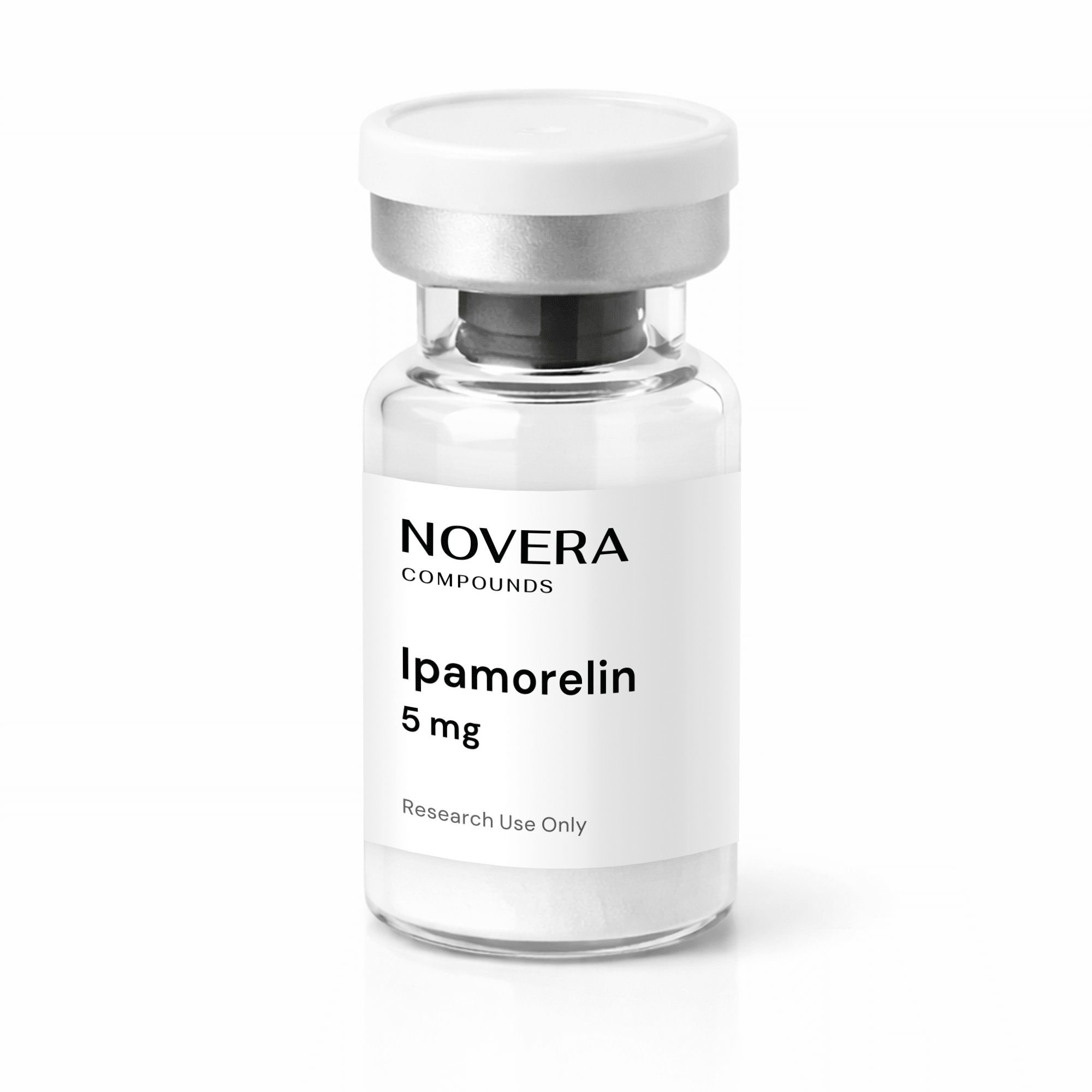
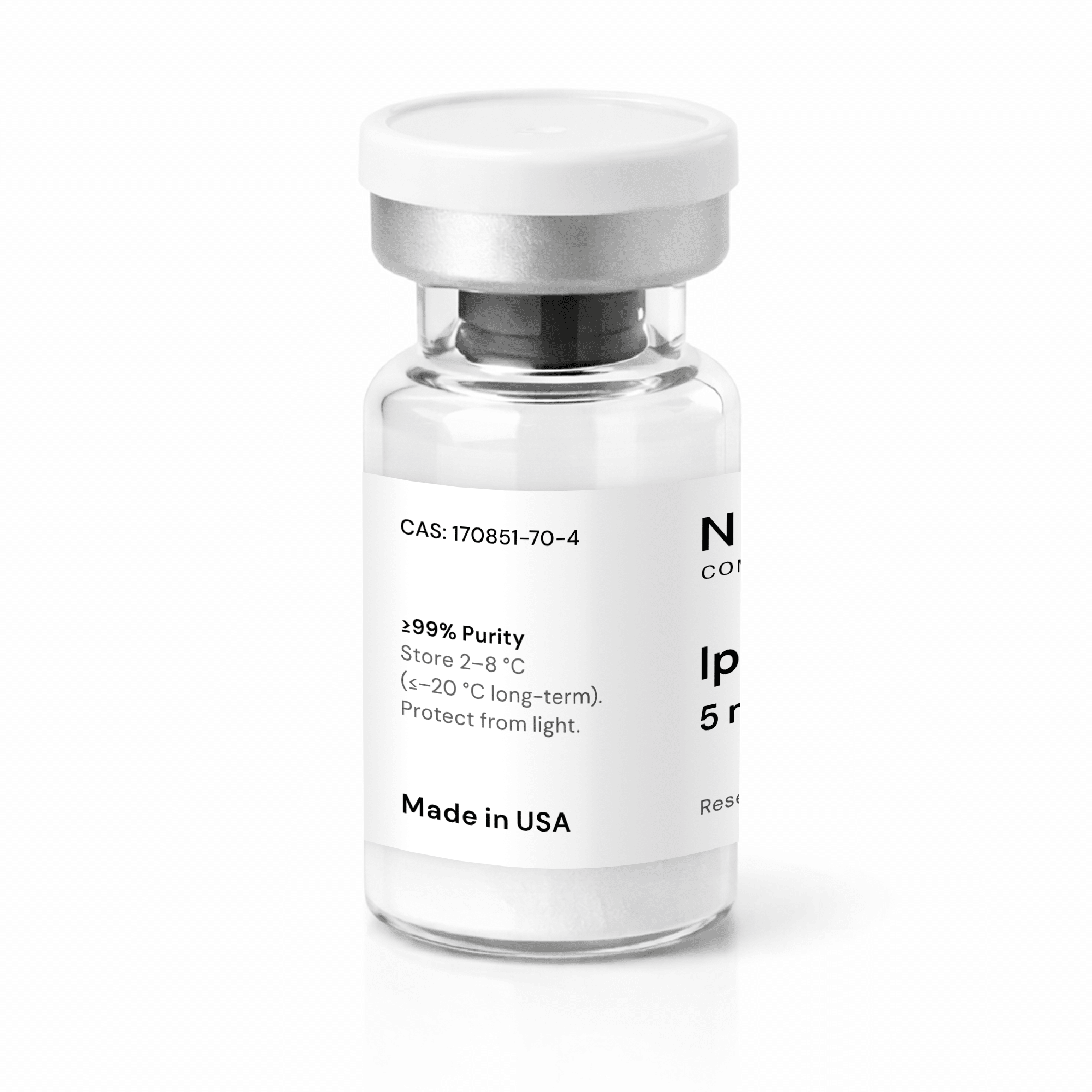
Ipamorelin (5 mg)
Coming Soon
This peptide will be available soon. Join the waitlist to be notified when it launches.
Product description
What is Ipamorelin (5mg)?
Ipamorelin (5mg) is a synthetic peptide classified as a growth hormone secretagogue. It is commonly used in laboratory studies to examine the regulation of growth hormone release and endocrine signaling. In research catalogs, it is often grouped with muscle growth and performance peptides due to its studied role in growth hormone pathways and related metabolic processes. Ipamorelin consists of five modified amino acids and has a molecular weight of 711.9 g/mol. Key identifiers include:- CAS Number: 170851-70-4
- Chemical Formula: C₃₈H₄₉N₉O₅
- Peptide Sequence: Aib–His-D-2Nal-D-Phe-Lys
- Synonym: Ipamorelin Acetate
What are the key features of Ipamorelin (5mg)?
Ipamorelin (5mg) is supplied as a research-grade lyophilized peptide, designed for laboratory investigation. The powder format allows researchers to prepare controlled concentrations for experimental use. Analytical testing is typically performed to confirm the purity and identity of the peptide before distribution. Key features include:- Synthetic pentapeptide designed for growth hormone secretion studies
- Supplied as 5 mg lyophilized powder in a sealed research vial
- High-purity peptide typically verified by HPLC and mass spectrometry
- Studied in endocrine signaling and gastrointestinal motility research
- Stable format suitable for controlled in vitro and in vivo experiments
- For laboratory research use only
How is Ipamorelin (5mg) synthesized?
Ipamorelin is produced through solid-phase peptide synthesis, a widely used method in laboratory settings. During this process, the peptide chain is assembled step-by-step using protected amino acids attached to a solid support. This technique enables precise incorporation of modified residues such as Aib and D-2Nal, thereby contributing to the peptide’s stability and biological selectivity. After synthesis, the peptide is purified by chromatographic techniques to achieve high purity. Analytical testing typically includes high-performance liquid chromatography (HPLC) to confirm purity levels and mass spectrometry (MS) to verify molecular weight and structural identity. These procedures help ensure batch consistency and reliability for laboratory studies investigating peptide signaling pathways.What is Ipamorelin (5mg) being studied for? What are its possible benefits?
Ipamorelin has been studied in preclinical research examining the biological regulation of growth hormone release. Animal studies have evaluated how the peptide influences growth hormone secretion patterns and endocrine responses, comparing its effects with other growth hormone secretagogues. These studies often focus on Ipamorelin’s selectivity in stimulating growth hormone without significantly increasing other pituitary hormones. Additional research has explored its effects on gastrointestinal motility and metabolic signaling. For example, experimental models of postoperative ileus have investigated how ghrelin-mimetic peptides such as Ipamorelin affect gastric emptying and intestinal motility. Other studies have examined potential interactions with metabolic pathways, body weight regulation, and endocrine signaling processes. These findings are limited to laboratory and animal research and should not be interpreted as therapeutic outcomes.How does Ipamorelin (5mg) work in research studies?
In research settings, Ipamorelin is used to stimulate biological pathways involved in growth hormone secretion. Experimental data suggest that the peptide acts as a ghrelin-like signaling molecule, influencing pathways that regulate hormone release from the pituitary gland. By activating these pathways in controlled experiments, researchers can observe changes in hormone secretion patterns and metabolic activity. This mechanism makes Ipamorelin a useful research tool for studying pulsatile hormone release and growth-related signaling networks. Additionally, scientists may investigate how the peptide interacts with gastrointestinal tissues or neural signaling involved in digestive motility. These studies help clarify how growth hormone-related pathways operate under different experimental conditions.What dosing information exists for Ipamorelin (5mg)?
Published preclinical research describes a range of experimental doses used in animal models. For example, rodent studies evaluating endocrine responses have administered Ipamorelin subcutaneously at approximately 10–100 µg/kg. These experiments measure growth hormone responses and metabolic changes following single or repeated exposures. Other research investigating gastrointestinal motility has used doses near 1 mg/kg in rodent models to assess effects on gastric emptying and intestinal motility. These dosing parameters are specific to the study designs and animal species involved. No standardized dosing guidelines exist for humans, and Ipamorelin (5mg) should be considered strictly a laboratory research reagent.How should Ipamorelin (5mg) be stored and handled?
- Store lyophilized Ipamorelin at ≤–20 °C. Protect from light and moisture.
- After reconstitution, store solutions at 2–8 °C and minimize freeze–thaw cycles to maintain structural integrity.
- Document preparation conditions to support experimental reproducibility.
- For laboratory research use only.
Where can I read more research about Ipamorelin (5mg)?
Several peer-reviewed publications describe research on Ipamorelin and related ghrelin-mimetic peptides:- Venkova K, Mann W, Nelson R, Greenwood-Van Meerveld B. Efficacy of ipamorelin, a novel ghrelin mimetic, in a rodent model of postoperative ileus. Journal of Pharmacology and Experimental Therapeutics. 2009;329(3):1110-1116. doi:10.1124/jpet.108.149211
- Raun K, Hansen BS, Johansen NL, et al. Ipamorelin, the first selective growth hormone secretagogue. European Journal of Endocrinology. 1998;139(5):552-561. doi:10.1530/eje.0.1390552
- Jiménez-Reina L 1, Cañete R, De La Torre MJ, Bernal G, Department of Morphological Sciences, Section of Human Anatomy, School of Medicine, Córdoba, Spain, Department of Pediatrics, Pediatric Endocrinology Unit, School of Medicine, Córdoba, Spain. Chronic in Vivo Ipamorelin Treatment Stimulates Body Weight Gain and Growth Hormone (GH) Release in Vitro in Young Female Rats.; 2002. https://eurjanat.com/v1/data/pdf/eja.02010037.pdf
Compliance Statement
This product is intended for laboratory research use only and is not approved for human or veterinary use.Shop with Confidence: Product Authenticity is Guaranteed
All products available at Doctor Medica shop are obtained from respective manufacturers and contain original LOT numbers Contact us if you have any questions about product LOT numbers.


