Your Cart is Empty
Start shopping

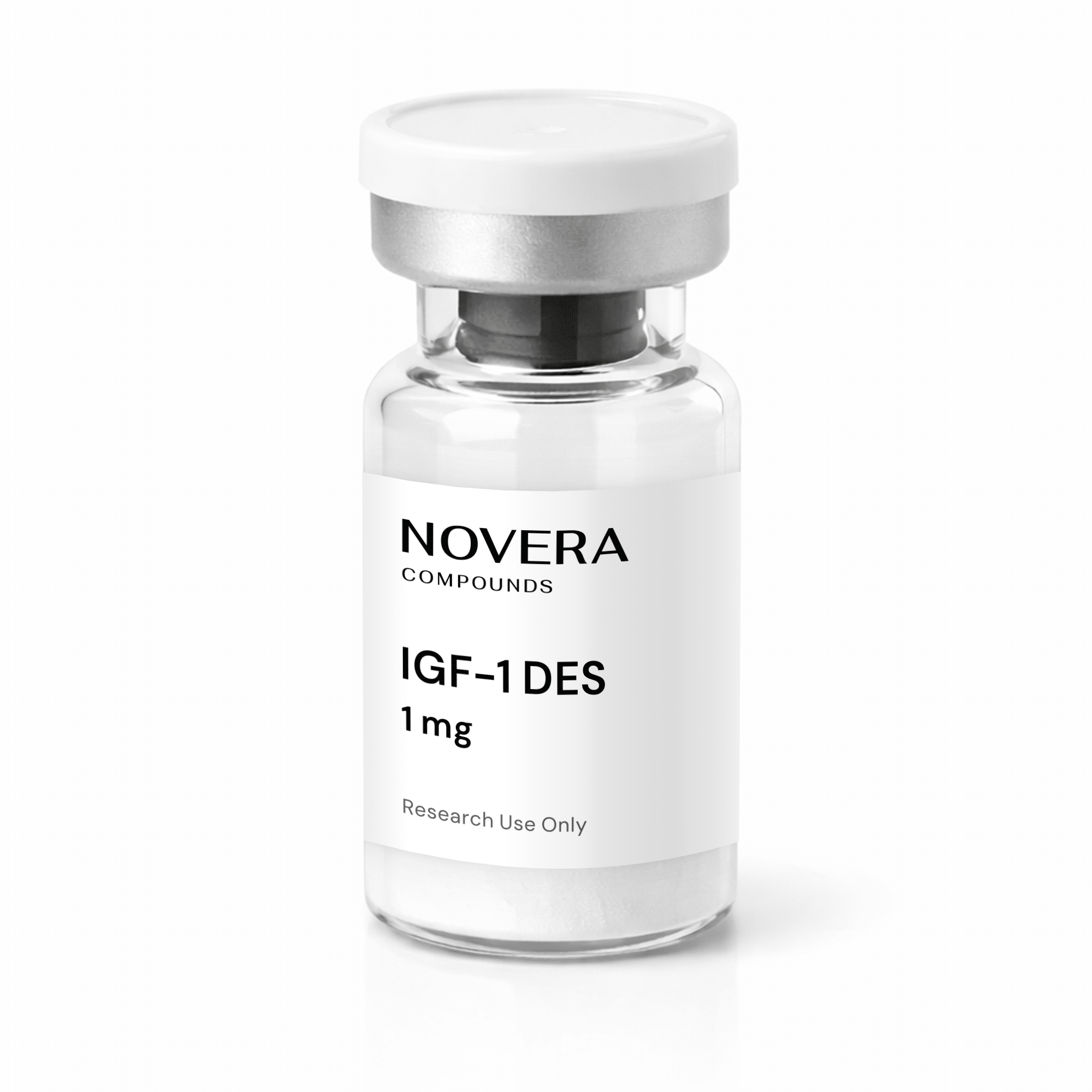
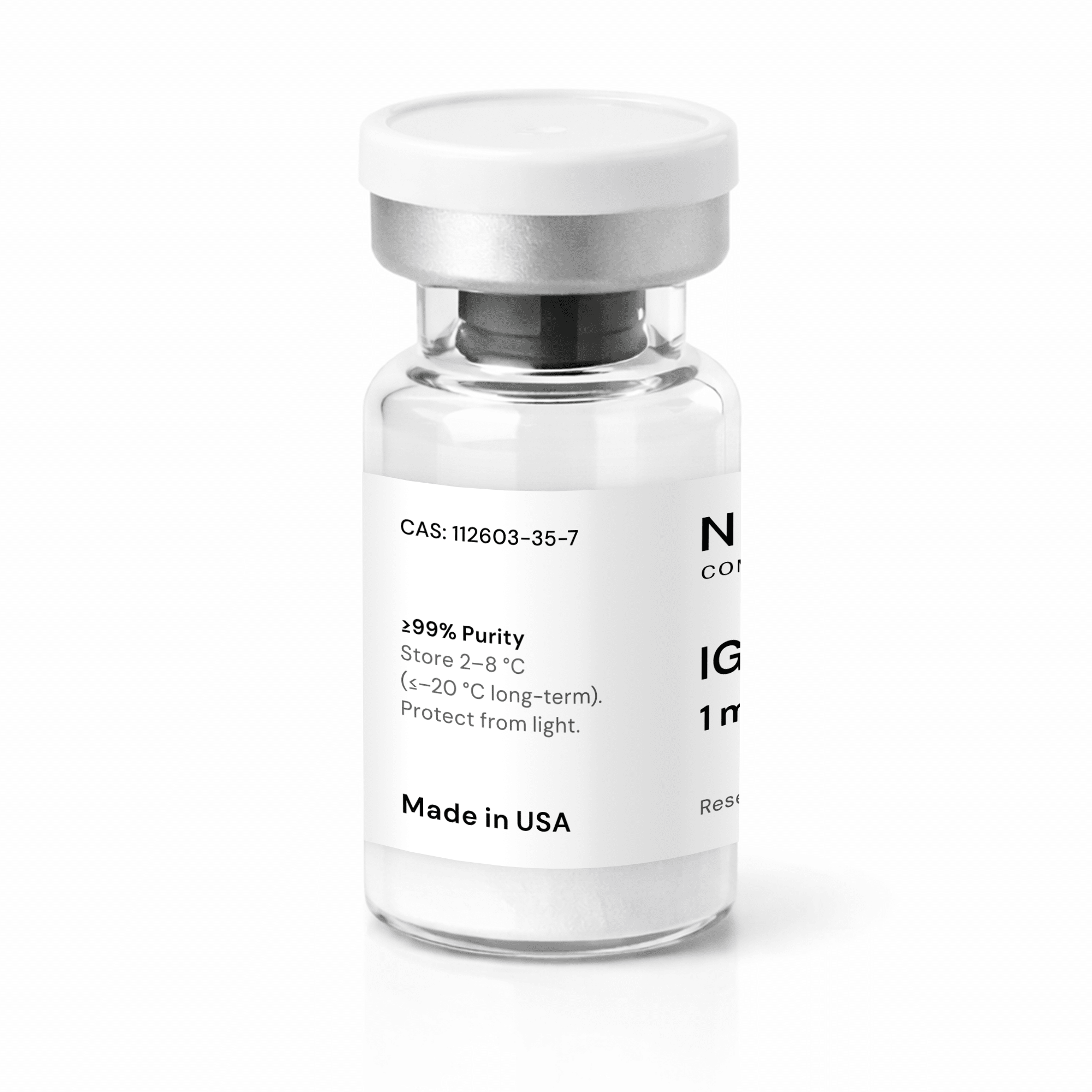
IGF-1 DES (1mg)
Coming Soon
This peptide will be available soon. Join the waitlist to be notified when it launches.
Product description
What is IGF-1 DES (1mg)?
IGF-1 DES (1mg) is a naturally occurring truncated variant of insulin-like growth factor 1 (IGF-1) and is also produced recombinantly for research applications. IGF-1, a protein involved in cellular growth and metabolic signaling, is produced naturally by the body. The Des(1-3) IGF-1 variant is a shortened form of IGF-1, where the first three amino acids of the native protein are removed. It belongs to the insulin-like growth factor family and is being studied for its roles in cell growth, tissue development, and metabolic signaling.- Chemical Formula: C₃₁₉H₅₀₁N₉₁O₉₆S₇
- Molecular Weight: 7371.48 g/mol
- CAS Number: 112603-35-7
What are the key features of IGF-1 DES (1mg)?
- High research-grade purity (≥95% typical analytical standard)
- Recombinant peptide variant of insulin-like growth factor 1
- Composed of 67 amino acids
- Supplied as 1 mg lyophilized peptide in a sealed vial
- Studied in cellular growth and metabolic signaling research models
- Shelf life of approximately 24 months under recommended storage conditions
- For laboratory research use only
How is IGF-1 DES (1mg) synthesized?
IGF-1 DES (1mg) is produced using recombinant DNA technology combined with controlled protein expression systems. The gene sequence encoding the truncated Des(1-3) variant of IGF-1 is inserted into host cells, such as bacterial or mammalian expression systems, to allow production of the peptide under laboratory conditions. After expression, purification is performed using chromatographic techniques, including high-performance liquid chromatography (HPLC), to ensure high purity. Molecular identity and mass are verified using mass spectrometry (MS). The purified peptide is typically lyophilized to improve stability and facilitate storage and transport.What is IGF-1 DES (1mg) being studied for? What are its possible benefits?
IGF-1 DES (1mg) has been studied in laboratory research focused on cellular growth signaling and tissue development. Investigations have examined its involvement in:- Muscle cell growth research
- Metabolic regulation studies
- Cell proliferation and differentiation models
- Regenerative biology research
- Growth factor signaling pathways
How does IGF-1 DES (1mg) work in research studies?
In laboratory models, IGF-1 DES (1mg) is being researched for its interaction with cellular signaling pathways associated with insulin-like growth factors. Growth factors in this family are known to influence cellular metabolism, proliferation, and differentiation. IGF-1 DES functions as a signaling peptide that may influence how cells respond to growth signals. Research studies have explored its role in activating pathways associated with protein synthesis and cellular growth in experimental systems. These mechanisms remain under investigation and are limited to controlled research environments.What dosing information exists for IGF-1 DES (1mg)?
Preclinical research involving IGF-1 DES has been conducted in both animal and cell culture systems. In vitro studies commonly evaluate nanomolar to micromolar concentration ranges to observe effects on cell growth and metabolic signaling. Animal studies have reported dosing ranges in microgram per kilogram (µg/kg) levels depending on study design and experimental goals. Dosing frequency and duration vary widely across research protocols. There are no established human dosing guidelines for IGF-1 DES (1mg), as it is intended strictly for laboratory research use.How should IGF-1 DES (1mg) be stored and handled?
IGF-1 DES (1mg) should be stored at 2–8 °C for routine laboratory handling. For long-term preservation, storing at ≤–20 °C is recommended to preserve peptide stability. Protect the vial from excessive light and moisture. After reconstitution using sterile laboratory-grade solvent, short-term storage at 2–8 °C is typically recommended. Avoid repeated freeze–thaw cycles, as these may affect peptide integrity. Under recommended conditions, the product has an approximate shelf life of 24 months. Appropriate laboratory protective equipment should be used when handling the material. Disposal should follow institutional biosafety guidelines.Where can I read more research about IGF-1 DES (1mg)?
The following peer-reviewed publications provide background information on insulin-like growth factor research:- Ballard FJ, Wallace JC, Francis GL, Read LC, Tomas FM. Des(1-3)IGF-I: a truncated form of insulin-like growth factor-I. Int J Biochem Cell Biol. 1996;28(10):1085-1087. doi:10.1016/1357-2725(96)00056-8
- Francis GL, Upton FM, Ballard FJ, McNeil KA, Wallace JC. Insulin-like growth factors 1 and 2 in bovine colostrum. Sequences and biological activities compared with those of a potent truncated form. Biochem J. 1988;251(1):95-103. doi:10.1042/bj2510095
- McKinnon P, Ross M, Wells JR, Ballard FJ, Francis GL. Expression, purification and characterization of secreted recombinant human insulin-like growth factor-I (IGF-I) and the potent variant des(1-3) IGF-I in Chinese hamster ovary cells. J Mol Endocrinol. 1991;6(3):231-239. doi:10.1677/jme.0.0060231
- McDonald A, Williams RM, Regan FM, Semple RK, Dunger DB. IGF-I treatment of insulin resistance. Eur J Endocrinol. 2007 Aug;157 Suppl 1:S51-6. doi: 10.1530/EJE-07-0271. PMID: 17785698.
Compliance Statement
This product is intended for laboratory research use only and is not approved for human or veterinary use.Shop with Confidence: Product Authenticity is Guaranteed
All products available at Doctor Medica shop are obtained from respective manufacturers and contain original LOT numbers Contact us if you have any questions about product LOT numbers.


