Your Cart is Empty
Start shopping

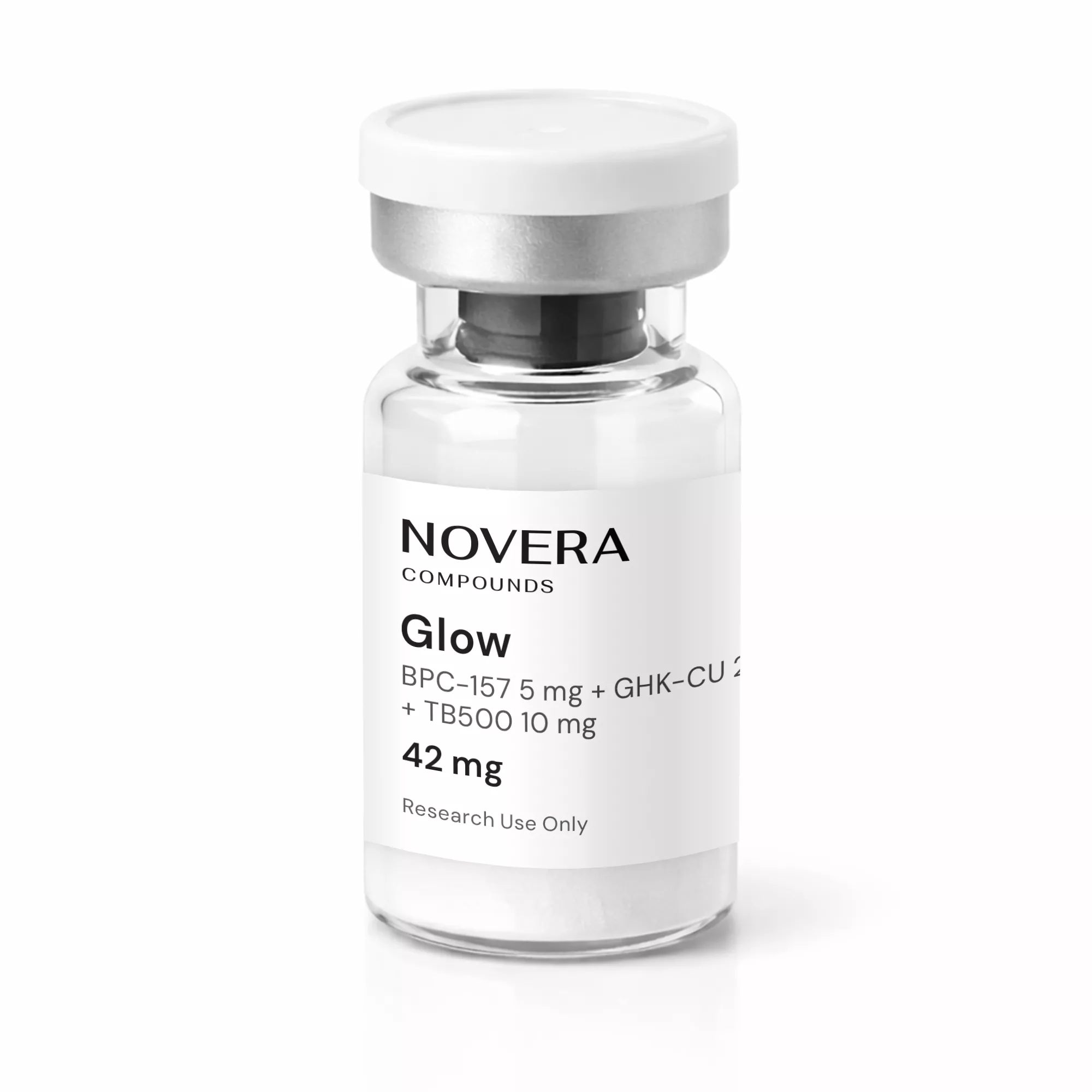
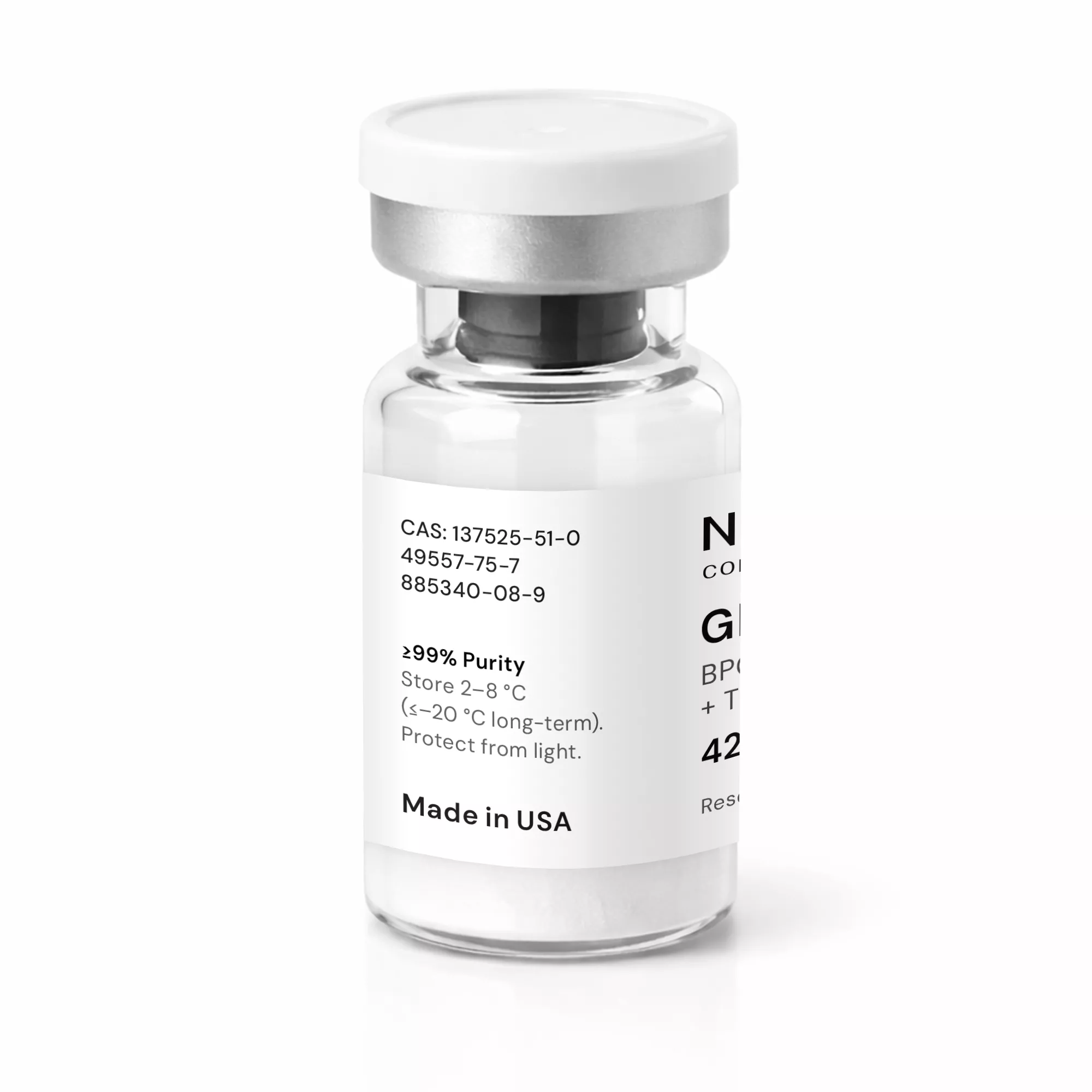
GLOW GHK-CU (27mg) / BPC-157 (5mg) / TB500 (10mg)
Tier
| Packs | Discount (%) | For Each |
|---|---|---|
| 1 - 5 | — | $97.00 |
| 6 - 10 | 1.03 % | $96.00 |
| 11 - 20 | 2.06 % | $95.00 |
| 21+ | 3.09 % | $94.00 |
Product description
What is GLOW GHK-CU 27mg / BPC-157 5mg / TB500 10mg?
GLOW GHK-Cu (27 mg) / BPC-157 (5 mg) / TB500 (10 mg) is a multi-peptide research blend composed of three synthetic peptides: GHK-Cu, BPC-157, and TB500. Each component has been studied independently for its roles in cellular communication, tissue remodeling, cytoprotective signaling, and regenerative biology. This formulation contains 27 mg of GHK-Cu, 5 mg of BPC-157, and 10 mg of TB500, supplied as a lyophilized powder for controlled laboratory research.CAS Numbers
- GHK-Cu: 49557-75-7
- BPC-157: 137525-51-0
- TB500: 885340-08-9
What are the key features of GLOW GHK-CU 27mg / BPC-157 5mg / TB500 10mg?
The GLOW GHK-Cu / BPC-157 / TB500 blend is designed for laboratory studies examining how multiple peptide pathways may interact in controlled experimental models. Its key features include:- Multi-Peptide Research Formulation: Combines three independently studied peptides into one formulation for investigating coordinated biological signaling pathways.
- GHK-Cu Peptide–Centered Composition: At 27 mg, the GHK-Cu peptide is the dominant component, emphasizing research on copper peptides and their roles in collagen signaling, redox regulation, extracellular matrix activity, and skin-associated biological pathways.
- Complementary Repair Pathway Components: BPC-157 is studied for its vascular and cytoprotective signaling, while TB500 is explored for its role in actin-related cellular movement and tissue organization.
- Lyophilized Research Format: Supplied as a freeze-dried powder to support stability during storage, shipment, and laboratory handling.
- Analytically Verified Peptide Components: Each peptide undergoes quality control processes, including HPLC purification and mass spectrometry verification, to confirm purity, molecular identity, and batch consistency.
- Flexible Experimental Use: The combined format allows researchers to evaluate multi-pathway peptide interactions without preparing each peptide separately.
- For Laboratory Research Only: This product is intended strictly for controlled laboratory and preclinical research settings and is not approved for human or veterinary use.
How is GLOW GHK-CU 27mg / BPC-157 5mg / TB500 10mg synthesized?
The GLOW GHK-Cu / BPC-157 / TB500 blend is a healing and regenerative peptide formulation manufactured through synthetic peptide production methods that allow precise control over peptide sequence, purity, and molecular structure. Each peptide component is produced using solid-phase peptide synthesis (SPPS), a standard laboratory technique for assembling amino acid chains in a controlled stepwise process. During SPPS, protected amino acids are sequentially attached to a solid-phase resin until the target peptide sequence is complete. After synthesis, the peptide is cleaved from the resin and protective groups are removed. Following synthesis, each component is purified by high-performance liquid chromatography (HPLC) to remove incomplete chains, by-products, and impurities. Mass spectrometry (MS) is then used to confirm molecular weight and structural identity. Once verified, the purified components are combined and lyophilized, producing a stable powder suitable for controlled research handling, storage, and transportation.What is GLOW GHK-CU 27mg / BPC-157 5mg / TB500 10mg being studied for? What are its possible benefits?
The GLOW GHK-Cu / BPC-157 / TB500 blend is being studied for its potential involvement in biological pathways related to tissue remodeling, extracellular matrix regulation, angiogenesis, cellular migration, and oxidative stress response. Research on the individual components suggests that each peptide may engage distinct yet overlapping mechanisms involved in repair-associated biological processes. Areas commonly explored in research include:- Collagen and extracellular matrix signaling
- Cellular migration and tissue organization
- Angiogenic pathway activity
- Fibroblast signaling and structural remodeling
- Copper-dependent enzymatic activity
- Nitric oxide and vascular signaling pathways
- Cytoskeletal organization through actin-related mechanisms
- Oxidative stress and redox balance modulation
How does GLOW GHK-CU 27mg / BPC-157 5mg / TB500 10mg work in research studies?
In laboratory research, the GLOW blend is examined to determine how its individual peptide components may influence related yet distinct biological pathways. The purpose of studying a multi-peptide formulation is to observe whether overlapping signaling mechanisms may contribute to coordinated responses in cellular or preclinical systems. The GHK-Cu peptide is investigated for its copper-binding activity and its relationship to metalloproteinases, collagen synthesis, antioxidant enzymes, and gene expression pathways involved in tissue remodeling. Because copper is an important cofactor in several enzymatic systems, GHK-Cu is often studied in relation to redox signaling and extracellular matrix regulation. BPC-157 has been explored for its potential interaction with nitric oxide pathways, vascular endothelial growth factor (VEGF) signaling, and cytoprotective mechanisms. These processes are commonly examined in models involving angiogenesis, fibroblast activity, and tissue-associated repair responses. TB500, a thymosin beta-4–related peptide fragment, has been studied for its association with actin regulation and cellular movement. Actin dynamics are important in cell migration, structural organization, and tissue remodeling models. In combined research settings, scientists may examine:- Growth factor signaling coordination
- Angiogenic response integration
- Collagen and matrix remodeling pathways
- Cellular migration and cytoskeletal organization
- Inflammatory and oxidative stress signaling
- Protein turnover and tissue maintenance mechanisms
What dosing information exists for GLOW GHK-CU 27mg / BPC-157 5mg / TB500 10mg?
Dosing information for this blend is based on experimental research involving the individual peptide components. Study concentrations vary widely depending on the model system, route of exposure, research endpoint, and laboratory protocol. Published experimental ranges have included:- GHK-Cu: 1–10 nM in molecular and dermatological assay systems; micromolar (µM) concentrations in topical and in vivo wound healing studies
- BPC-157: ~0.5–2 µg/mL in cell culture systems; ~150–375 µg (approx. 6–50 µg/kg) in murine preclinical models
- TB500: ~2–8 mg/week in certain animal research protocols; doses range widely from micrograms to milligrams per kilogram depending on the study
How should GLOW GHK-CU 27mg / BPC-157 5mg / TB500 10mg be stored and handled?
Lyophilized peptide blends should be stored under conditions that preserve stability and minimize degradation.Storage
- Long-term (lyophilized): ≤–20 °C; shelf life up to 24 months when sealed and properly stored
- Short-term (lyophilized): 2–8 °C acceptable for weeks to a few months
- Post-reconstitution: Refrigerate at 2–8 °C and use within 14–30 days as per protocol
- Protect from light and moisture at all times; brief room-temperature exposure during transport is acceptable
Handling
- Use aseptic technique when reconstituting and aliquoting
- Avoid repeated freeze-thaw cycles of reconstituted solutions, as temperature fluctuations may cause peptide degradation
- Follow all institutional biosafety guidelines; consult the Safety Data Sheet (SDS) provided with the product for comprehensive safety information
Where can I read more research about GLOW GHK-CU 27mg / BPC-157 5mg / TB500 10mg?
- Pickart L, Margolina A. Regenerative and Protective Actions of the GHK-Cu Peptide in the Light of the New Gene Data. Int J Mol Sci. 2018;19(7):1987. Published 2018 Jul 7. doi:10.3390/ijms19071987
- He L, Feng D, Guo H, et al. Pharmacokinetics, distribution, metabolism, and excretion of body-protective compound 157, a potential drug for treating various wounds, in rats and dogs. Front Pharmacol. 2022;13:1026182. Published 2022 Dec 14. doi:10.3389/fphar.2022.1026182
- Morris DC, Chopp M, Zhang L, Lu M, Zhang ZG. Thymosin beta4 improves functional neurological outcome in a rat model of embolic stroke. Neuroscience. 2010;169(2):674-682. doi:10.1016/j.neuroscience.2010.05.017
- Xing Y, Ye Y, Zuo H, Li Y. Progress on the Function and Application of Thymosin β4. Frontiers in Endocrinology. 2021;12:767785. doi:10.3389/fendo.2021.767785
- Sharma S, Anwar MF, Dinda A, Singhal M, Malik A. In Vitro and in Vivo Studies of pH-Sensitive GHK-Cu-Incorporated Polyaspartic and Polyacrylic Acid Superabsorbent Polymer. ACS Omega. 2019;4(23):20118-20128. Published 2019 Nov 19. doi:10.1021/acsomega.9b00655
Shop with Confidence: Product Authenticity is Guaranteed
All products available at Doctor Medica shop are obtained from respective manufacturers and contain original LOT numbers Contact us if you have any questions about product LOT numbers.


