Your Cart is Empty
Start shopping

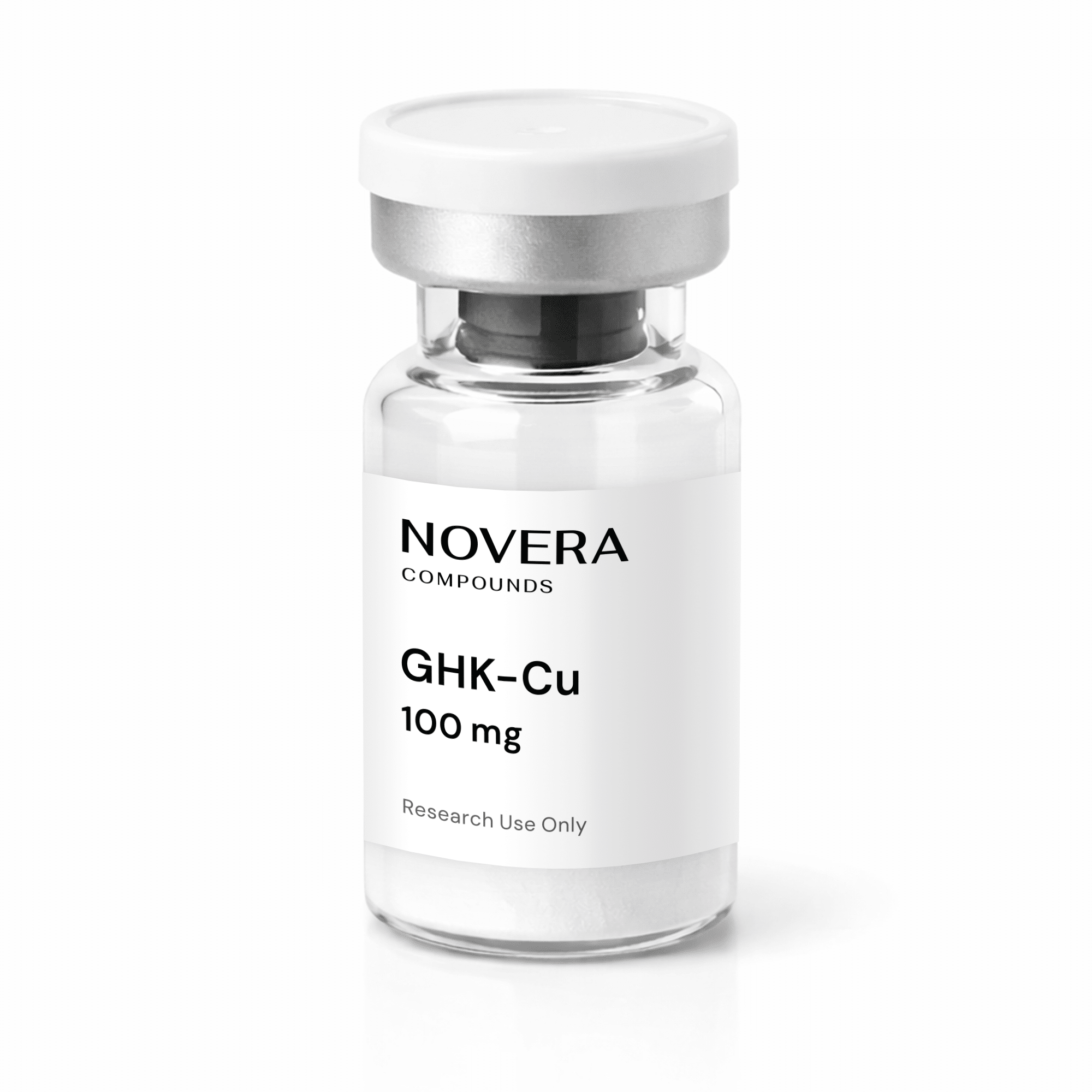
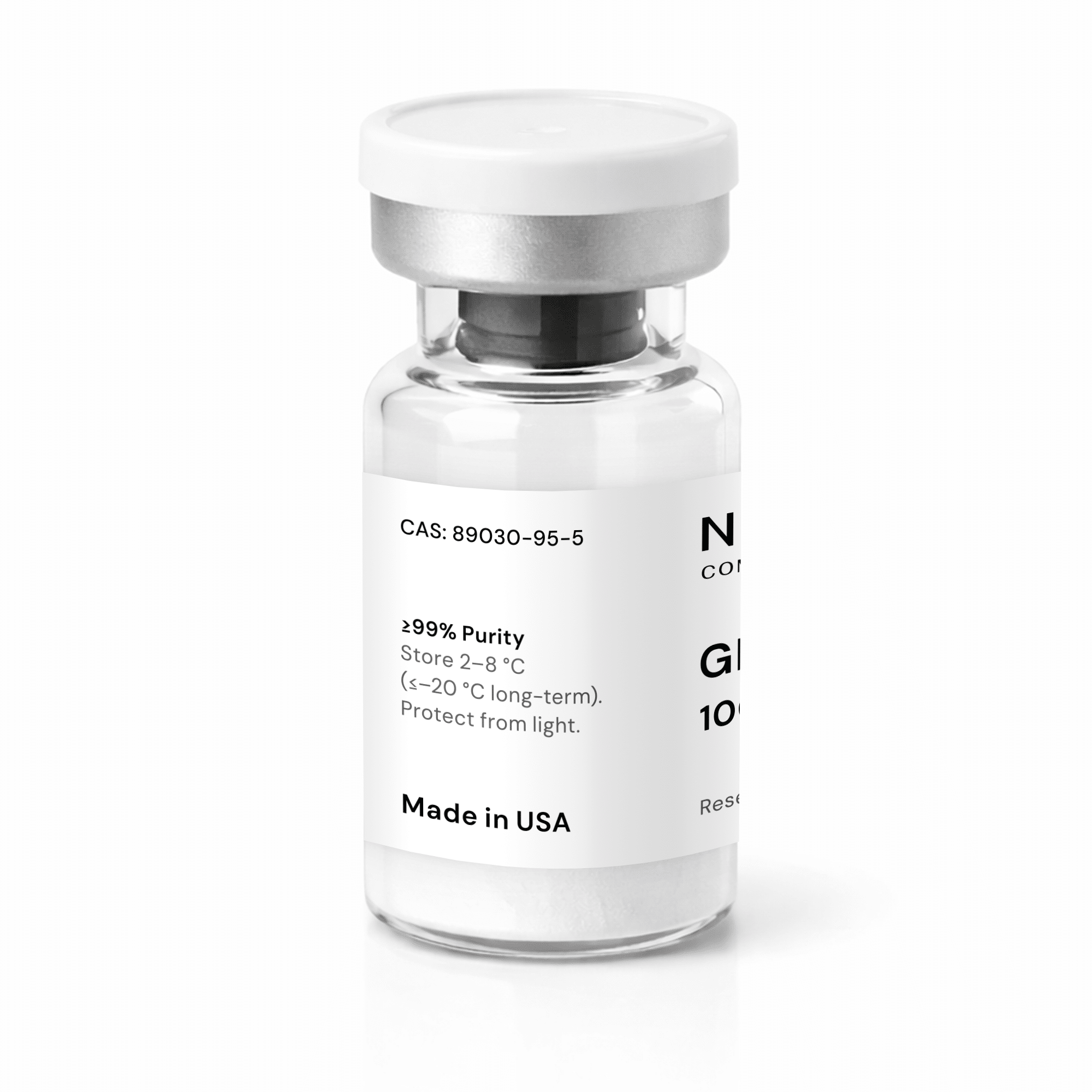
GHK-Cu (100mg)
Tier
| Packs | Discount (%) | For Each |
|---|---|---|
| 1 - 5 | — | $82.00 |
| 6 - 10 | 9.76 % | $74.00 |
| 11 - 20 | 18.29 % | $67.00 |
| 21+ | 26.83 % | $60.00 |
Product description
What is GHK-CU (100mg)?
GHK-Cu is a naturally occurring copper-binding tripeptide composed of three amino acids: glycine, histidine, and lysine. When complexed with copper ions (Cu²⁺), it forms the biologically studied coordination compound known as GHK-Cu. With a molecular weight of approximately 401.91 g/mol, GHK-Cu is classified as a small bioactive peptide complex. This healing and regenerative peptide consists of a compact three-amino-acid structure, making it one of the more structurally concise peptides investigated in controlled laboratory research. Scientific literature describes GHK-Cu as being studied in tissue-related environments, cellular balance systems, protein regulation pathways, and stress-response models. Researchers working with high-purity synthetic GHK-Cu typically investigate its role in cellular signaling, structural regulation, and copper-mediated biochemical interactions.Product Specifications
- Product Name: GHK-Cu
- Synonyms: Copper peptide, GHK, Tripeptide, ghkcu, GHK-Cu acetate, Gly-His-Lys-Cu(II)
- CAS Number: 89030-95-5
- Chemical Formula: C14H21N6O4Cu
- Subscript Format: C₁₄H₂₁N₆O₄Cu
- Molecular Weight: 401.91 g/mol
- Sequence: Gly-His-Lys (Cu²⁺ complex)
- Structure Type: Copper (II)–coordinated tripeptide complex
What are the key features of GHK-CU?
GHK-CU (100mg) is supplied as a lyophilized powder, ensuring stability during shipping and long-term storage. The peptide is frequently included in studies focusing on cellular senescence, metabolic regulation, oxidative stress response, and gene expression. Its compact structure and solubility make it accessible for a wide range of experimental designs. The GHK-CU 10 mg vial format is commonly used in research environments requiring consistent dosing across multiple assays. Key features include:- High analytical purity, typically ≥ 95%, verified through HPLC and mass spectrometry
- Compact synthetic tetrapeptide structure for efficient laboratory manipulation
- Supplied as a lyophilized powder for accurate laboratory reconstitution
- Investigated in roles related to cellular stress, oxidative stress, and metabolic regulation
- Frequently provided in various research vials, including GHK-CU (100 mg), GHK-CU (75mg), GHK-CU (50mg)
- For laboratory research use only
How is GHK-CU synthesized?
GHK-CU (100mg) is produced using solid-phase peptide synthesis (SPPS), a controlled method that ensures accurate assembly of its three-amino-acid sequence. After the peptide backbone is assembled, copper ions are introduced to form the characteristic GHK-CU complex. This manufacturing process ensures batch-to-batch consistency and allows researchers to use a stable, predictable material for experiments. Quality control testing includes analytical verification via HPLC and mass spectrometry, as well as purity certification. These methods confirm the peptide's identity and verify that impurities remain minimal. This level of consistency supports studies exploring the biology of the GHK-CU skin peptide as researchers examine its interactions across different test systems, including cellular and biochemical assays.What is GHK-CU (100mg) being studied for? What are its possible benefits?
GHK-CU has been studied in several fields of preclinical research, especially those involving cellular aging, oxidative stress, and metabolic regulation. Investigations have evaluated how the peptide may influence telomere-associated processes, though findings remain preliminary and require further study. Research has also examined GHK-CU’s potential connection to stress adaptation pathways and the maintenance of cellular homeostasis. Possible biological benefits under investigation include effects related to cell repair, protein synthesis, antioxidant responses, and genomic stability. Some experimental models also evaluate GHK-CU for its potential effects on angiogenesis, protein synthesis, and metabolic markers. In many catalog descriptions, GHK-CU skin peptide is casually referred to, reflecting its historical research focus on skin-related mechanisms, though no definitive outcomes have been established. All findings remain limited to laboratory research environments.How does GHK-CU work in research studies?
In research studies, GHK-CU is investigated for its potential interaction with neurochemical pathways involved in sleep–wake regulation, metabolic function, and hormonal signaling. Laboratory models examine how GHK-CU may influence cellular signaling molecules and intracellular processes that regulate stress responses and energy balance. These mechanisms remain under investigation and vary depending on the experimental model used. GHK-CU is studied for its potential effects on neurotransmitter systems and cellular signaling pathways. Some preclinical studies explore peptide–protein interactions, while others assess potential effects on cellular membrane receptors or neurotransmitter balance. Because GHK-CU is a small, synthetic peptide, it is readily incorporated into standard laboratory protocols, making it suitable for experiments investigating general peptide behavior and neurochemical processes in controlled research environments. Other research peptides that researchers may explore under the peptide category include ARA-290 and the GLOW blend.What dosing information exists for GHK-CU (100mg)?
Preclinical studies investigating GHK-CU employ various concentrations depending on the research model and methodology:- In vivo murine models: 10–100 µg/kg (micrograms per kilogram body weight)
- In vitro cellular assays: 1–50 µM (micromolar concentrations)
How should GHK-CU (100mg) be stored and handled?
Lyophilized GHK-CU should generally be stored at –20 °C, protected from light and moisture. This ensures long-term stability and preserves the peptide’s structural integrity. Laboratories often keep vials in airtight, low-humidity conditions to prevent degradation. Upon reconstitution with suitable sterile solvents, GHK-CU is generally recommended to be stored at 2–8 °C for short-term use. To maintain consistency across experiments, many laboratories aliquot solutions to prevent repeated freeze–thaw cycles, which can reduce peptide quality. Researchers who buy GHK-CU (100mg) should follow established laboratory protocols for handling peptides, including sterile technique, proper PPE, and controlled environmental conditions. Stability may vary by formulation, so storage recommendations should always be followed precisely as labeled.Where can I read more research about GHK-CU?
Researchers looking for more information on the GHK-CU copper peptide may consult the following credible sources:- https://pubmed.ncbi.nlm.nih.gov/29986520/
- https://onlinelibrary.wiley.com/doi/10.1155/2015/648108
- https://pubmed.ncbi.nlm.nih.gov/35083444/
- https://pubmed.ncbi.nlm.nih.gov/39963574/
- https://www.liebertpub.com/doi/10.1001/archfaci.8.4.252
Compliance Statement
This product is intended for laboratory research use only and is not approved for human or veterinary use.Shop with Confidence: Product Authenticity is Guaranteed
All products available at Doctor Medica shop are obtained from respective manufacturers and contain original LOT numbers Contact us if you have any questions about product LOT numbers.


