Your Cart is Empty
Start shopping

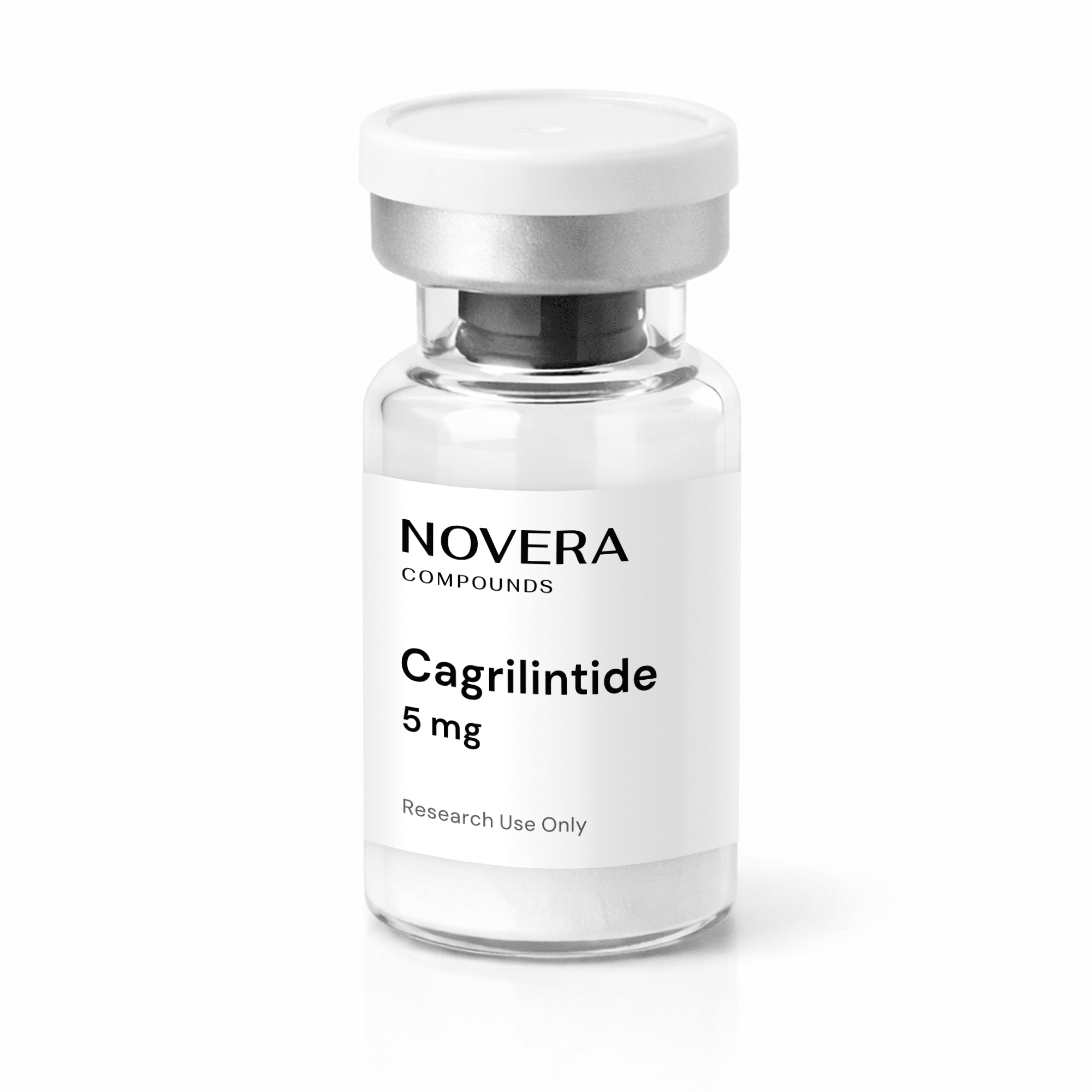
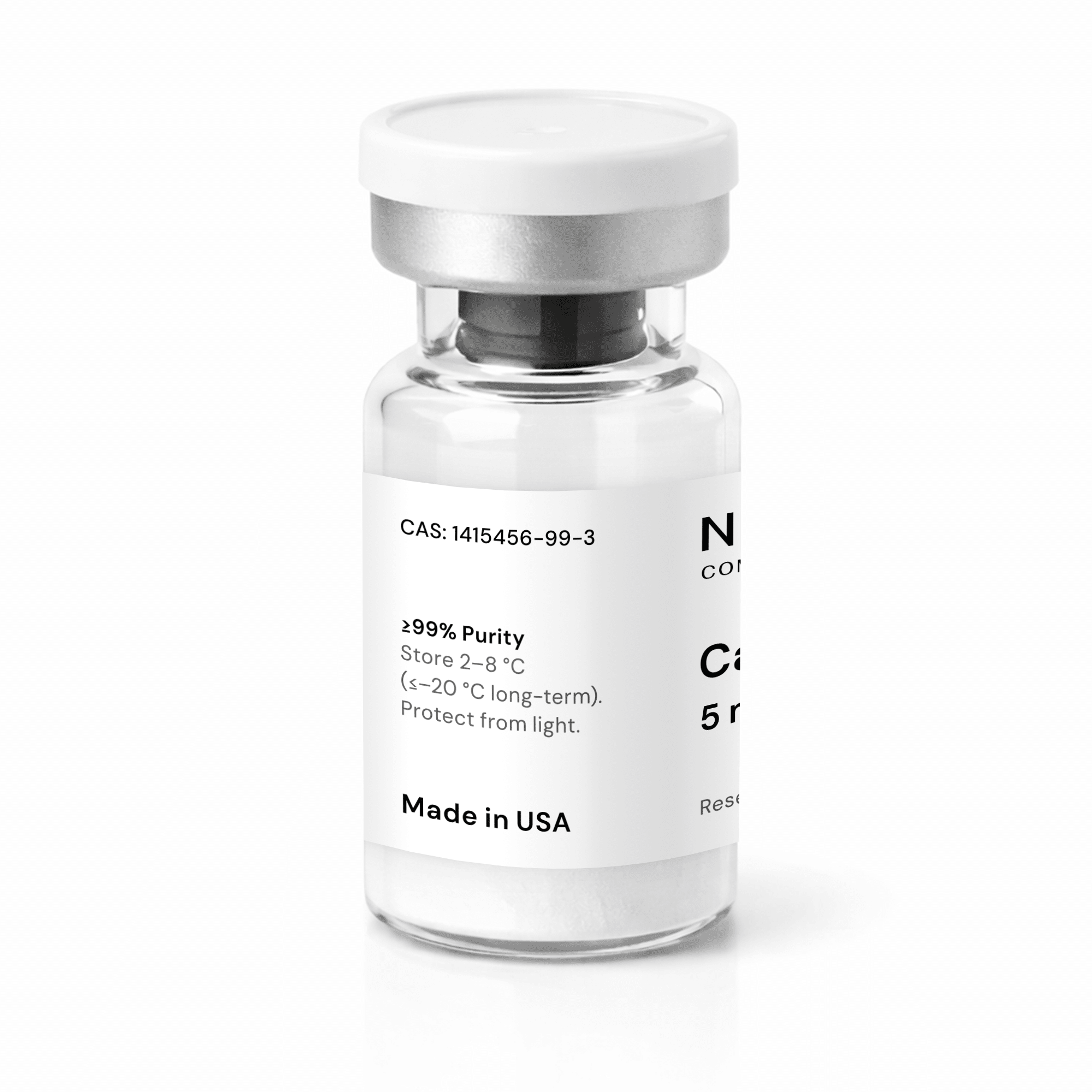
Cagrilintide (5mg)
Coming Soon
This peptide will be available soon. Join the waitlist to be notified when it launches.
Product description
What is Cagrilintide (5mg)?
Cagrilintide peptide is a synthetic analog of amylin, a naturally occurring peptide hormone involved in metabolic regulation. It is a long-acting peptide with a molecular weight of 4409 g/mol. This peptide is supplied as a lyophilized powder in 5 mg vials, with >98% purity verified by HPLC analysis, ensuring consistent results in experimental use. Cagrilintide is primarily used for research purposes in models investigating its effects on appetite regulation, body weight, and metabolic pathways. Experts use Cagrilintide for research to explore its role in energy balance and how it affects metabolic processes, particularly related to weight loss and glucose homeostasis.What are the key features of Cagrilintide?
Researchers examining Cagrilintide (5mg) often focus on its stability, structural modifications, and receptor-specific interactions in metabolic models. It is commonly supplied in lyophilized form in standardized vial formats.- >98% purity, verified by HPLC to ensure accurate and reliable results.
- Supplied as 5 mg per vial of lyophilized powder for precise experimental dosing.
- Investigated for its potential effects on appetite regulation, body weight management, and energy expenditure.
- Retains structural integrity when stored at –20°C or below.
- Available in multiple vial sizes and dosage configurations, including Cagrilintide (5mg) and Cagrilintide (10mg), to support flexible research applications and investigational study designs.
- Reconstitute with sterile water or buffer for straightforward experimental use.
- Intended solely for research and is not for human or veterinary use.
How is Cagrilintide synthesized?
Cagrilintide is synthesized using solid-phase peptide synthesis (SPPS), a method that enables precise replication of its modified amino acid sequence. This synthetic approach ensures consistent batch quality while avoiding reliance on biological extraction. Following synthesis, purification is typically performed through high-performance liquid chromatography (HPLC), with identity and structural integrity confirmed via mass spectrometry. These analytical steps provide reliability, reproducibility, and confidence in research applications, supporting ongoing investigations into the peptide’s potential biological properties.What is Cagrilintide (5mg) being studied for? What are its possible benefits?
Under the weight loss and metabolic peptides category, Cagrilintide (5mg) is being studied for several key research areas in preclinical models. Primary areas include metabolic regulation, satiety signaling, and energy expenditure, with studies examining interactions with amylin receptors and related biochemical pathways. Research also evaluates its role in glucose and lipid metabolism and its potential influence on cellular energy balance. Potential biological effects under investigation include appetite modulation, support for metabolic homeostasis, and interaction with nutrient utilization pathways. These outcomes remain exploratory and are limited to laboratory studies. No clinical or therapeutic claims should be inferred, and findings are intended solely to inform controlled experimental research.How does Cagrilintide work in research studies?
In laboratory studies, Cagrilintide appears to influence amylin receptor-associated pathways and downstream metabolic signaling networks. Researchers have examined its ability to modify satiety cues, regulate nutrient intake, and impact energy utilization in rodent and in vitro models. Cagrilintide works through direct agonist activity at amylin receptors (AMYR) and calcitonin receptors (CTR) in central and peripheral tissues, with effects on satiety and metabolic regulation occurring through downstream signaling from these receptor activations. Preclinical experiments suggest that the peptide may interact with cellular signaling, hormonal networks, and biochemical pathways involved in energy balance, offering insights into potential mechanisms without implying therapeutic efficacy. All observations remain research-specific and should be interpreted strictly in laboratory contexts. Additionally, researchers seeking other peptides in this category for weight loss and metabolism may look into the Cagrilintide + Semaglutide blend and the Survodutide compound.What dosing information exists for Cagrilintide (5mg)?
Available dosing information for Cagrilintide weight loss peptide is based solely on preclinical and in vitro studies. Experimental concentrations vary by model and study objective; for example, some rodent studies have used microgram-per-kilogram ranges to evaluate receptor interactions and metabolic effects. In cell culture experiments, nanomolar to micromolar concentrations have been tested to assess signaling pathways and cellular responses. No human dosing guidelines exist, and all reported ranges apply strictly to laboratory research. Researchers emphasize that these doses are exploratory, designed for controlled studies, and should not be interpreted as clinical or therapeutic recommendations.How should Cagrilintide be stored and handled?
Proper storage and handling of Cagrilintide (5mg) are essential to maintain peptide stability, ensure reliable preclinical research results, and prevent degradation during reconstitution, handling, or laboratory use.- Storage Instructions: Store the lyophilized peptide at –20 °C or lower. After reconstitution, store at 2–8°C (refrigerator temperature). Do not freeze reconstituted solutions. Properly prepared solutions are typically stable for 2-3 weeks with proper sterile handling.
- Handling: Use sterile techniques during reconstitution and laboratory work.
- Follow standard safety protocols, including gloves, lab coats, and eye protection.
- Disposal: Dispose of unused material in accordance with institutional peptide waste guidelines to ensure safe laboratory practices.
Where can I read more research about Cagrilintide?
esearchers looking to buy Cagrilintide can explore peer-reviewed preclinical and metabolic studies to better understand its activity in satiety signaling, energy regulation, and metabolic pathways. Reviewing published data on these platforms provides insights into experimental design, dosing ranges, and observed biological effects in controlled laboratory studies. Some of the reliable sources and studies include:- D'Ascanio AM, Mullally JA, Frishman WH. Cagrilintide: A Long-Acting Amylin Analog for the Treatment of Obesity. Cardiol Rev. 2024;32(1):83-90. doi:10.1097/CRD.0000000000000513
- Lau DCW, Erichsen L, Francisco AM, et al. Once-weekly cagrilintide for weight management in people with overweight and obesity: a multicentre, randomised, double-blind, placebo-controlled and active-controlled, dose-finding phase 2 trial. Lancet. 2021;398(10317):2160-2172. doi:10.1016/S0140-6736(21)01751-7
- Dutta D, Nagendra L, Harish BG, et al. Efficacy and Safety of Cagrilintide Alone and in Combination with Semaglutide (Cagrisema) as Anti-Obesity Medications: A Systematic Review and Meta-Analysis. Indian J Endocrinol Metab. 2024;28(5):436-444. doi:10.4103/ijem.ijem_45_24
- Kruse T, Hansen JL, Dahl K, et al. Development of Cagrilintide, a Long-Acting Amylin Analogue. J Med Chem. 2021;64(15):11183-11194. doi:10.1021/acs.jmedchem.1c00565
Compliance Notice
This product is intended for laboratory research use only and is not approved for human or veterinary use.Shop with Confidence: Product Authenticity is Guaranteed
All products available at Doctor Medica shop are obtained from respective manufacturers and contain original LOT numbers Contact us if you have any questions about product LOT numbers.


