Your Cart is Empty
Start shopping

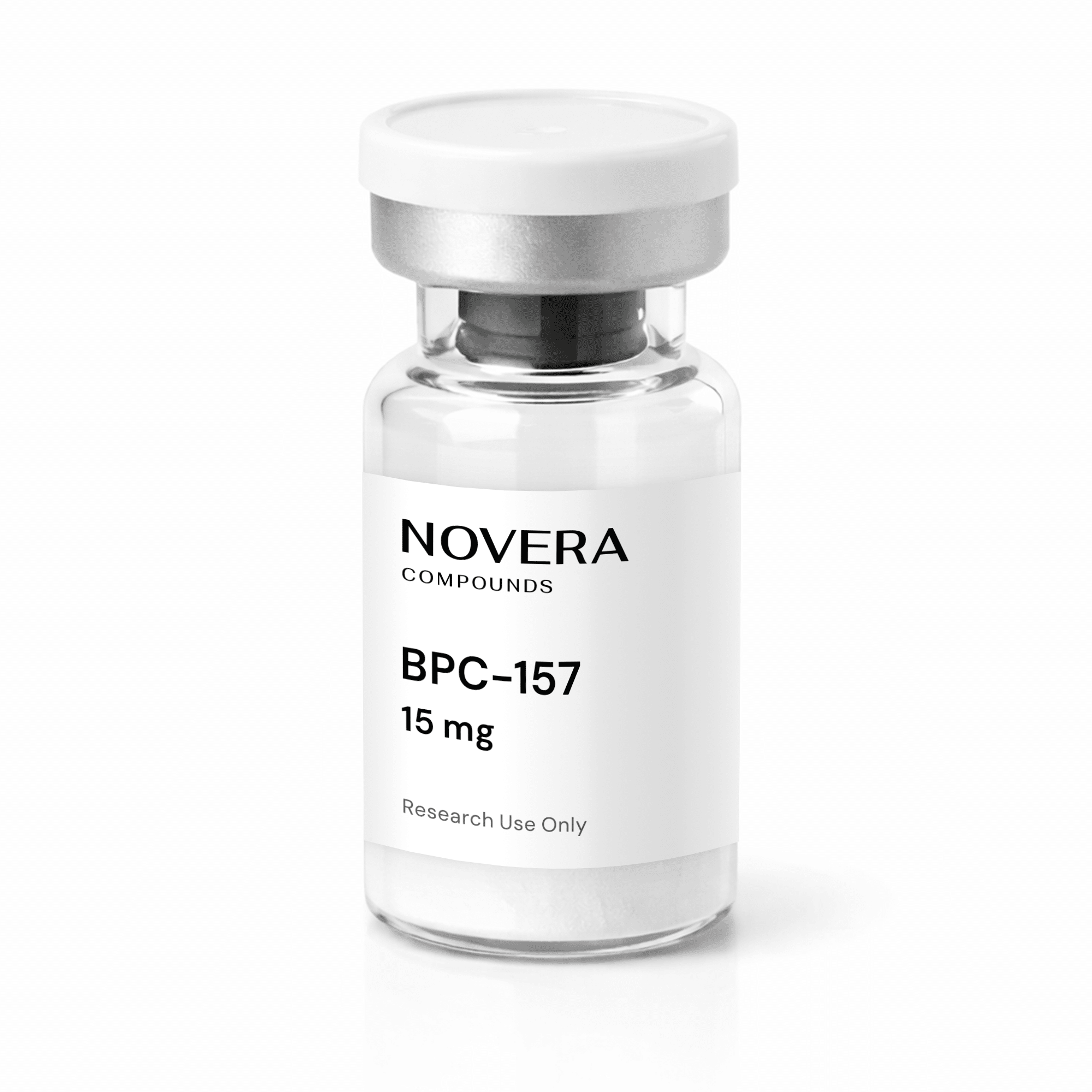
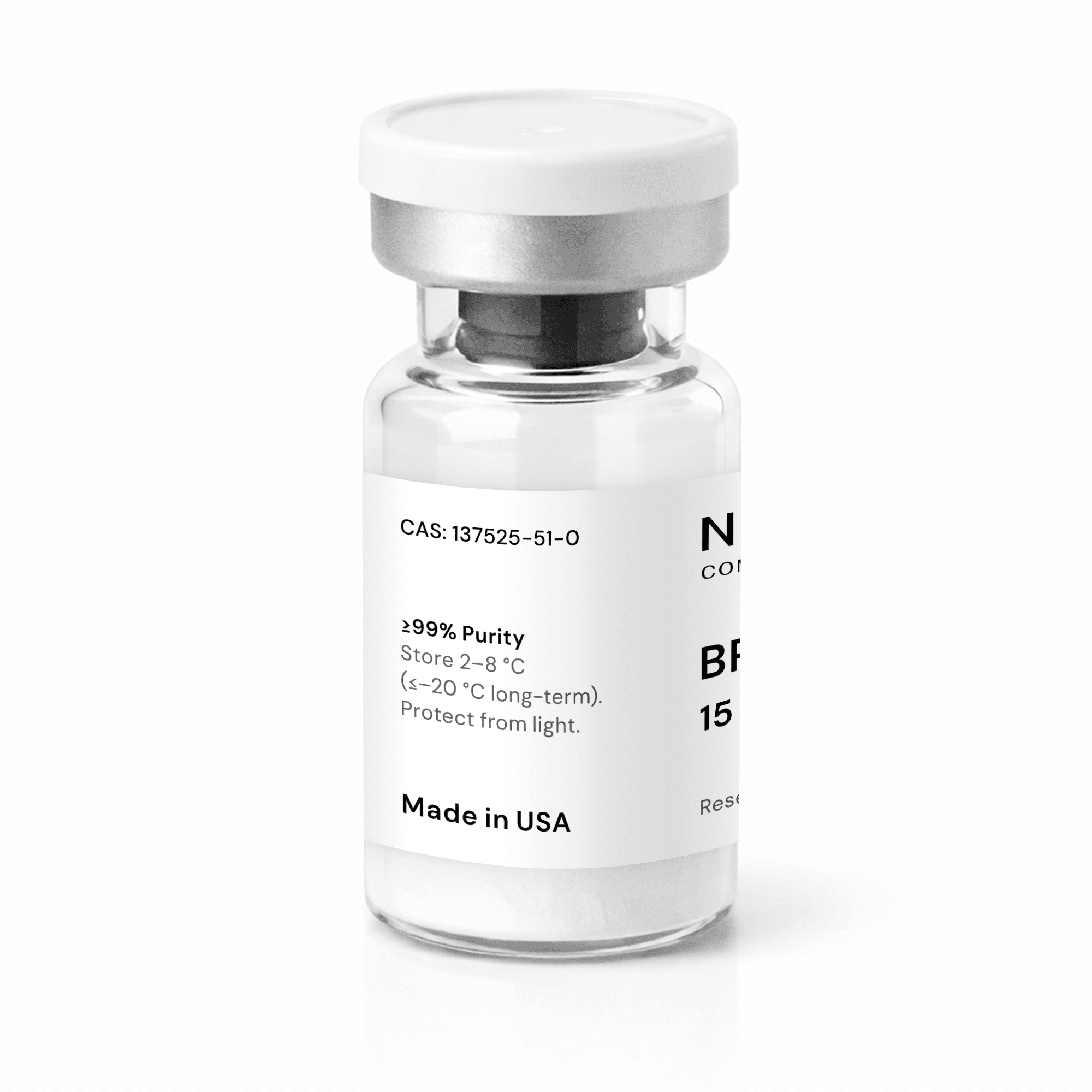
BPC-157 (15mg)
Coming Soon
This peptide will be available soon. Join the waitlist to be notified when it launches.
Product description
What is BPC-157 (15mg)?
BPC-157 (15mg) is a synthetic pentadecapeptide composed of 15 amino acids. It is derived from a protein fragment originally identified in human gastric juice and has been synthesized for laboratory research applications. This compound is commonly categorized as a regenerative and tissue-research peptide.Identification Characteristics
- CAS Number: 137525-51-0
- Chemical Formula: C₆₂H₉₈N₁₆O₂₂
- Molecular Weight: 1419.5 g/mol
- Sequence: Gly-Glu-Pro-Pro-Pro-Gly-Lys-Pro-Ala-Asp-Asp-Ala-Gly-Leu-Val
What are the key features of BPC-157 (15mg)?
BPC-157 (15mg) is supplied in a research-grade format suitable for controlled laboratory environments. Key features include:- High research-grade purity (≥98% typical analytical standard by HPLC)
- Supplied as 15 mg lyophilized peptide in a sealed vial
- Sequence length: 15 amino acids
- Studied in tissue repair and angiogenesis research models
- Stable for up to 24 months under proper storage conditions
- For laboratory research use only
How is BPC-157 (15mg) synthesized?
BPC-157 (15mg) is synthetically manufactured using solid-phase peptide synthesis (SPPS), a standard laboratory method for assembling short peptide chains. The 15-amino acid sequence is constructed stepwise, allowing precise control over structure and composition. Following synthesis, the peptide is purified using high-performance liquid chromatography (HPLC). Identity and molecular mass are typically confirmed through mass spectrometry (MS) analysis. The final product is lyophilized to enhance stability during storage and transport in research settings.What is BPC-157 (15mg) being studied for? What are its possible benefits?
BPC-157 (15mg) has been studied in preclinical research models exploring connective tissue repair and vascular biology. Investigations have examined its involvement in:- Angiogenesis research
- Muscle and tendon injury models
- Gastrointestinal mucosal research
- Ligament and soft tissue studies
How does BPC-157 (15mg) work in research studies?
In experimental models, BPC-157 (15mg) is being investigated for its interactions with signaling pathways involved in tissue repair and vascular function. Studies suggest it may influence growth factor activity and cellular communication processes involved in the maintenance of structural tissue. BPC-157 is thought to modulate processes that affect:- Blood vessel formation
- Inflammation signaling
- Extracellular matrix regulation
What dosing information exists for BPC-157 (15mg)?
Preclinical studies involving BPC-157 have primarily been conducted in animal and cell culture models. In murine research, the peptide has been studied at doses ranging from approximately 10 µg/kg to higher microgram or milligram per kilogram (mg/kg) ranges, depending on the experimental design. In in vitro studies, nanomolar to micromolar concentrations are typically used to assess cellular responses. Dosing protocols vary widely based on research objectives, tissue model, and duration of exposure. There are no established human dosing guidelines for BPC-157 (15mg), as it is intended exclusively for laboratory research.How should BPC-157 (15mg) be stored and handled?
BPC-157 (15mg) should be stored:- As a lyophilized powder at ≤–20 °C for long-term preservation
- Shelf life is up to 24 months under recommended conditions
- Protect from light and moisture
- Room temperature exposure during shipping is acceptable
- After reconstitution, store at 2–8 °C for short-term use
- Avoid repeated freeze-thaw cycles
- Use aseptic laboratory technique during handling
Where can I read more research about BPC-157 (15mg)?
The following peer-reviewed publications provide background information on BPC-157 research:- He L, Feng D, Guo H, et al. Pharmacokinetics, distribution, metabolism, and excretion of body-protective compound 157, a potential drug for treating various wounds, in rats and dogs. Front Pharmacol. 2022;13:1026182. Published 2022 Dec 14. doi:10.3389/fphar.2022.1026182
- Xu C, Sun L, Ren F, et al. Preclinical safety evaluation of body protective compound-157, a potential drug for treating various wounds. Regul Toxicol Pharmacol. 2020;114:104665. doi:10.1016/j.yrtph.2020.104665
- Sikiric P, Seiwerth S, Rucman R, et al. Focus on ulcerative colitis: stable gastric pentadecapeptide BPC 157. Curr Med Chem. 2012;19(1):126-132. doi:10.2174/092986712803414015
Compliance Statement
This product is intended for laboratory research use only and is not approved for human or veterinary use.Shop with Confidence: Product Authenticity is Guaranteed
All products available at Doctor Medica shop are obtained from respective manufacturers and contain original LOT numbers Contact us if you have any questions about product LOT numbers.


