Your Cart is Empty
Start shopping

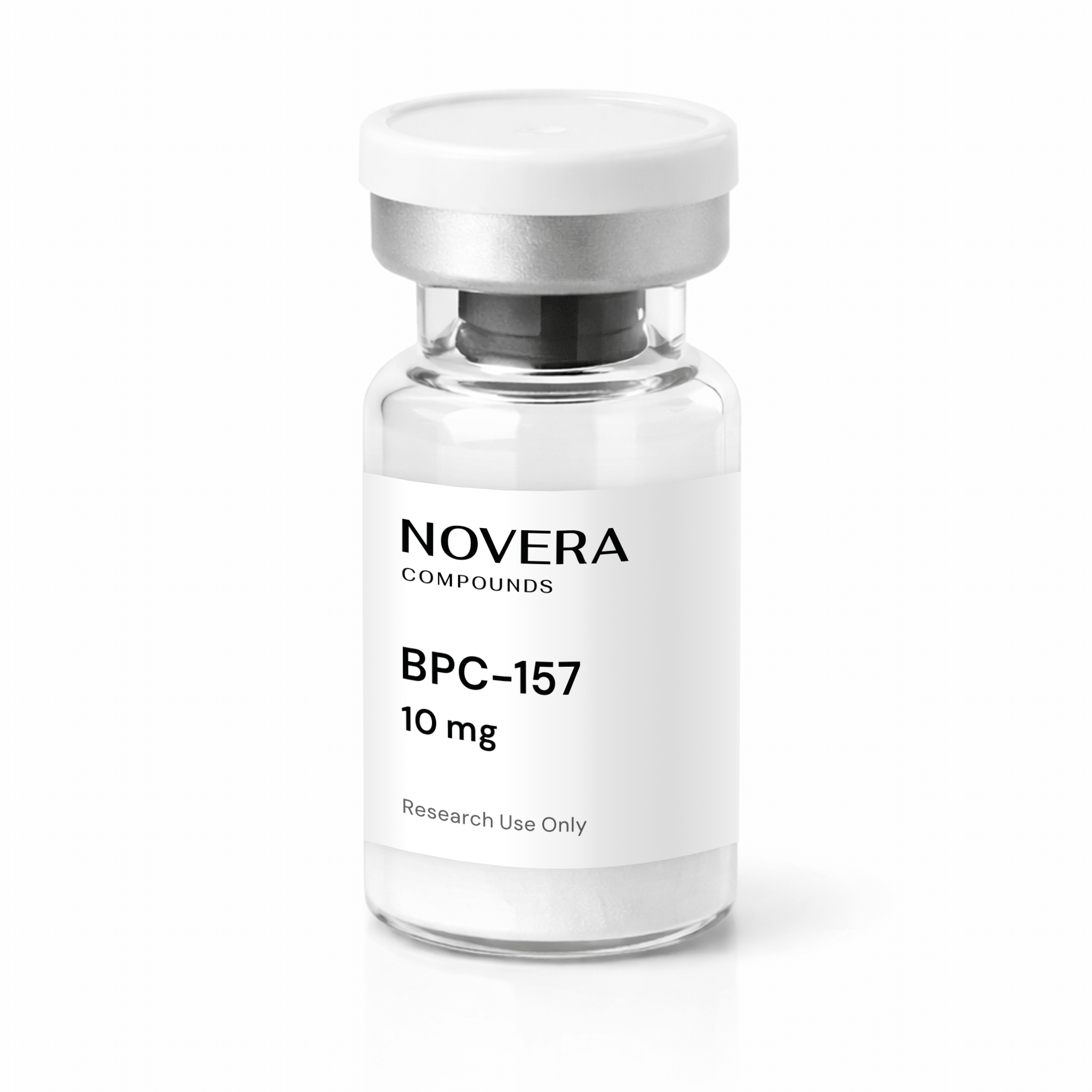
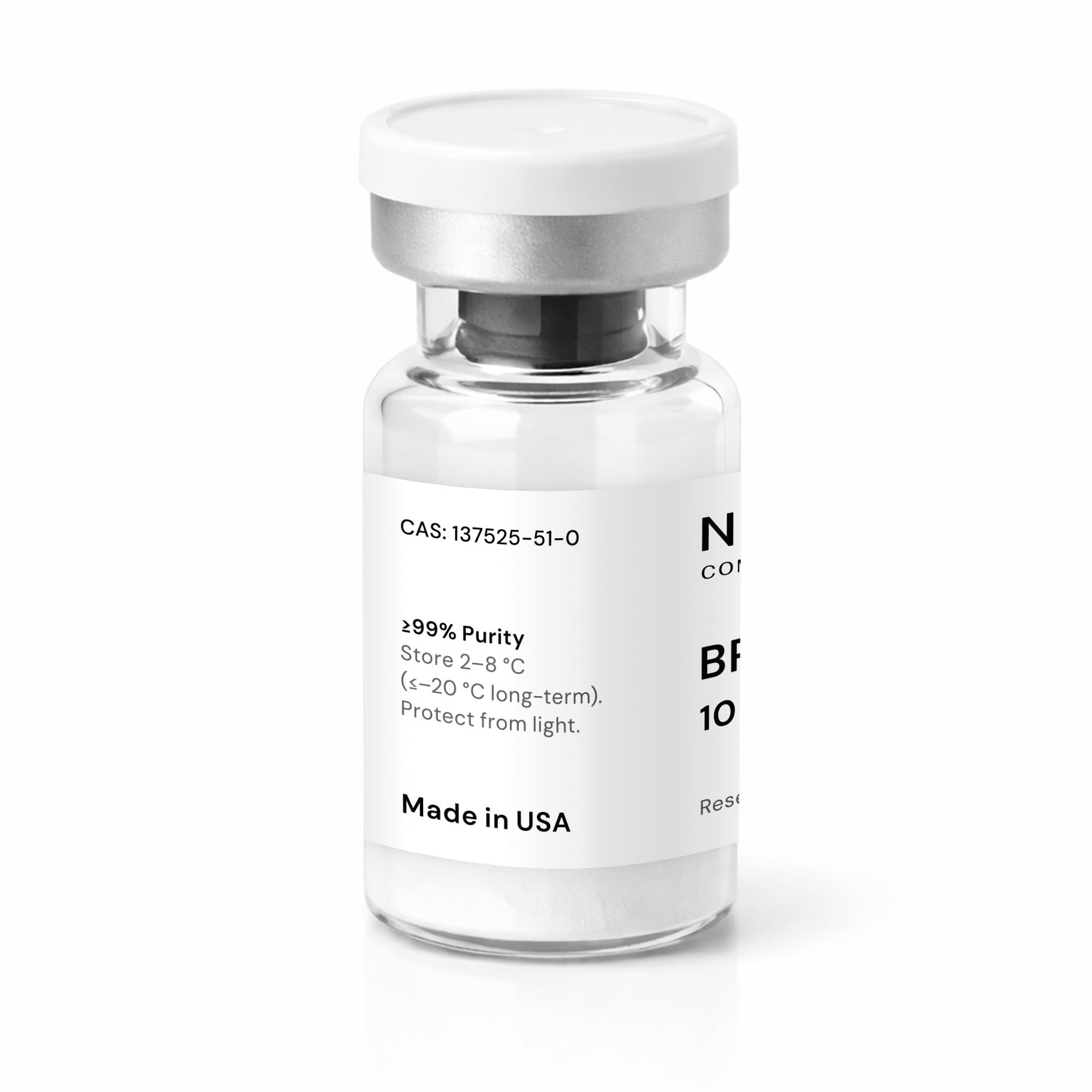
BPC-157 (10mg)
Tier
| Packs | Discount (%) | For Each |
|---|---|---|
| 1 - 5 | — | $76.00 |
| 6 - 10 | 10.53 % | $68.00 |
| 11 - 20 | 19.74 % | $61.00 |
| 21+ | 27.63 % | $55.00 |
Product description
What is BPC 157 (10mg)?
The BPC 157 peptide is a synthetic sequence modeled after a protective protein fragment found in the gastric system. It belongs to a class of research peptides studied for their potential roles in cellular repair, angiogenesis, and structural support in tissue models. The peptide consists of 15 amino acids with a molecular weight of 1419.5 g/mol and a molecular formula of C₆₂H₉₈N₁₆O₂₂. In laboratory settings, it has been studied for its role in biological pathways involving cellular signaling and tissue regeneration. Research-grade materials are often highly pure and verified using standard analytical methods to support consistent experimental outcomes. Furthermore, based on investigations, BPC-157 (10mg) falls under the category of healing and regenerative peptides.What are the key features of BPC 157?
Researchers who choose BPC 157 (10mg) often focus on its structural consistency, purity, and suitability for controlled in-vitro and preclinical applications. The peptide is typically supplied as a lyophilized powder in sealed vials to maintain stability until reconstitution. Key features include:- Verified through HPLC and MS to ensure consistent peptide quality.
- Structured 15–amino acid chain supporting controlled experimental reproducibility.
- Freeze-dried powder designed to maintain integrity during storage and transport.
- Uniform vial size enabling accurate measurement and straightforward reconstitution.
- Commonly used in metabolic and tissue-modeling research environments, similar to Retatrutide and Klow Blend.
- Produced under strict research-grade standards for dependable batch consistency.
How is BPC 157 synthesized?
When using BPC 157 for research, the peptide is produced through solid-phase peptide synthesis (SPPS), allowing precise stepwise assembly of its amino acid sequence. This synthetic process is widely used for laboratory peptides because it supports high fidelity and minimizes impurities that may occur in biological extraction. After synthesis, purification is typically performed using HPLC, which separates the target peptide from incomplete chains or unwanted byproducts. Final verification may involve mass spectrometry (MS) to confirm the correct mass-to-charge profile and ensure structural accuracy. These steps help establish consistency across batches and support reliable experimental use.What is BPC 157 being studied for? What are its possible benefits?
BPC 157 (10mg) is under investigation in preclinical and in vitro studies for multiple biological processes. Research has focused specifically on its distinctive control of angiogenesis and the nitric oxide (NO) system, which distinguishes it from other tissue-repair peptides. Main research areas include:- Angiogenesis modulation: BPC 157 promotes beneficial angiogenesis through VEGFR2 activation and eNOS-mediated nitric oxide production, while simultaneously suppressing pathological angiogenesis (relevant to tumor and cirrhosis models)
- Nitric oxide system control: A distinctive dual NO-system function that increases essential protective NO signaling while counteracting cytotoxic NO formation, a mechanism not observed in other peptides
- Cellular repair pathways: Fibroblast activation, extracellular matrix remodeling, and endothelial cell protection through innate cytoprotection mechanisms
- Neuroprotective effects: Evidence in animal models of Parkinson's disease and Alzheimer's disease-like disturbances
- Anti-inflammatory responses: Modulation of inflammatory markers and reactive oxygen species (ROS) scavenging through its four carboxylic acid groups
How does BPC 157 (10mg) work in research studies?
In laboratory studies, BPC 157 10 mg vial preparations are used to explore potential interactions with growth factors, cellular signaling molecules, and pathways associated with tissue stability. Research suggests the peptide may influence nitric oxide activity, angiogenic responses, or cytoprotective mechanisms, depending on the model used. The peptide is thought to act by indirectly modulating biochemical pathways rather than directly activating receptors. Researchers continue to evaluate how BPC 157 integrates into cell cultures and animal models to understand better its impact on cellular communication, structural maintenance, and metabolic regulation.What dosing information exists for BPC 157?
Scientific literature reports BPC 157 dosing parameters exclusively from preclinical studies. Published research has evaluated doses ranging from 6 µg/kg to 500 µg/kg depending on route and model:- Intravenous (IV): 6–20 µg/kg
- Intramuscular (IM): 20–500 µg/kg
- Effective therapeutic range: 6–50 µg/kg
- Proposed clinical equivalent: 200 µg/person/day
How should BPC 157 be stored and handled?
When you buy BPC 157 for research, make sure to store it at –20 °C to maintain long-term stability. The peptide should be kept in its sealed vial, protected from light, moisture, and repeated temperature fluctuations. Under these conditions, lyophilized peptides often maintain structural integrity for extended periods, as indicated by supplier specifications. Once reconstituted, short-term storage at 2–8 °C is recommended. The solution should be used promptly and never subjected to repeated freeze–thaw cycles, which may degrade peptide quality. Laboratories typically follow internal guidelines or supplier documentation regarding maximum storage duration after reconstitution.Where can I read more research about BPC 157 (10mg)?
Professionals seeking additional studies on BPC 157 for research applications can explore several well-established scientific repositories. These platforms include preclinical studies, biochemical analyses, and broader discussions of peptide behavior in metabolic and cellular models. Recommended sources include:- He L, Feng D, Guo H, et al. Pharmacokinetics, distribution, metabolism, and excretion of body-protective compound 157, a potential drug for treating various wounds, in rats and dogs. Front Pharmacol. 2022;13:1026182. Published 2022 Dec 14. doi:10.3389/fphar.2022.1026182
- Xu C, Sun L, Ren F, et al. Preclinical safety evaluation of body protective compound-157, a potential drug for treating various wounds. Regul Toxicol Pharmacol. 2020;114:104665. doi:10.1016/j.yrtph.2020.104665
- Sikiric P, Seiwerth S, Rucman R, et al. Focus on ulcerative colitis: stable gastric pentadecapeptide BPC 157. Curr Med Chem. 2012;19(1):126-132. doi:10.2174/092986712803414015
Compliance Statement
This product is intended for laboratory research use only and is not approved for human or veterinary use.Shop with Confidence: Product Authenticity is Guaranteed
All products available at Doctor Medica shop are obtained from respective manufacturers and contain original LOT numbers Contact us if you have any questions about product LOT numbers.


