Your Cart is Empty
Start shopping

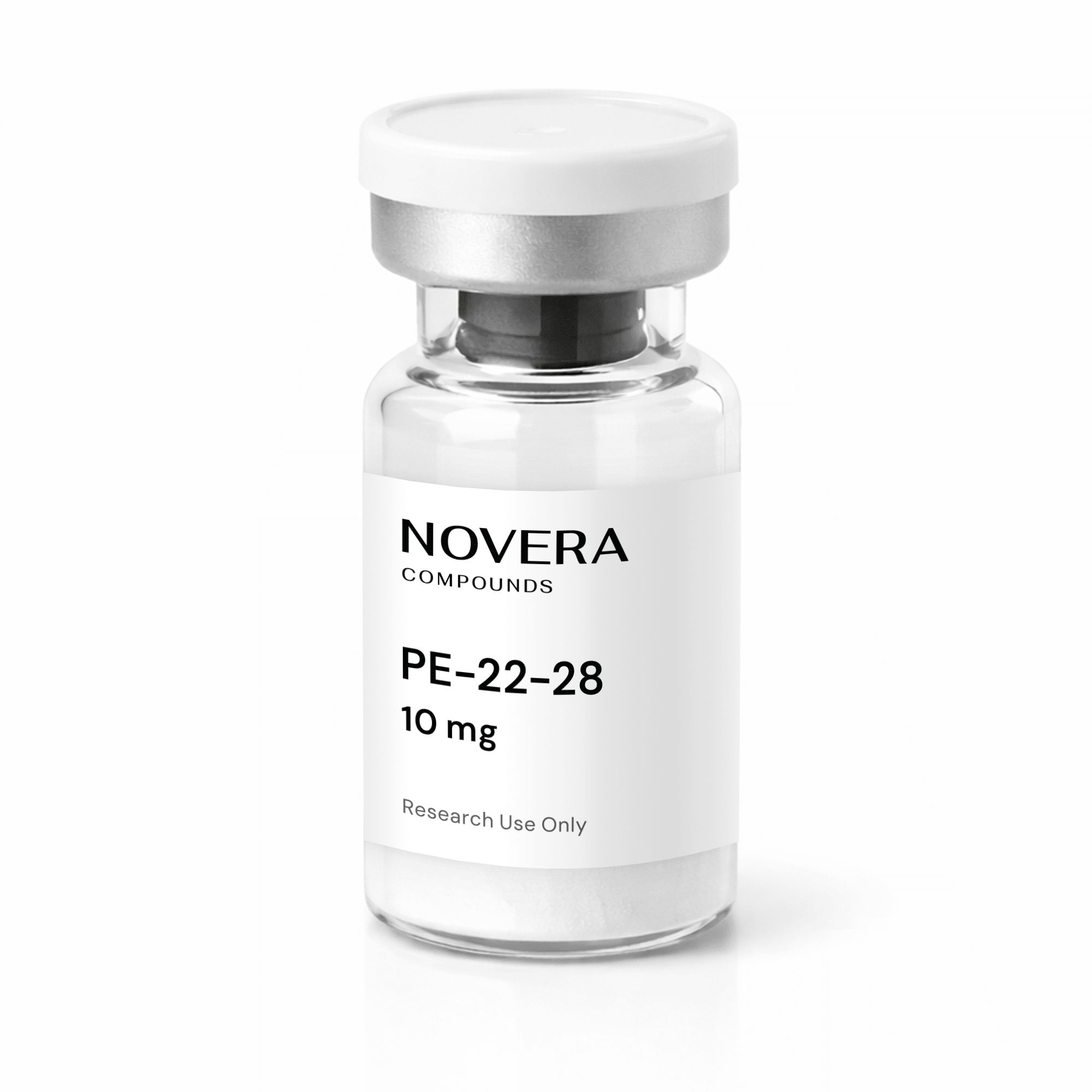
PE-22-28 (10mg)
Tier
| Packs | Discount (%) | For Each |
|---|---|---|
| 1 - 5 | — | $63.00 |
| 6 - 10 | 9.52 % | $57.00 |
| 11 - 20 | 19.05 % | $51.00 |
| 21+ | 26.98 % | $46.00 |
Product description
What is PE-22-28 (10mg)?
PE-22-28 is a synthetic peptide fragment derived from the spadin peptide, which originates from the propeptide sequence of the sortilin protein (NTSR3). The fragment, often referred to as PE-22-28, is a seven-amino acid sequence studied in laboratory research on neural signaling and molecular mechanisms related to mood regulation and neuronal activity. Research-grade preparations typically have ≥98% purity, verified using high-performance liquid chromatography (HPLC) and mass spectrometry (MS). PE-22-28 has been studied in experimental models investigating neuronal signaling pathways and peptide-mediated cellular responses in neural tissue.What are the key features of PE-22-28 (10mg)?
PE-22-28 (10mg) is supplied as a lyophilized peptide for controlled laboratory research. Researchers commonly use this peptide in studies of peptide signaling and neural cell models. Key features of PE-22-28 (10mg) include:- Peptide class: Short regulatory peptide derived from a sortilin-related peptide fragment
- Subcategory: Brain, Cognitive & Nootropic Peptides
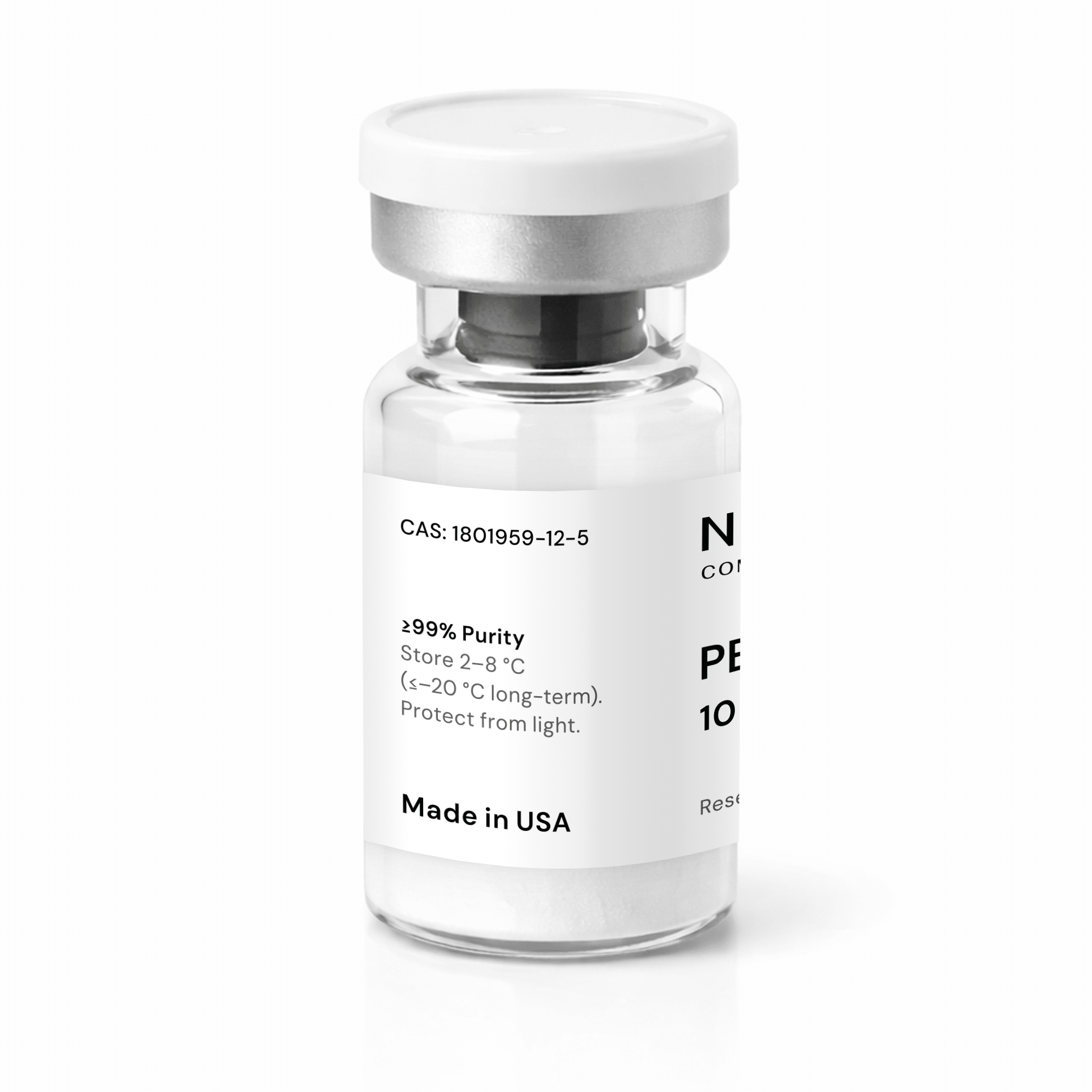
- CAS Number: 1801959-12-5
- Sequence length: Gly-Val-Ser-Trp-Gly-Leu-Arg
- Chemical Formula: C₃₅H₅₅N₁₁O₉
- Molecular weight: 773.8947 g/mol
- Purity: Typically ≥98%, verified by HPLC analysis
- Analytical verification: Identity confirmed using mass spectrometry (MS)
- Format: 10 mg lyophilized peptide supplied in a sealed research vial
How is PE-22-28 (10mg) synthesized?
PE-22-28 is produced using solid-phase peptide synthesis (SPPS), a widely used method for constructing peptides with precise amino acid sequences. In this process, protected amino acids are sequentially linked to a solid resin support, ensuring accurate assembly of the peptide’s seven-residue sequence. After synthesis, the peptide undergoes purification, typically using high-performance liquid chromatography (HPLC), to achieve high purity levels (≥98%). Structural verification is completed using mass spectrometry (MS), which confirms the peptide's molecular weight and identity. The final compound is lyophilized to minimize degradation and facilitate laboratory handling.What is PE-22-28 (10mg) being studied for? What are its possible benefits?
PE-22-28 has been studied in laboratory research focused on neurobiology and cellular signaling within the central nervous system. Studies have investigated this peptide as part of broader research on sortilin-related peptides and their potential influence on neural communication pathways and synaptic activity. Experimental models have explored whether PE-22-28 may influence neuronal signaling, cellular plasticity, and neurotransmitter-related pathways. Some preclinical studies have evaluated the peptide in models investigating molecular processes associated with mood regulation and neural network activity. These potential biological roles remain under investigation, and current findings are limited to laboratory and preclinical research settings rather than clinical applications.How does PE-22-28 (10mg) work in research studies?
In laboratory studies, PE-22-28 is researched for its potential interaction with cellular signaling pathways in neural tissues. Investigations into spadin-related peptides suggest that these short fragments may influence neuronal communication by modulating signaling mechanisms within neurons. Researchers have examined whether the peptide may affect processes related to cellular communication, synaptic regulation, and neuronal excitability in experimental models. These studies typically use cultured neurons or animal models to observe how peptide fragments influence molecular activity. While the mechanisms are still under investigation, the peptide’s biological role remains an active area of scientific research.What dosing information exists for PE-22-28 (10mg)?
Research involving PE-22-28 and related spadin fragments has primarily been conducted in preclinical models and in-vitro experiments. In some experimental animal studies, peptide fragments derived from spadin have been investigated at doses in the microgram-per-kilogram (µg/kg) range to assess molecular and behavioral responses in controlled environments. Dosing protocols vary widely depending on experimental design, species studied, and research objectives. Importantly, no standardized dosing guidelines exist for human use. Reported experimental concentrations are strictly part of controlled laboratory research and should not be interpreted as clinical dosage recommendations.How should PE-22-28 (10mg) be stored and handled?
To minimize degradation, PE-22-28 should be stored in its lyophilized form at –20 °C or lower. Maintaining a cold, dry environment helps preserve the peptide’s structural integrity and reduces the risk of degradation. The vial should be protected from light, heat, and moisture, as these factors may affect peptide structural integrity. After reconstitution with a suitable laboratory solvent, the solution is typically stored at 2–8 °C for short-term use. Researchers often prepare small aliquots to minimize repeated freeze-thaw cycles, as these cycles can reduce peptide stability. Peptide integrity may vary depending on solvent choice and laboratory handling conditions.Where can I read more research about PE-22-28 (10mg)?
Researchers interested in learning more about PE-22-28 and related peptide fragments may consult the following scientific databases and publications:- Djillani A, Pietri M, Moreno S, Heurteaux C, Mazella J, Borsotto M. Shortened Spadin Analogs Display Better TREK-1 Inhibition, In Vivo Stability and Antidepressant Activity. Front Pharmacol. 2017;8:643. Published 2017 Sep 12. doi:10.3389/fphar.2017.00643
- Mazella J, Pétrault O, Lucas G, et al. Spadin, a Sortilin-Derived peptide, targeting rodent TREK-1 channels: a new concept in the antidepressant drug design. PLoS Biology. 2010;8(4):e1000355. doi:10.1371/journal.pbio.1000355
- Djillani A, Mazella J, Heurteaux C, Borsotto M. Role of TREK-1 in health and disease, Focus on the central nervous system. Frontiers in Pharmacology. 2019;10:379. doi:10.3389/fphar.2019.00379
- Borsotto M, Veyssiere J, Moha Ou Maati H, Devader C, Mazella J, Heurteaux C. Targeting two-pore domain K(+) channels TREK-1 and TASK-3 for the treatment of depression: a new therapeutic concept. Br J Pharmacol. 2015;172(3):771-784. doi:10.1111/bph.12953
Compliance Statement
This product is intended for laboratory research use only and is not approved for human or veterinary use.Shop with Confidence: Product Authenticity is Guaranteed
All products available at Doctor Medica shop are obtained from respective manufacturers and contain original LOT numbers Contact us if you have any questions about product LOT numbers.


