Your Cart is Empty
Start shopping

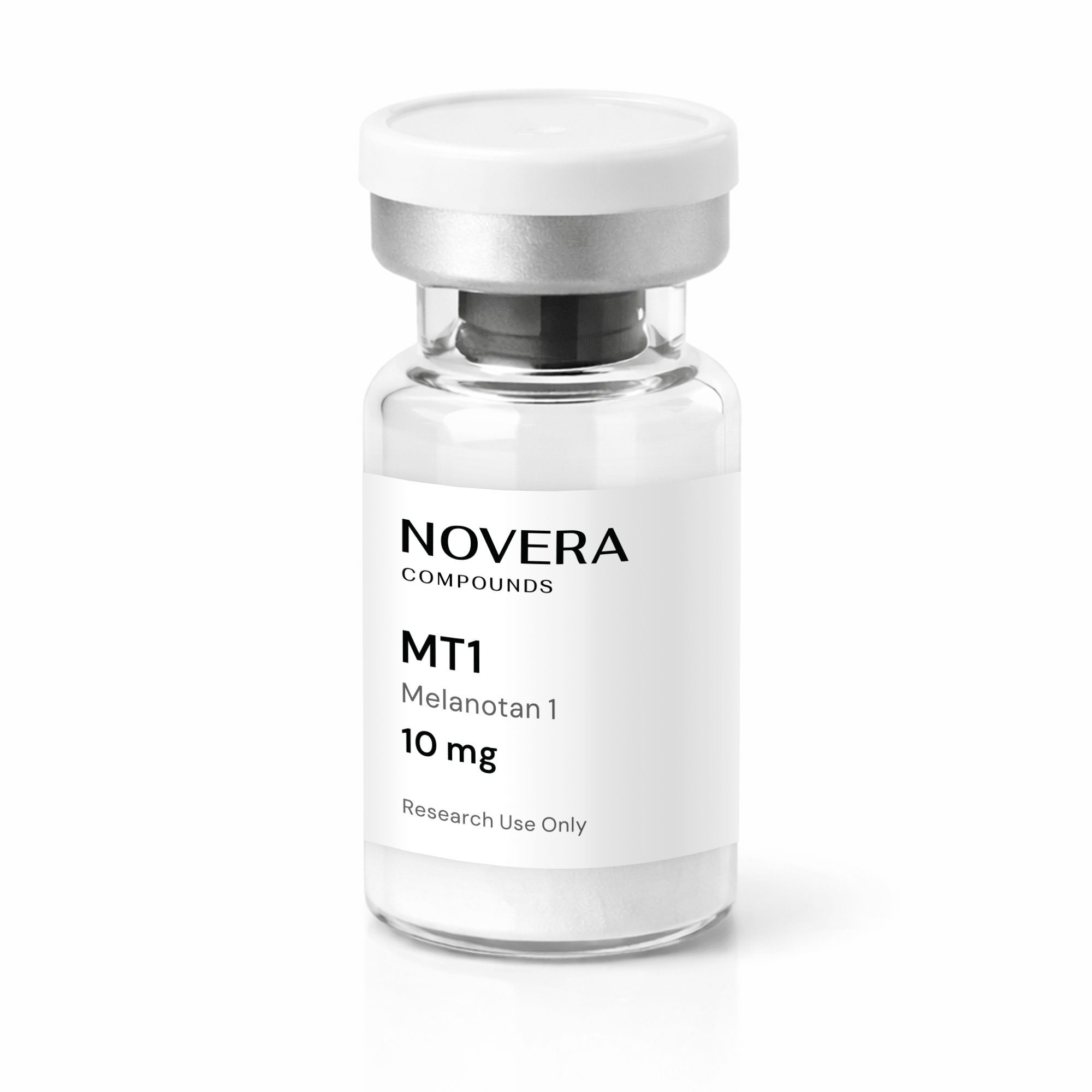
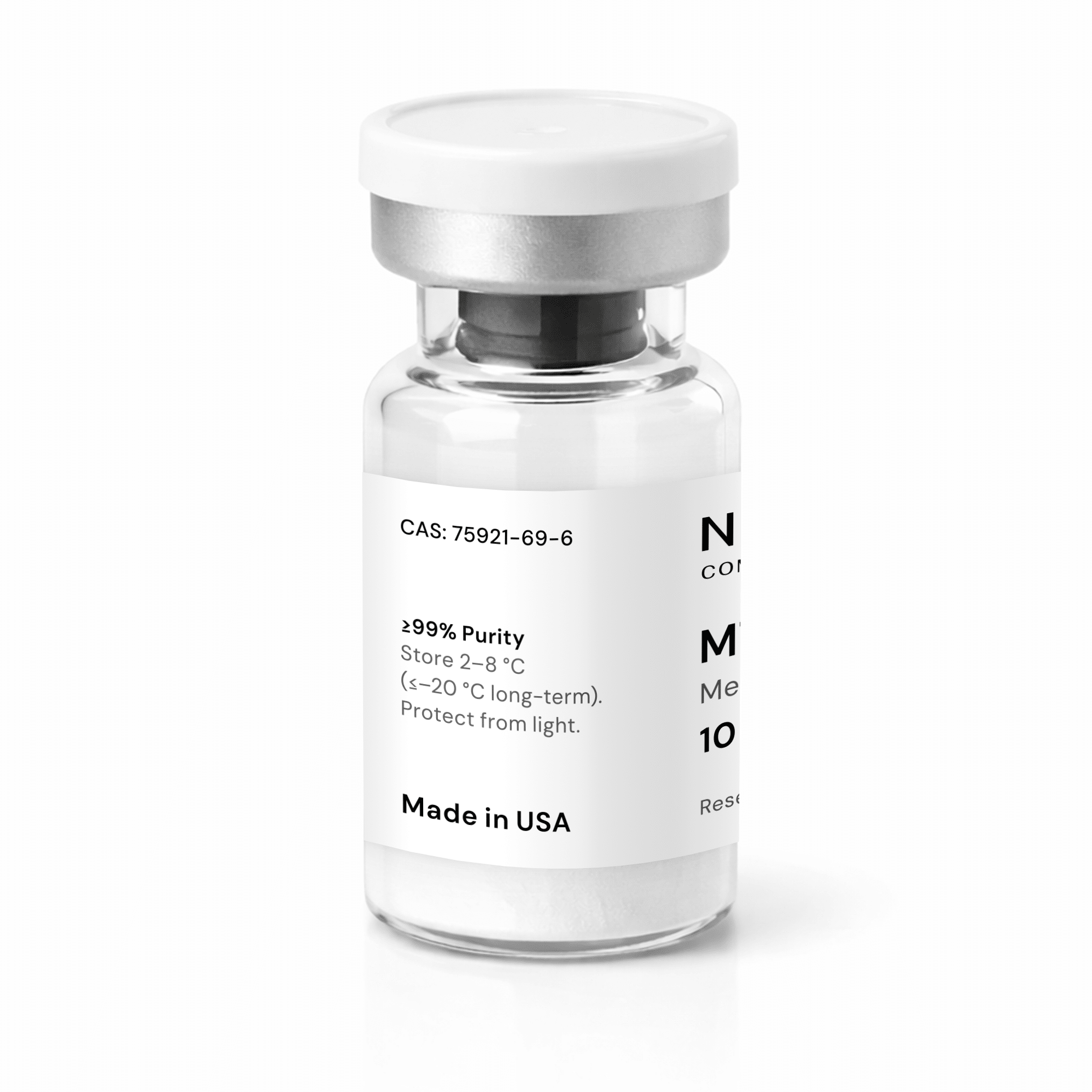
MT-1
Tier
| Packs | Discount (%) | For Each |
|---|---|---|
| 1 - 5 | — | $51.00 |
| 6 - 10 | 9.8 % | $46.00 |
| 11 - 20 | 19.61 % | $41.00 |
| 21+ | 27.45 % | $37.00 |
Product description
What is MT-1?
MT-1 (Melanotan 1, also known as Afamelanotide or [Nle⁴,D-Phe⁷]-α-MSH) is a synthetic 13-amino acid analogue of alpha-melanocyte-stimulating hormone (α-MSH).- Peptide Sequence: Ser-Tyr-Ser-Nle-Glu-His-D-Phe-Arg-Trp-Gly-Lys-Pro-Val
- The peptide has a molecular weight of 1,646.87 g/mol(molecular formula C₇₈H₁₁₁N₂₁O₁₉) and features two strategic amino acid substitutionsdesigned to enhance enzymatic stability and optimize receptor interaction: position 4 substitution of methionine with norleucine (Nle) and position 7 replacement of L-phenylalanine with D-phenylalanine (D-Phe).
What are the key features of MT-1?
Researchers who buy MT 1 for laboratory use benefit from its well-characterized biochemical profile, high purity, and extensive research literature. MT-1 is produced as a high-purity research material with consistent composition and verified identity, supplied in lyophilized powder format in standardized 10 mg vial packages suited for controlled handling and experimental reproducibility. The peptide is widely selected for mechanistic studies of melanocortin receptor biology and signaling pharmacology. Furthermore, key features include:- 99% purity, confirmed by reverse-phase HPLC with controlled impurity profiles
- 10 mg vial format— Lyophilized powder suitable for controlled laboratory reconstitution and measured research use
- Selective multi-receptor activity— Binds melanocortin receptors (MC1R, MC3R, MC4R, MC5R) for comprehensive receptor pharmacology investigations
- Engineered stability— Nle and D-Phe substitutions at positions 4 and 7 enhance enzymatic resistance compared to native α-MSH
- cAMP-dependent signaling— Investigated for activation of second-messenger cascades and downstream transcriptional responses
- Stable freeze-dried formulation— Lyophilized for long-term stability at −18 °C with minimal degradation
- For laboratory research use only
How is MT-1 synthesized?
MT-1 is produced via solid-phase peptide synthesis (SPPS), a precisely controlled chemical method that ensures accurate replication of the 13-amino acid sequence while preserving the two critical structural modifications. The synthesis process carefully incorporates norleucine at position 4 (replacing native methionine) and D-phenylalanine at position 7 (replacing native L-phenylalanine), modifications essential to the peptide's enhanced metabolic stability and receptor-binding profile. Following synthesis, the compound undergoes comprehensive analytical validation including reverse-phase HPLC purification to achieve ≥99% purity and mass spectrometry analysis to confirm molecular identity, structural accuracy, and compliance with analytical standards. The freeze-dried powder produced through this method maintains stability when stored under recommended conditions. Synthetic production eliminates biological contaminants, enabling researchers to work with a well-defined, consistent compound across experimental replicates and studies.What is MT-1 being studied for? What are its possible benefits?
Laboratory investigations involving melanotan 1 peptide for research have focused on its roles as a melanocortin receptor agonist probe for investigating receptor pharmacology and downstream signaling mechanisms. Research has examined MT-1's effects on multiple research areas, including melanocortin receptor binding and selectivity, second-messenger pathway activation (cAMP/PKA signaling), pigmentation-related gene expression, neuroinflammation-linked signaling, cardiovascular pathway modulation, and metabolic endpoint evaluation in controlled in-vitro and preclinical animal models. Key research areas under investigation include:- Receptor-ligand selectivity studies
- Transcriptional regulation of melanogenic pathways
- Eumelanin synthesis mechanisms
- cAMP-dependent gene expression
- Neurobiological signaling in CNS models
- Inflammation-associated molecular endpoints
- Metabolic pathway interrogation
How does MT-1 work in research studies?
In laboratory investigations, MT-1 functions as a melanocortin receptor agonist, binding to and activating members of the melanocortin receptor family (MC1R, MC3R, MC4R, MC5R). Upon receptor engagement, MT-1 triggers Gs-protein-coupled signaling pathways leading to cAMP accumulation and PKA activation. This second-messenger cascade activates CREB-linked transcriptional responses and immediate early gene expression associated with downstream biological effects. Research demonstrates that MT-1-mediated receptor activation can also engage additional intracellular signaling cascades including MAPK/ERK pathways depending on receptor subtype and cellular context. In pigmentation research, MT-1 is examined for its role in stimulating melanogenic enzyme expression and eumelanin synthesis through MC1R engagement on melanocytes. In neurobiology and cardiovascular studies, MT-1 activation of neural melanocortin receptors (particularly MC4R) is investigated for effects on inflammation-linked molecular endpoints, neurotrophin signaling, and vascular tone regulation in preclinical animal models. Studies typically employ subtype-selective antagonists and receptor-expression controls to deconvolute specific receptor contributions to measured biochemical endpoints across cell-based assays and in-vivo systems.What dosing information exists for MT-1?
Preclinical research examining MT-1 and related melanocortin agonists has employed variable dosing protocols depending on study design, research endpoint, and experimental model. Published literature describes:- In-vitro cellular assays:Peptide concentrations typically range from nanomolar to low micromolar levels, depending on cell type and signaling endpoints measured
- Receptor binding studies:Concentrations optimized for kinetic and competitive binding analysis
- Preclinical animal models:Variable dosing based on animal species, route of administration, study duration, and specific biological parameters evaluated
How should MT-1 be stored and handled?
Unreconstituted Lyophilized Peptide:- Storage temperature:−18 °C (or lower for extended long-term storage)
- Storage environment:Dry, sealed, light-protected container; protect from moisture, heat, and direct light exposure
- Expected stability:Lyophilized peptide maintains stability for extended periods under proper cold-storage conditions
- Preparation:Reconstitute using sterile water or dilute acetic acid at concentrations appropriate for experimental protocols
- Short-term storage:4 °C (standard refrigeration) for immediate use
- Long-term storage:−18 °C or −80 °C freezing for extended preservation of biological activity
- Handling precaution:Minimize repeated freeze-thaw cycles, as they can compromise peptide structural integrity and reduce biological activity
- Aseptic technique:Standard laboratory safety procedures and sterile technique should be followed during all experimental preparation steps
Where can I read more research about MT-1?
Researchers can access peer-reviewed studies and detailed scientific discussions through major biomedical databases. Foundational and contemporary studies on MT-1 receptor pharmacology, melanocortin signaling, pigmentation mechanisms, and preclinical research applications are available via:- Fitzgerald LM, Fryer JL, Dwyer T, Humphrey SM. Effect of MELANOTAN, [Nle(4), D-Phe(7)]-alpha-MSH, on melanin synthesis in humans with MC1R variant alleles. Peptides. 2006;27(2):388-394. doi:10.1016/j.peptides.2004.12.038
- In: LiverTox: Clinical and Research Information on Drug-Induced Liver Injury. Bethesda (MD): National Institute of Diabetes and Digestive and Kidney Diseases; March 5, 2024.
- Minder EI, Barman-Aksoezen J, Schneider-Yin X. Pharmacokinetics and Pharmacodynamics of Afamelanotide and its Clinical Use in Treating Dermatologic Disorders. Clin Pharmacokinet. 2017;56(8):815-823. doi:10.1007/s40262-016-0501-5
- Dorr RT, Ertl G, Levine N, et al. Effects of a superpotent melanotropic peptide in combination with solar UV radiation on tanning of the skin in human volunteers. Archives of Dermatology. 2004;140(7):827-835. doi:https://doi.org/10.1001/archderm.140.7.827
- Dall'Olmo L, Papa N, Surdo NC, Marigo I, Mocellin S. Alpha-melanocyte stimulating hormone (α-MSH): biology, clinical relevance and implication in melanoma. J Transl Med. 2023;21(1):562. Published 2023 Aug 22. doi:10.1186/s12967-023-04405-y
- Böhm, Robert C, Malhotra S, K. Clément, Farooqi S. An overview of benefits and risks of chronic melanocortin‐1 receptor activation. Journal of the European Academy of Dermatology and Venereology. Published online July 31, 2024. doi:https://doi.org/10.1111/jdv.20269
Compliance Statement
This product is intended for laboratory research use only and is not approved for human or veterinary use.Shop with Confidence: Product Authenticity is Guaranteed
All products available at Doctor Medica shop are obtained from respective manufacturers and contain original LOT numbers Contact us if you have any questions about product LOT numbers.


