Your Cart is Empty
Start shopping

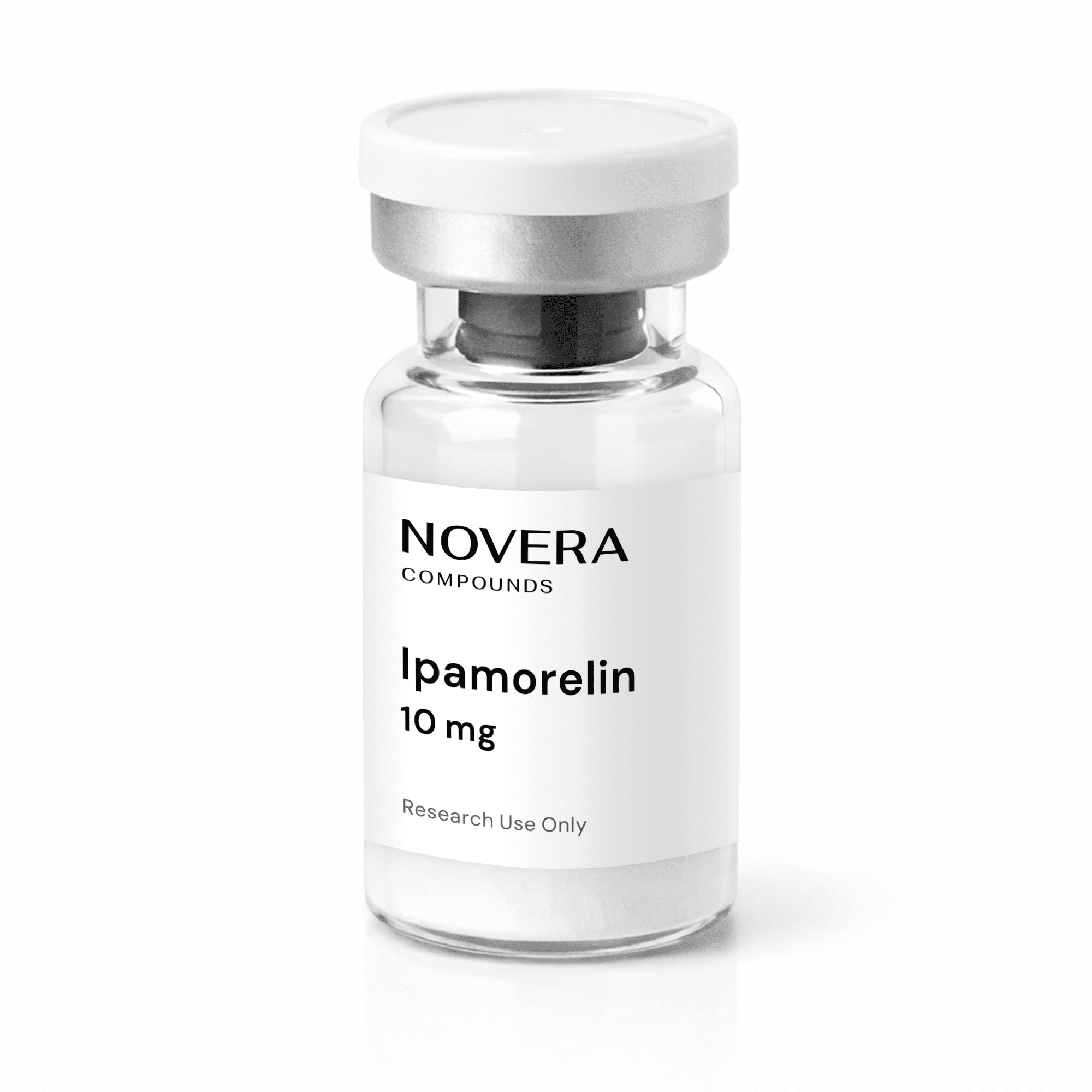
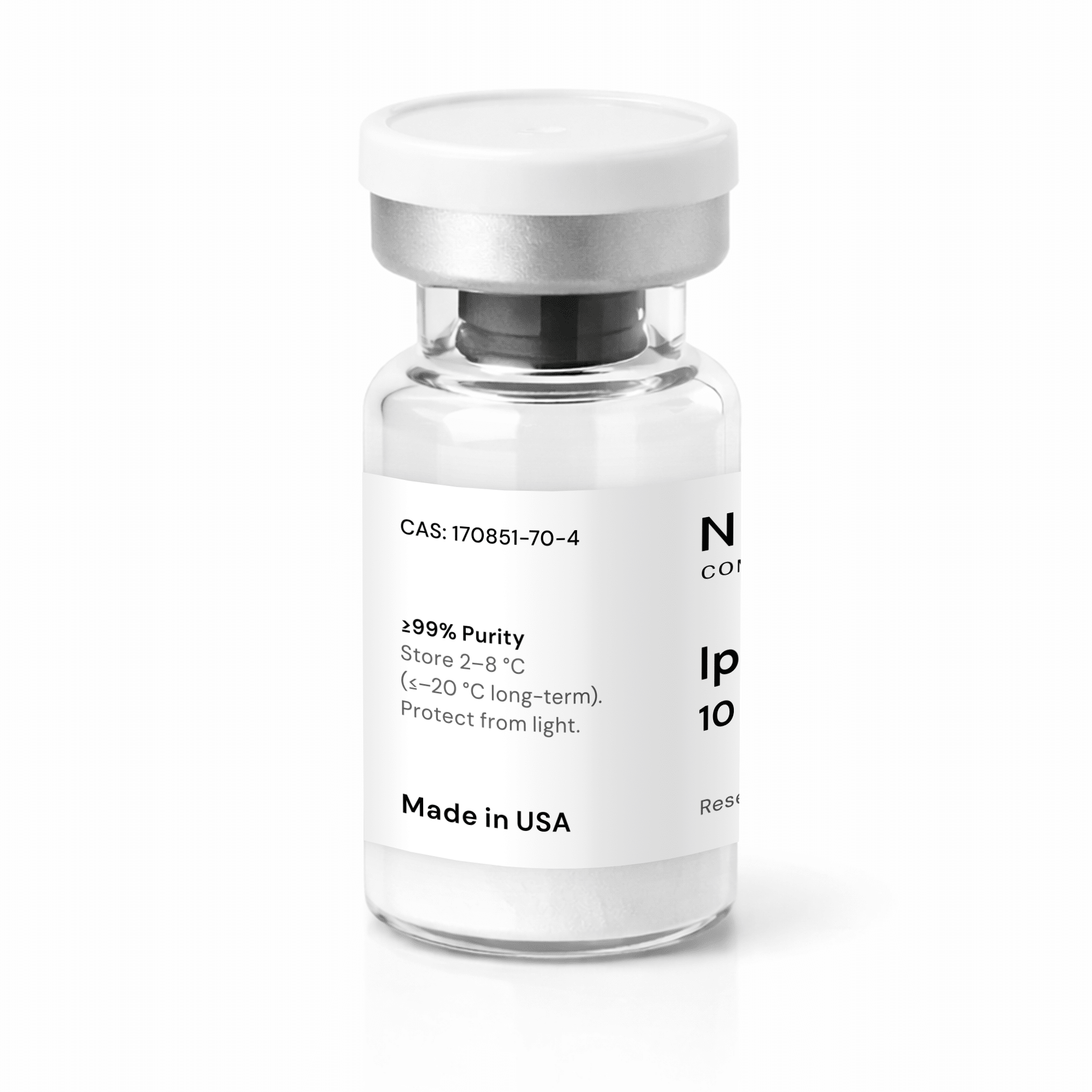
Ipamorelin (10mg)
Tier
| Packs | Discount (%) | For Each |
|---|---|---|
| 1 - 5 | — | $64.00 |
| 6 - 10 | 9.38 % | $58.00 |
| 11 - 20 | 18.75 % | $52.00 |
| 21+ | 26.56 % | $47.00 |
Product description
What is Ipamorelin?
Ipamorelin is a synthetic pentapeptide growth hormone secretagogue classified as a selective growth hormone secretagogue receptor (GHS-R1a/GHSR-1a) agonist. The peptide has a molecular weight of 711.868 g/mol (molecular formula C₃₈H₄₉N₉O₅; CAS No. 170851-70-4) and is composed of five amino acids with the sequence Aib-His-D-2Nal-D-Phe-Lys-NH₂. Notably, this sequence contains non-proteinogenic residues including alpha-aminoisobutyric acid (Aib) and D-amino acids (D-2-naphthylalanine and D-phenylalanine), which are deliberately incorporated to enhance metabolic stability and receptor-binding selectivity. The ipamorelin peptide has been extensively studied in preclinical research models for its selective activation of growth hormone release pathways. Laboratory investigations have examined its 99% purity, verified through HPLC and mass spectrometry, and documented its receptor selectivity profile. Researchers who buy ipamorelin typically employ it for biochemical, receptor pharmacology, and endocrine signaling investigations in controlled experimental settings.What are the key features of Ipamorelin?
Ipamorelin is valued in research for its exceptional receptor selectivity, biochemical stability, and well-characterized pharmacological profile. Supplied in a standardized lyophilized (freeze-dried) powder format, it supports both small-scale and large-scale laboratory experiments. Furthermore, the ipamorelin 10 mg vial format (available in 2 mg, 5 mg, and 10 mg specifications) provides researchers with convenient, precisely measured amounts for accurate experimental work. Key features include:- 99% purity, confirmed by HPLC and mass spectrometry for analytical accuracy and research reproducibility
- Pentapeptide structurewith non-proteinogenic residues (Aib and D-amino acids) conferring exceptional metabolic stability and resistance to non-specific proteolytic degradation
- High receptor selectivitydemonstrating minimal activity on non-target pituitary hormones including ACTH, cortisol, prolactin, FSH, LH, and TSH—distinguishing it from less selective growth hormone secretagogues
- Potent GHS-R1a agonist activitywith ED₅₀ = 2.3 nmol/kg in conscious animal models, comparable to GHRP-6 efficacy but with enhanced selectivity
- Lyophilized powder formatproviding extended shelf-life stability of up to 24 months when stored appropriately, with minimal degradation under recommended cold-storage conditions
- Widely utilized as a pharmacological tool compoundfor structure-activity relationship (SAR) investigations and receptor-ligand selectivity studies
- For laboratory research use only
How is Ipamorelin synthesized?
Ipamorelin is produced via solid-phase peptide synthesis (SPPS), a precisely controlled chemical methodology that assembles the five amino acids in correct sequence while incorporating the distinctive non-proteinogenic residues. The synthesis process carefully manages the incorporation of alpha-aminoisobutyric acid (Aib) at the N-terminus and the D-amino acids (D-2-naphthylalanine and D-phenylalanine), which do not occur in natural proteins but are critical to the peptide's final properties.Structural Significance of Non-Proteinogenic Residues:
- Aib (N-terminal position):Reduces conformational flexibility of the peptide backbone, locking it into a bioactive conformation and enhancing its stability against enzymatic degradation
- D-2-Naphthylalanine (position 3):Provides hydrophobic interactions with the GHSR-1a receptor binding pocket while conferring resistance to peptidase cleavage; the bulky 2-naphthyl side chain is essential for potency and selectivity
- D-Phenylalanine (position 4):Contributes to metabolic stability and receptor-binding specificity; the D-stereoisomer prevents recognition and cleavage by proteolytic enzymes that specifically recognize L-amino acids
What is Ipamorelin being studied for? What are its possible benefits?
Ipamorelin has been studied extensively in preclinical research for its selective GHS-R1a agonist activity and effects on growth hormone secretion pathways. Research examines how this peptide influences multiple biological systems through receptor-selective signaling without activating non-target pituitary hormone axes. Main Research Areas Under Investigation Include:- GHSR-1a receptor binding affinity and selectivity assays— Comparative binding studies and structure-activity relationship (SAR) investigations examining ligand-receptor interactions and selectivity mechanisms
- Second-messenger signaling analysis— Examination of calcium-dependent and adenylate cyclase/cAMP pathway activation downstream of GHSR-1a engagement
- Receptor pharmacology and mechanism-of-action studies— Evaluation of how selective GHSR activation triggers distinct intracellular cascades compared to less selective secretagogues
- Glucocorticoid-associated signaling models— Rodent studies examining effects on bone metabolism, muscle nitrogen balance, and osteoblastic activity markers
- Gastrointestinal motility signaling— Preclinical models of postoperative ileus and gastroparesis examining prokinetic effects and enteric neuronal signaling
- Pancreatic islet and metabolic signaling— Isolated pancreas preparations and diabetic rodent models evaluating calcium-dependent insulin secretion mechanisms
- Molecular imaging probe development— Exploration of radiolabeled ipamorelin analogues for GHSR visualization in experimental imaging applications
How does Ipamorelin work in research studies?
In laboratory settings, Ipamorelin functions as a selective agonist of the growth hormone secretagogue receptor (GHS-R1a), also known as the ghrelin receptor. The peptide binds to this G-protein coupled receptor (GPCR) with high affinity and selectivity, triggering a cascade of intracellular signaling events distinct from other growth hormone secretagogues. Mechanism of Action:- Receptor Binding:Ipamorelin's non-proteinogenic residues (particularly the bulky D-2-naphthylalanine) fit precisely into the hydrophobic binding pocket of GHS-R1a, creating a high-affinity, selective interaction. This binding is stabilized by multiple hydrogen bonds and hydrophobic interactions.
- G-Protein Coupling:Upon receptor engagement, ipamorelin activates Gq/11 G-protein coupling, leading to activation of phospholipase C (PLC)and triggering calcium mobilization from intracellular stores. The peptide also modulates adenylate cyclase activity, influencing cAMP signaling cascades.
- Second-Messenger Cascades:The elevation of intracellular calcium and modulation of cAMP leads to downstream phosphorylation eventsand transcriptional responses in somatotropic cells of the anterior pituitary.
- Growth Hormone Secretion:These coordinated signaling cascades stimulate the pulsatile release of growth hormoneinto circulation, mimicking the body's natural episodic GH secretion pattern rather than producing sustained hormone elevation.
What dosing information exists for Ipamorelin?
Published research examining ipamorelin has employed dosing parameters including:- Potency Reference:ED₅₀ value of 3 nmol/kg in conscious animal models (swine), representing the dose producing 50% maximal growth hormone response
- Anesthetized rodent studies:ED₅₀ approximately 80±42 nmol/kg in pentobarbital-anesthetized rats
- Gastrointestinal motility research:Doses of 014–0.14 µmol/kg intravenous administration in rodent models
- Cell-based assays:Concentrations ranging from nanomolar to low micromolar levels depending on cell type and endpoint measured
How should Ipamorelin be stored and handled?
Unreconstituted Lyophilized Vials:- Storage temperature:–20 °C (or lower for extended long-term preservation)
- Storage environment:Dry, sealed, light-protected container; protect from moisture, heat, and light exposure
- Expected stability:Lyophilized ipamorelin maintains stability for extended periods under proper cold storage conditions; Shelf-life can reach up to 24 months in adherence to appropriate storage environment and humidity control.
- Short-term storage:2–8 °C (standard refrigeration)
- Usage window:Use within 7–14 days for optimal peptide integrity; longer storage requires freezing
- Freeze-thaw cycles:Minimize repeated freeze-thaw cycles, as they can compromise peptide structural integrity and reduce biological activity
Where can I read more research about Ipamorelin?
Researchers may refer to the following peer-reviewed sources:- Raun K, Hansen BS, Johansen NL, et al. Ipamorelin, the first selective growth hormone secretagogue. Eur J Endocrinol. 1998;139(5):552-561. doi:10.1530/eje.0.1390552
- Ipamorelin: Uses, Interactions, Mechanism of Action | DrugBank Online. Drugbank.com. Published 2019. https://go.drugbank.com/drugs/DB12370
- Svensson J, Lall S, Dickson SL, et al. The GH secretagogues ipamorelin and GH-releasing peptide-6 increase bone mineral content in adult female rats. J Endocrinol. 2000;165(3):569-577. doi:10.1677/joe.0.1650569
- Johansen PB, Nowak J, Skjaerbaek C, et al. Ipamorelin, a new growth-hormone-releasing peptide, induces longitudinal bone growth in rats. Growth Horm IGF Res. 1999;9(2):106-113. doi:10.1054/ghir.1999.9998
Compliance Statement
This product is intended for laboratory research use only and is not approved for human or veterinary use.Shop with Confidence: Product Authenticity is Guaranteed
All products available at Doctor Medica shop are obtained from respective manufacturers and contain original LOT numbers Contact us if you have any questions about product LOT numbers.


