Your Cart is Empty
Start shopping

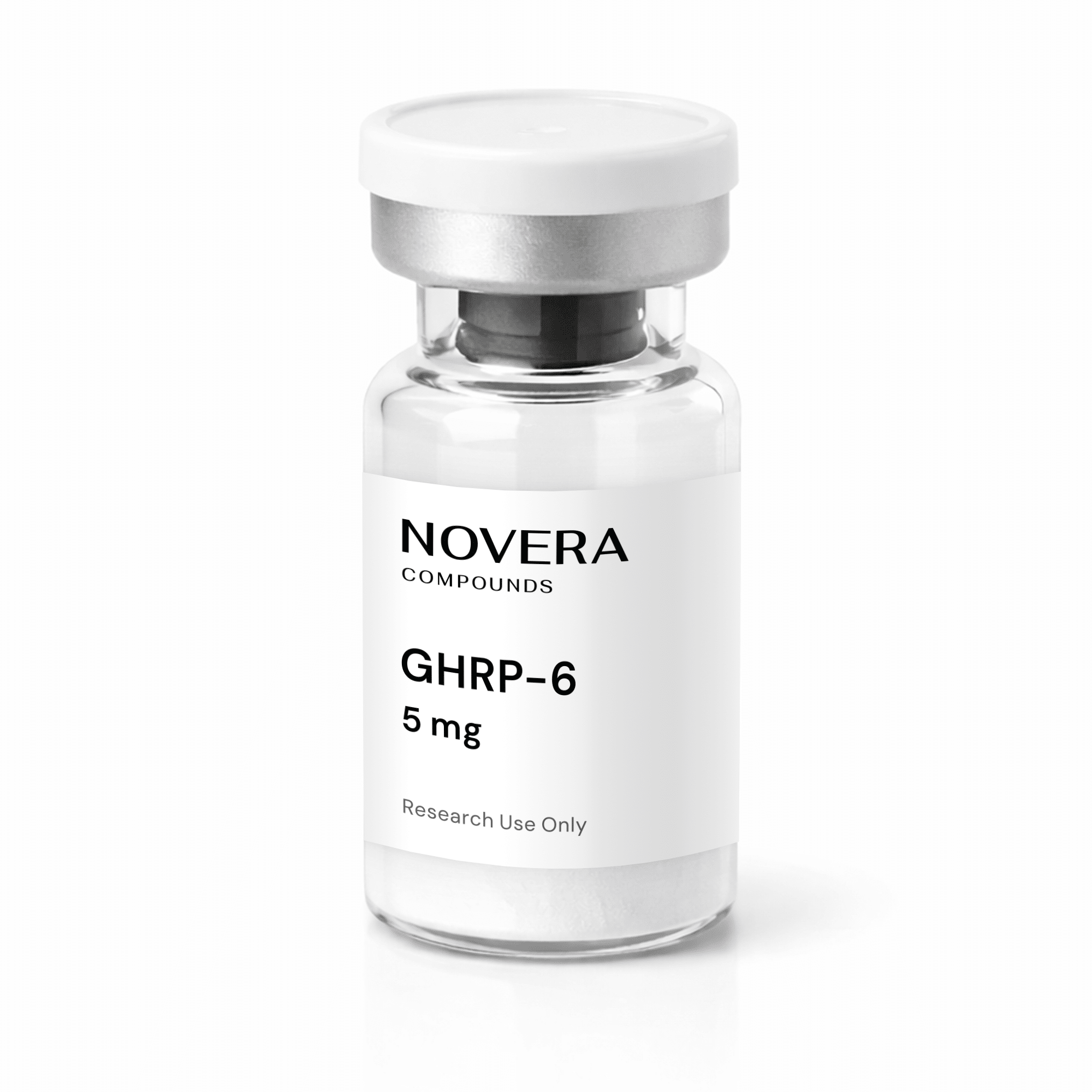
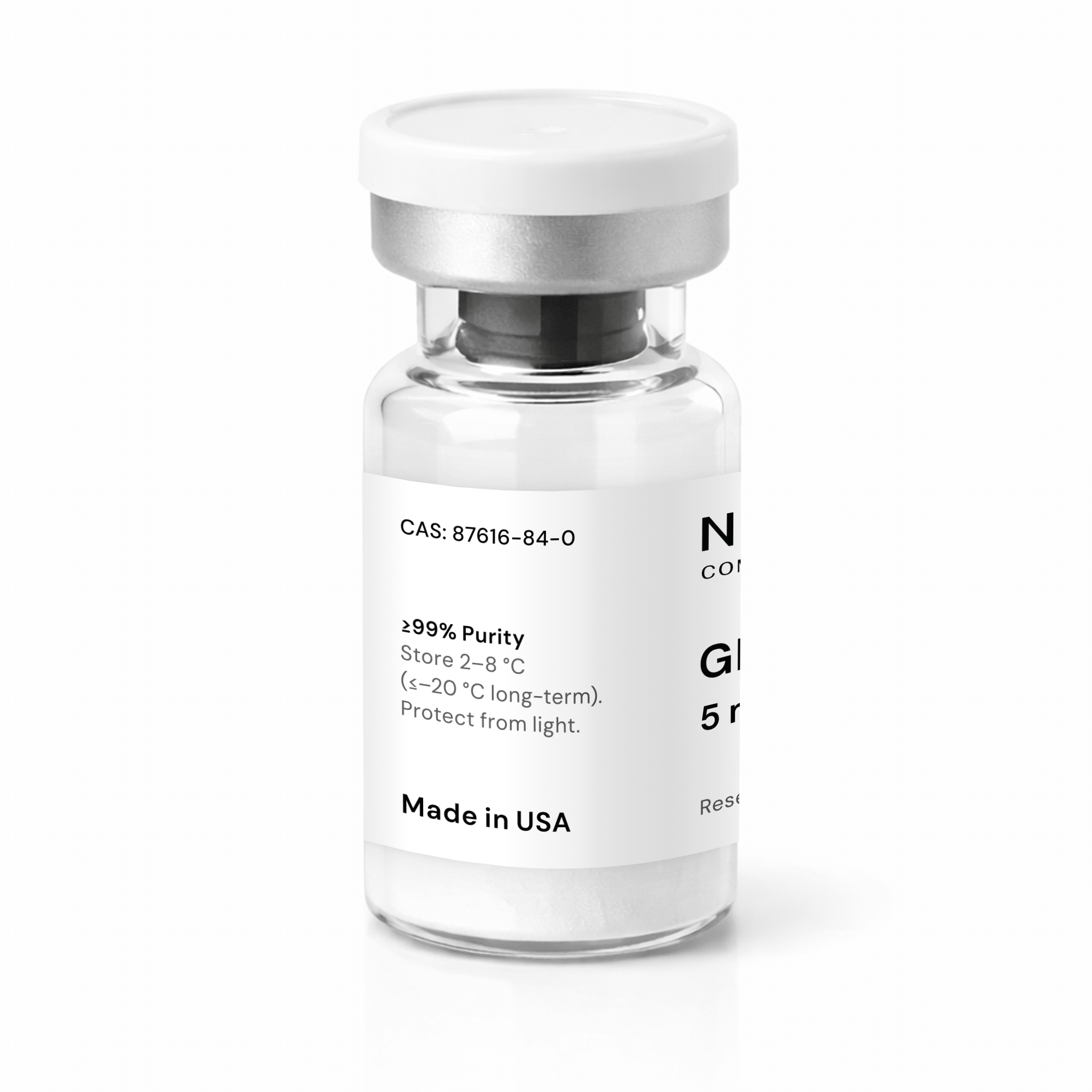
GHRP-6 (5mg)
Tier
| Packs | Discount (%) | For Each |
|---|---|---|
| 1 - 5 | — | $44.00 |
| 6 - 10 | 9.09 % | $40.00 |
| 11 - 20 | 18.18 % | $36.00 |
| 21+ | 27.27 % | $32.00 |
Product description
What is GHRP-6 (5mg)?
GHRP-6 (Growth Hormone Releasing Peptide-6) is a synthetic hexapeptide widely studied in biochemical and physiological research. It belongs to a class of compounds known as growth hormone secretagogues, which are being investigated for their potential to modulate growth-related signaling pathways in experimental models. The peptide consists of six amino acids arranged in a specific sequence and is commonly supplied in lyophilized form for laboratory use. In laboratory settings, this peptide has been studied for its interactions with biological systems that regulate the release and metabolism of growth factors.What are the key features of GHRP-6 (5mg)?
GHRP-6 (5mg) is commonly supplied as a lyophilized peptide powder in a sterile research vial. It is designed for controlled laboratory handling and experimental use. Researchers typically use this peptide to investigate cellular signaling mechanisms related to growth hormone secretion and metabolic processes. Key characteristics typically include:- Peptide classification: Synthetic growth hormone releasing peptide
- Sequence length: 6 amino acids (His-D-Trp-Ala-Trp-D-Phe-Lys-NH2)
- CAS Number: 87616-84-0
- Chemical Formula: C₄₆H₅₆N₁₂O₆
- Molecular weight:873.03 g/mol
- Purity: ≥98%, verified using HPLC and MS analysis
- Format: 10 mg lyophilized peptide supplied in a sterile research vial
- Research applications: Investigated in endocrine signaling and metabolic pathway studies
How is GHRP-6 (5mg) synthesized?
GHRP-6 is produced using solid-phase peptide synthesis (SPPS), a common laboratory method for assembling peptide chains. This method allows for precise control over the amino acid sequence, ensuring the correct structure of the final peptide. After synthesis, the peptide is cleaved from the resin, purified, and lyophilized to produce a stable powder suitable for laboratory use. Quality verification is typically performed using HPLC to assess purity and mass spectrometry (MS) to confirm the peptide's molecular mass and identity. These steps ensure the consistency and reliability of the peptide for research applications.What is GHRP-6 (5mg) being studied for? What are its possible benefits?
In research, GHRP-6 is primarily studied for its potential role in growth hormone signaling and metabolic regulation. Scientists are investigating how peptides such as GHRP-6 can influence biological pathways involved in endocrine activity and cellular growth. These studies are mostly conducted in cell cultures and animal models. Additional areas of interest include studies on angiogenesis, metabolic signaling, and tissue repair. Some experiments suggest that growth hormone secretagogues such as GHRP-6 may interact with pathways involved in protein synthesis and cellular regeneration. However, these findings are still being explored, and the peptide’s effects remain under investigation in preclinical studies.How does GHRP-6 (5mg) work in research studies?
In laboratory studies, GHRP-6 is believed to interact with systems regulating growth hormone signaling pathways. Researchers have studied how this peptide may influence cellular signaling mechanisms that control the release of growth-related factors in endocrine tissues. Experimental findings suggest that GHRP-6 may affect processes such as protein synthesis, metabolic activity, and cellular growth. However, these mechanisms are still being investigated, with current knowledge largely based on preclinical studies and laboratory experiments rather than clinical studies.What dosing information exists for GHRP-6 (5mg)?
The literature on GHRP-6 primarily reports experimental concentrations used in preclinical and laboratory studies. In animal models, the peptide has been studied at doses ranging from approximately 10 to 100 µg/kg, depending on the experimental design and objectives. In vitro studies have also evaluated GHRP-6 at varying concentrations within cell cultures, typically in the nanomolar to micromolar range. These concentrations reflect conditions used in laboratory experiments and are not intended as dosing guidelines for humans or veterinary use. No established dosing recommendations exist for clinical applications.How should GHRP-6 (5mg) be stored and handled?
For research stability, GHRP-6 (5mg) is typically stored as a lyophilized powder at –20 °C. Low temperatures help maintain peptide integrity and minimize degradation over time. The vial should remain sealed and protected from light and moisture until ready for use. If the peptide is reconstituted with a sterile solvent, short-term storage at 2–8 °C is typically recommended. Researchers should minimize repeated freeze-thaw cycles to maintain stability. Under proper laboratory storage conditions, lyophilized peptides can remain stable for extended periods, though stability can vary depending on handling procedures and environmental exposure.Where can I read more research about GHRP-6 (5mg)?
Researchers interested in learning more about GHRP-6 can explore scientific literature available through established biomedical databases. Several peer-reviewed studies examine the biochemical characteristics and experimental applications of this peptide.- de Sá LB, Nascif SO, Correa-Silva SR, et al. Effects of ghrelin, growth hormone-releasing peptide-6, and growth hormone-releasing hormone on growth hormone, adrenocorticotropic hormone, and cortisol release in type 1 diabetes mellitus. Metabolism. 2010;59(10):1536-1542. doi:10.1016/j.metabol.2010.01.021
- Catalina PF, Mallo F, Andrade MA, García-Mayor RV, Diéguez C. Growth hormone (GH) response to GH-releasing peptide-6 in type 1 diabetic patients with exaggerated GH-releasing hormone-stimulated GH secretion. J Clin Endocrinol Metab. 1998;83(10):3663-3667. doi:10.1210/jcem.83.10.5153
- Cabrales A, Gil J, Fernández E, et al. Pharmacokinetic study of Growth Hormone-Releasing Peptide 6 (GHRP-6) in nine male healthy volunteers. Eur J Pharm Sci. 2013;48(1-2):40-46. doi:10.1016/j.ejps.2012.10.006
- Oliveira JH, Vieira JG, Abucham J, Lengyel AM. GHRP-6 is able to stimulate cortisol and ACTH release in patients with Cushing's disease: comparison with DDAVP. J Endocrinol Invest. 2003;26(3):230-235. doi:10.1007/BF03345162
Compliance Statement
This product is intended for laboratory research use only and is not approved for human or veterinary use.Shop with Confidence: Product Authenticity is Guaranteed
All products available at Doctor Medica shop are obtained from respective manufacturers and contain original LOT numbers Contact us if you have any questions about product LOT numbers.


