Your Cart is Empty
Start shopping

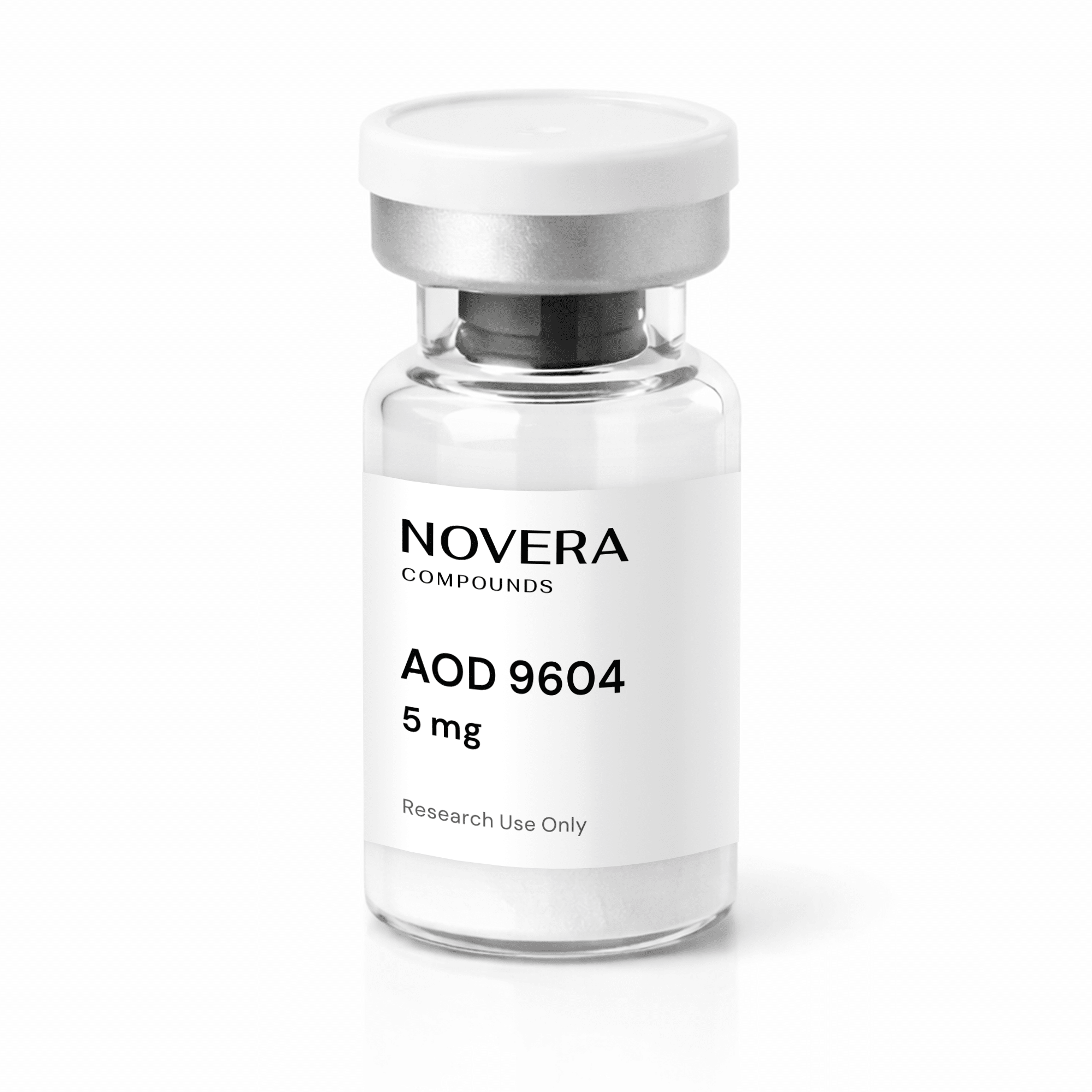
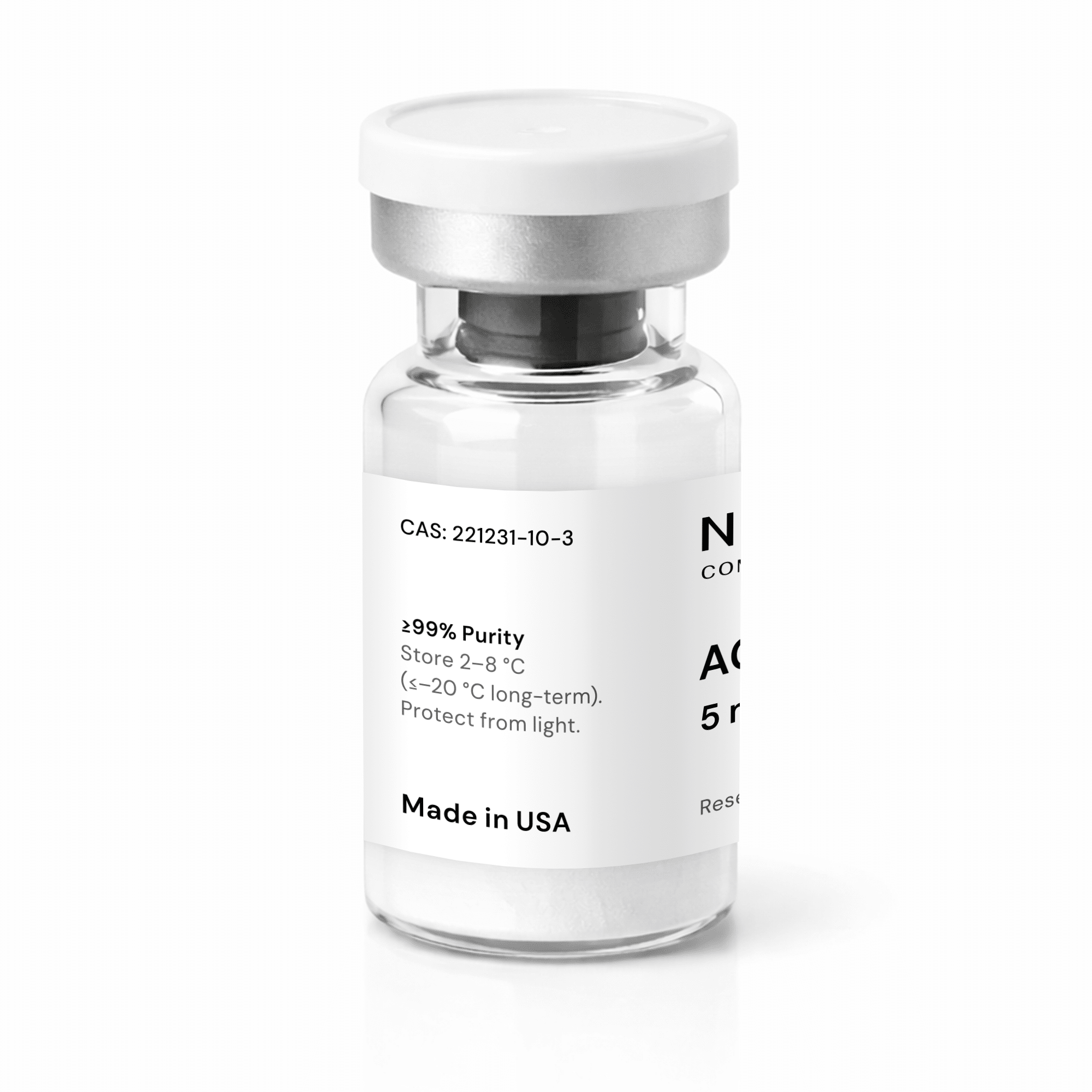
AOD 9604 (5mg)
Tier
| Packs | Discount (%) | For Each |
|---|---|---|
| 1 - 5 | — | $50.00 |
| 6 - 10 | 10 % | $45.00 |
| 11 - 20 | 18 % | $41.00 |
| 21+ | 26 % | $37.00 |
Product description
What is AOD 9604 (5mg)?
The AOD 9604 peptide is a synthetic fragment derived from the C-terminal region of human growth hormone, consisting of a 16-amino-acid sequence that has been studied for its potential role in metabolic and cellular research. It is classified as a modified peptide consisting of a 16-amino-acid sequence with a molecular weight of approximately 1815.10 g/mol. Researchers value its defined amino acids, stable structure, and analytical documentation. This peptide has been evaluated for various biochemical interactions in laboratory settings, falling under the subcategory of weight loss and metabolic peptides. Many research-grade materials are prepared to high purity levels, verified by standard analytical methods, making the peptide suitable for controlled experimental use.What are the key features of AOD 9604 (5mg)?
When researchers choose to buy AOD 9604 (5mg) for research, they typically focus on characteristics such as purity, stability, and consistent formulation. Many laboratories work with this peptide in sterile vial formats, which support reproducible handling and measurement. The peptide is often supplied lyophilized to maintain its integrity during storage and shipment. Key features include:- Verified through analytical methods to ensure consistent peptide quality.
- Precisely structured fragment derived from human growth hormone
- Freeze-dried formulation designed to maintain integrity during storage and handling.
- Supplied in uniform vial configurations for accurate measurement and reconstitution.
- Commonly used in controlled in-vitro or animal-based research
- Available in different dosages, including AOD 9604 (3mg) to support flexible research protocols and varied investigational study requirements.
- Produced under strict research-grade systems to support reliable experimental use.
How is AOD 9604 (5mg) synthesized?
Researchers using AOD 9604 (5mg) for research rely on a synthetic peptide manufactured by solid-phase peptide synthesis. This process allows precise control over each amino acid added to the chain, supporting consistency across batches. Because it is derived from the C-terminal fragment of a natural protein, the synthetic route replicates the same structural sequence without requiring biological extraction. Once the sequence is assembled, the peptide undergoes purification – often by HPLC – to remove incomplete chains or byproducts. Analysts may also evaluate the molecular profile using mass spectrometry (MS) to ensure accurate composition. These verification steps help confirm that the final material meets expected specifications for laboratory use.What is AOD 9604 (5mg) being studied for? What are its possible benefits?
AOD 9604 (5mg) is primarily studied as the lipolytic (fat-mobilizing) domain of human growth hormone. Research has focused on its selective ability to stimulate fat breakdown (lipolysis) and fat oxidation while avoiding the growth-promoting effects of full-length growth hormone. Key research areas include:- Lipolysis in adipocytes: Stimulation of fat cell breakdown through β3-adrenergic receptor activation
- Inhibition of fat synthesis: Suppression of acetyl-CoA carboxylase activity, reducing new fat formation
- Metabolic effects: Increased fat oxidation and energy expenditure in animal models
- Adipocyte remodeling: Reduction in fat cell size and prevention of hypertrophy
- β3-AR expression modulation: Restoration of β3-adrenergic receptor levels in obese models
How does AOD 9604 (5mg) work in research studies?
In laboratory environments, AOD 9604 (5mg) vial preparations are used to study how this peptide interacts with metabolic and cellular pathways. Research suggests it may influence lipid-related processes or modulate specific growth-associated factors. These findings primarily come from preclinical models, where controlled variables allow scientists to observe changes in cell behavior. The peptide is thought to act through indirect pathways, potentially affecting cellular signaling or protein-related processes. Researchers continue to examine how fragments of growth hormone can produce selective biochemical responses without influencing the broader growth axis.What dosing information exists for AOD9604 (5mg)?
Published research has evaluated AOD 9604 at multiple dose levels: murine studies have explored 10–50 µg/kg, rat toxicology studies have tested 0.1–100 mg/kg/day, and human clinical studies have administered 25–400 µg/kg intravenously or 0.25–54 mg/day orally. All dosing is strictly research-specific and determined by study design and experimental objectives.How should AOD 9604 (5mg) be stored and handled?
Research-grade material like AOD 9604 (5mg) for research is typically stored at –20 °C to maintain stability over longer periods. The lyophilized form should remain tightly sealed, protected from light and moisture, ensuring that the peptide retains its structural integrity. When handled under proper laboratory conditions, it can remain stable for extended storage periods as indicated by supplier data. After reconstitution, short-term storage at 2–8 °C is recommended. Solutions should be used within the timeframe indicated by laboratory protocols or supplier notes. Repeated freeze-thaw cycles should be avoided, as they may compromise peptide quality or experimental performance.Where can I read more research about AOD 9604 (5mg)?
Professionals looking for additional information about AOD 9604 (5mg) for research applications can consult several credible scientific resources. These platforms host peer-reviewed studies, biochemical analyses, and related literature linked to peptide fragments and metabolic research. Recommended sources include:- Heffernan M, Summers RJ, Thorburn A, et al. The effects of human GH and its lipolytic fragment (AOD9604) on lipid metabolism following chronic treatment in obese mice and beta(3)-AR knock-out mice. Endocrinology. 2001;142(12):5182-5189. doi:https://doi.or
- Ng FM, Sun J, Sharma L, Libinaka R, Jiang WJ, Gianello R. Metabolic studies of a synthetic lipolytic domain (AOD9604) of human growth hormone. Hormone research. 2000;53(6):274-278. doi:https://doi.org/10.1159/000053183
- Moré MI, Kenley D. Safety and Metabolism of AOD9604, a Novel Nutraceutical Ingredient for Improved Metabolic Health. Journal of Endocrinology and Metabolism. 2014;4(3):64-77. doi:https://doi.org/10.14740/jem.v4i3.213
Compliance Notice
This product is intended for laboratory research use only and is not approved for human or veterinary use.Shop with Confidence: Product Authenticity is Guaranteed
All products available at Doctor Medica shop are obtained from respective manufacturers and contain original LOT numbers Contact us if you have any questions about product LOT numbers.


